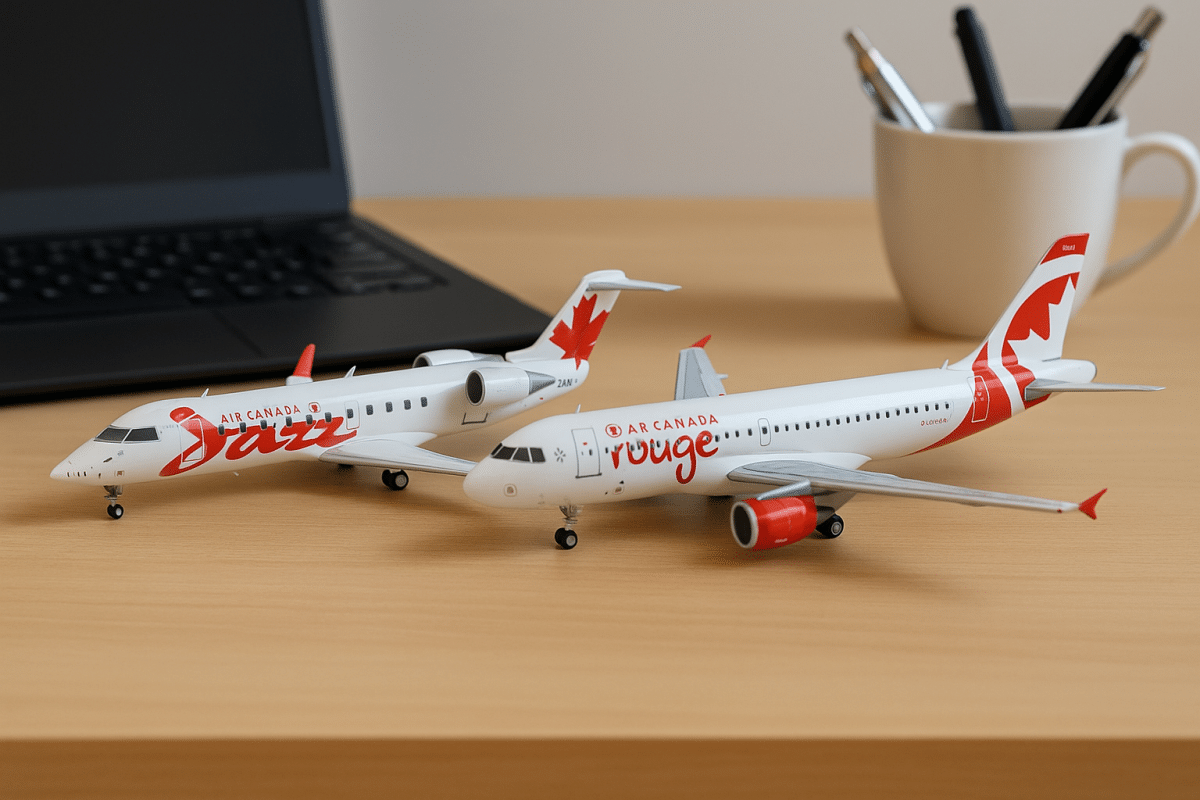
Imagine the scene: you’re finally about to elope with your beloved to Las Vegas over a long weekend. Lo and behold, there’s a direct flight available to Sin City on both cash and points from Toronto.
You go through the booking flow and are about to hit the buy button when you realize you’ve ignored something vital: the dreaded fine print that reads Operated by Air Canada Rouge. Perhaps the word dread is a bit too strong; regardless, a sense of mild, informed skepticism washes over you.
Well, you’ll keep an open mind. Or maybe you’ll do your impromptu wedding in the most romantic part of Canada – Sudbury, the capital of Hallmark Christmas in North America. What’s that about the flight? Operated by Air Canada Express – Jazz.
What does this all mean? Are these the real Air Canada? A discount impostor? And most importantly, what does it mean for your legroom, your points, and your overall sanity?
Today, let’s take a look at the differences between the flight product offered by Air Canada’s mainline brand and those of its “airlines-within-an-airline,” Rouge and Express.
Who’s Flying the Air Canada Plane: A Business Breakdown
To understand why Air Canada would even have such miniature versions of itself folded into its operations, we need to understand some of the business complexities of the airline industry.
Obviously, the goal of any airline is to earn revenue by transporting people or cargo from Point A to Point B. How they’ll do it and make a buck is a different question
The product that jumps into the heads of Canadians everywhere when they see any passenger jet wearing a maple leaf is Air Canada: the iconic national flag carrier, which is a founding member of Star Alliance, and that’s been operating continuously, in one form or another, since the 1930s.

Make no mistake: the mainline’s main source of revenue comes from high-value international business travelers and cargo. That’s why it operates the big, sexy routes, on wide-body jets with plenty of cargo space and Signature Suite business class pods to destinations such as London, Tokyo, and Frankfurt, and all the major Canadian hubs not named Calgary. These flights offer full-service amenities even in economy class, and act as the ambassador for the company’s brand.
The prestige of this branding is then lent to its two airlines-within-an-airline, whose flights are seamlessly integrated into Air Canada’s network.
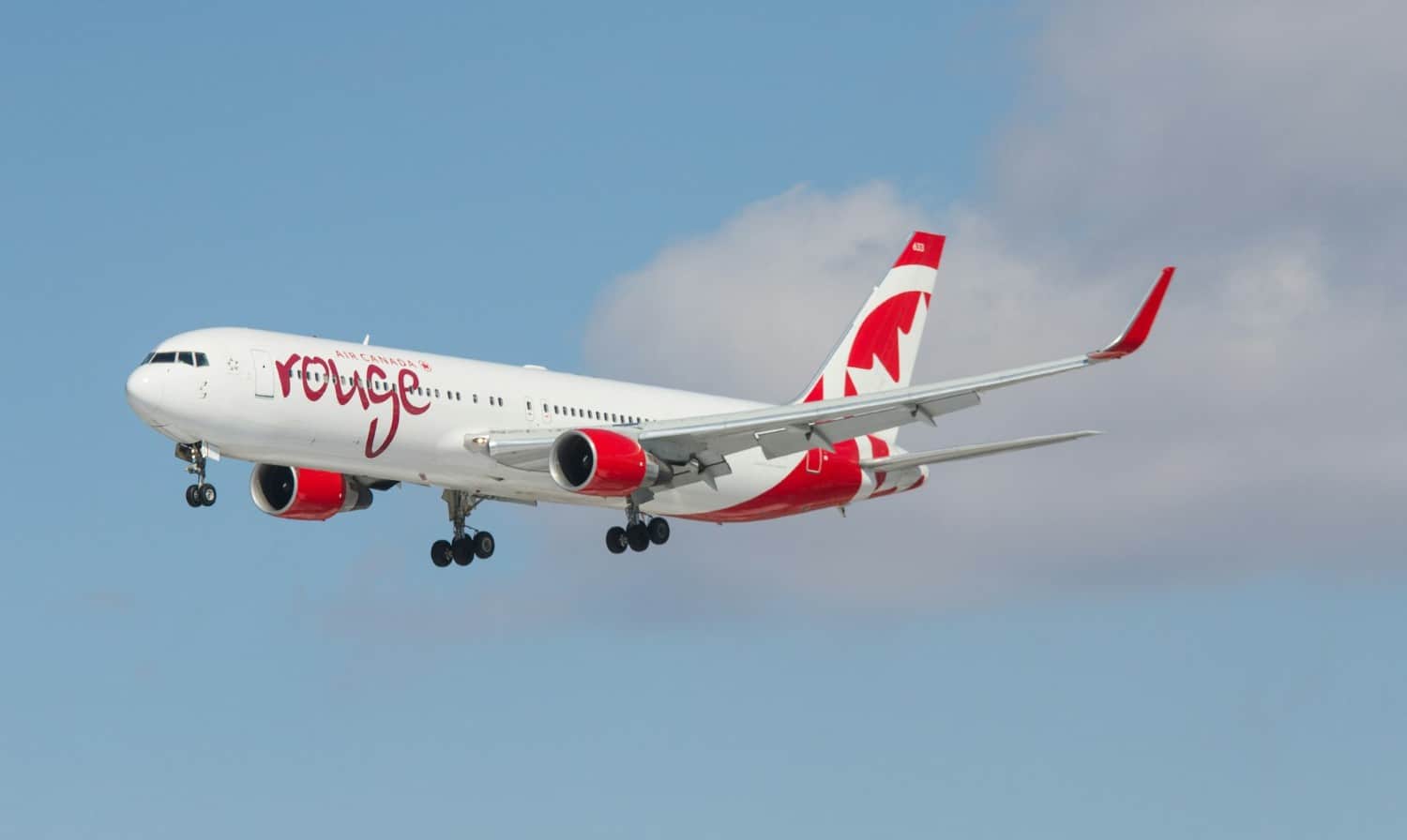
First up is Air Canada Rouge. This is Air Canada’s wholly-owned leisure subsidiary. It’s the airline’s defence against low-cost carriers that primarily service sun destinations like Mexico or seasonal European routes. It operates directly under Air Canada’s Transport Canada license but uses a distinct, lower-cost model with higher-density seating and different crew contracts.
Basically, Air Canada Rouge is a holiday, rather than a business-oriented division of Air Canada, but you’ll be served by Air Canada employees and pilots.
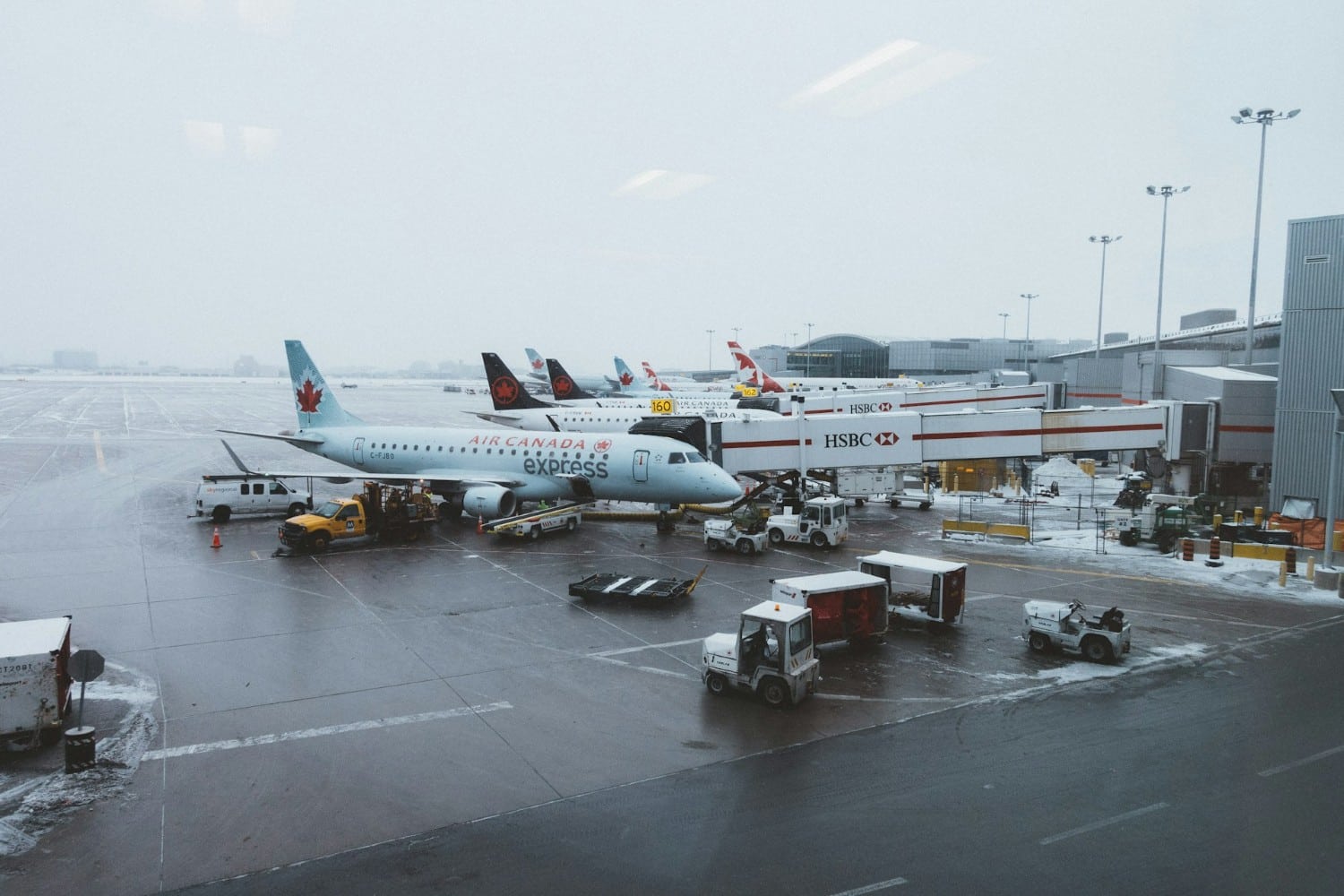
On the other hand, there’s Air Canada Express. This is where things get a little funky because Air Canada Express isn’t an airline; it’s a brand name for flights operated by a subcontractor (that still has to pass Transport Canada safety and professionalism standards): Jazz Aviation LP.
This subcontracting arrangement is governed by what the North American airline industry calls a Capacity Purchase Agreement (CPA. This allows Air Canada to shift its own risk by buying all of Jazz’s flight capacity (seats and hours) at a set price, with Jazz then having to operate the flights.
The relationship splits responsibility: Air Canada sells tickets, sets prices, and eats the cost of fuel or unsold seats. Jazz, on the other hand, only receives its fixed fee but has to handle all operations, such as providing pilots or keeping the flights on time.
While the flight attendants and planes will be liveried as Air Canada, everyone aboard is an employee of Jazz, which makes its money by having a steady, contracted revenue stream from Air Canada, no matter how many tickets are sold.
This model was actually invented in the United States. Savvy travelers may have noted seeing flights operated by American Eagle or Delta Connection, which function in a similar fashion.
Onboard Experience: Mainline vs Rouge vs Express
The most tangible difference for passengers is what you get–or don’t get–once the cabin door closes. The planes in each brand’s fleet vary significantly, as do service levels, and the same aircraft body can offer an enormously different flight experience across them.
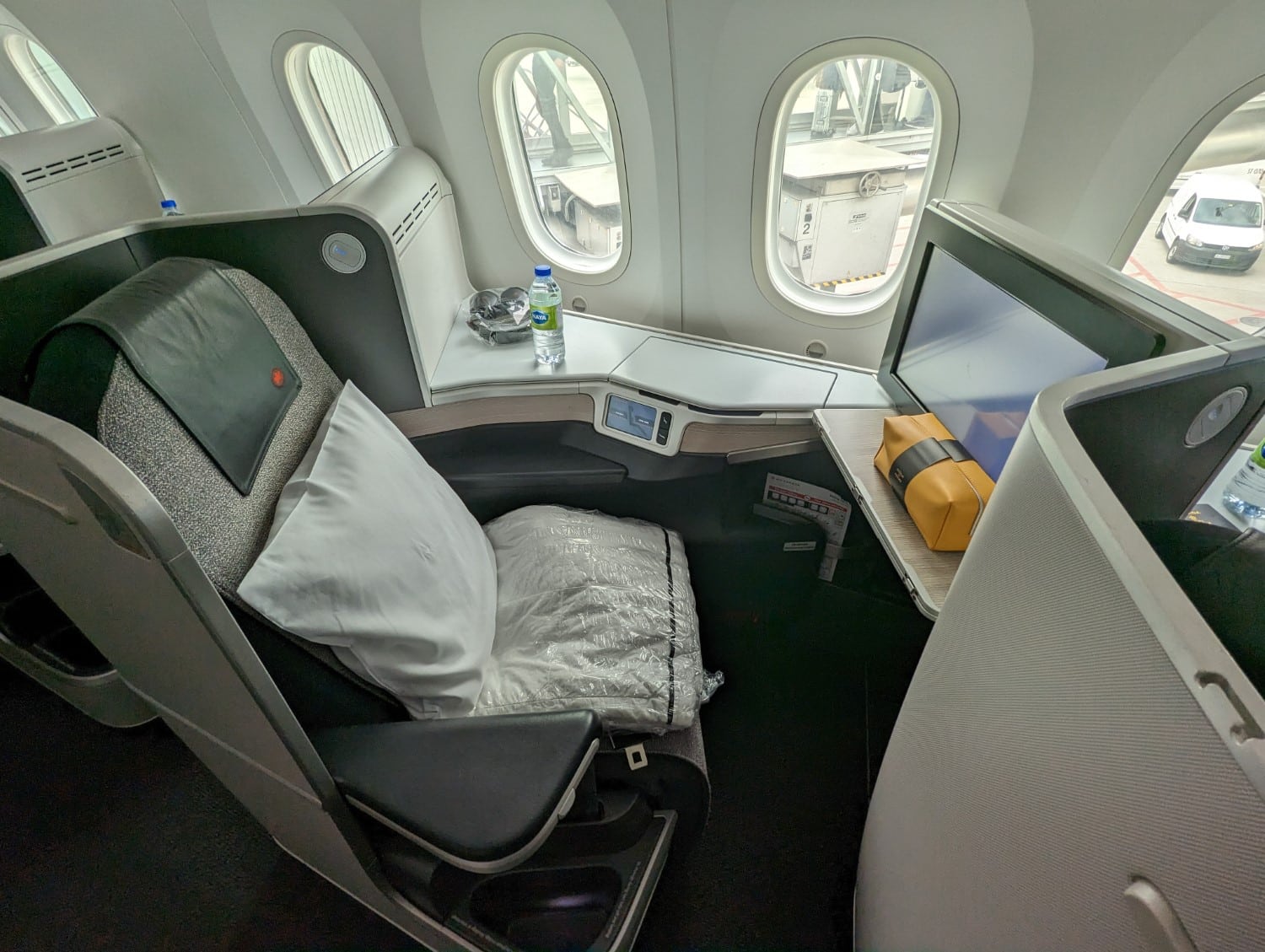
The mainline product we most often think of is Air Canada proper. The cabins they offer can range from the latest Signature Suite on a Boeing 787 Dreamliner to the large recliner business class standard to North America. Remember that latter plane: it’s an important piece of comparison with Air Canada Rouge.
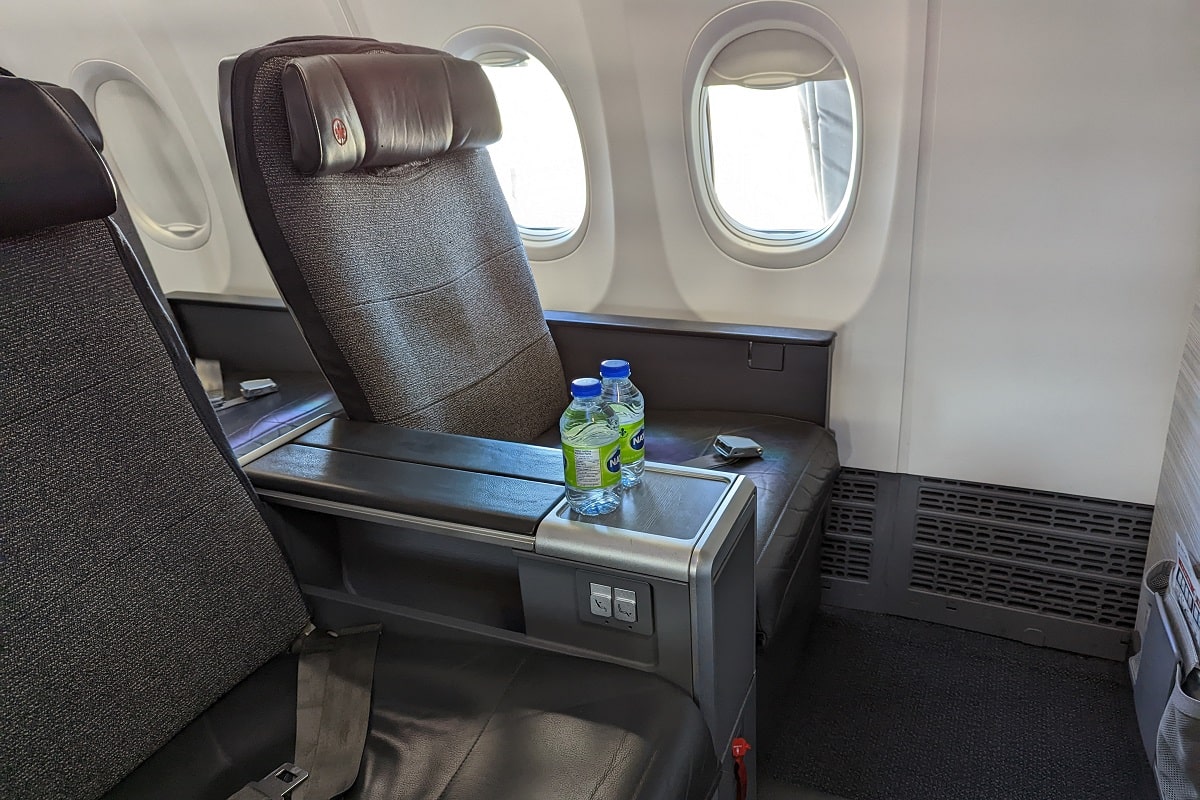
On the other hand, Air Canada Express’ flights are designed for short, regional hops. That means a leaner fleet of cheaper regional jets, such as my personal favourite, the Embraer E175, or turboprops like the De Havilland Dash 8-400. This keeps costs down, but it does mean you have to fly on a louder plane.
Read: Air Canada Express Business Class Review
Service is often a tad barebones. As Jazz, which provides all the flights for Air Canada Express, is a subcontractor that only makes fixed fees, their primary path to profitability is to keep their own operational costs as minimal as possible while still fulfilling their contract. Translation: no free beer. Ever.
And finally, we come to the (in)famous. Air Canada Rouge which exclusively operates a fleet of Airbus A319, A320, and A321 aircraft (though it is set to receive many of the mainline’s old 737s starting in 2026). Same aircraft as operated by the mainline, right? These may have the same engines and look exactly the same, but they are built for fundamentally different purposes.
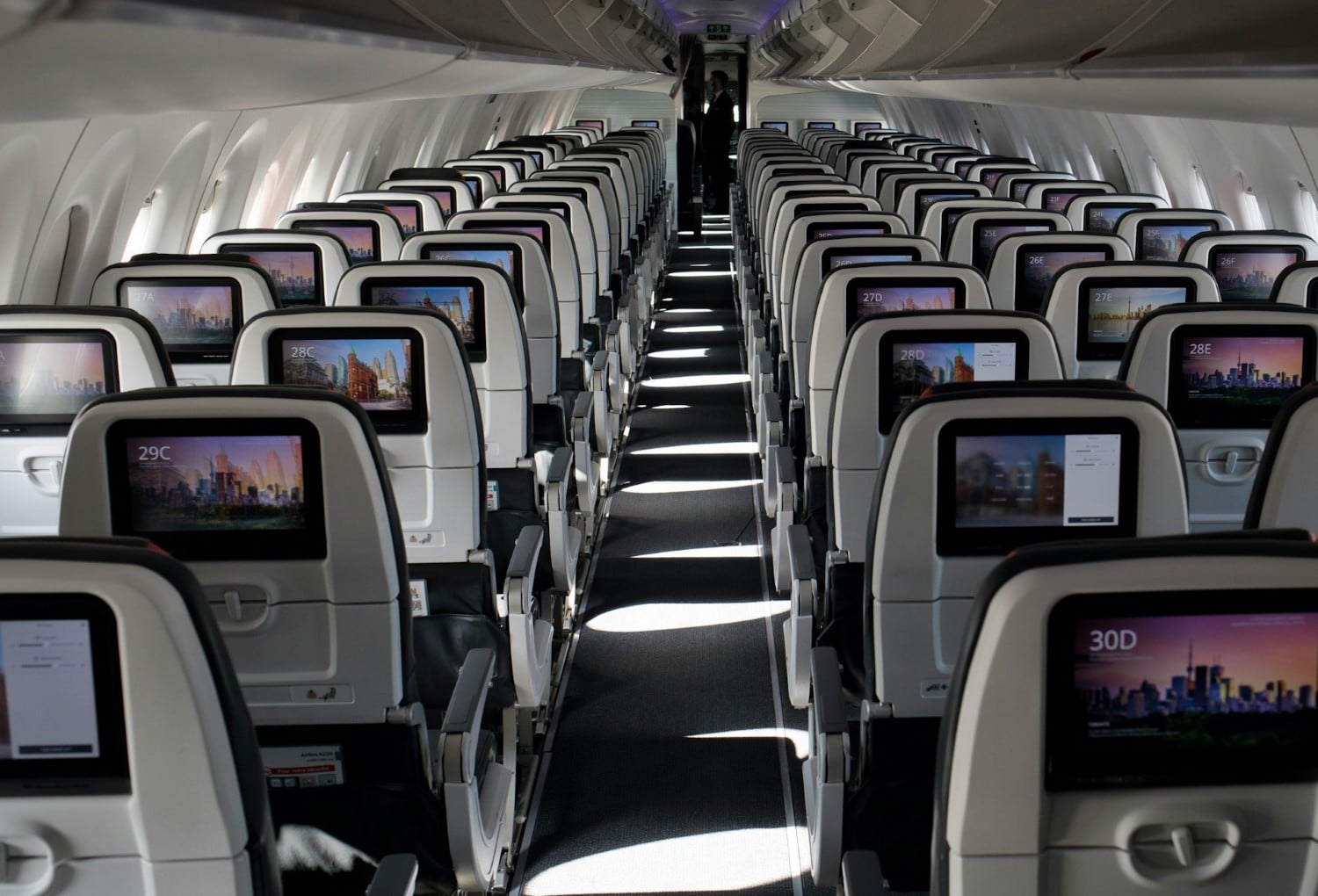
Let’s compare the workhorse Airbus A321. The mainline version is configured for a mix of business and leisure travelers, with around 190 seats, a proper business class cabin for North American flights, and seat-back screens for all. The Rouge version of that exact same plane is built to maximize capacity on leisure routes.
It packs in approximately 200 seats by reducing economy legroom to a snug 29-30 inches and swaps built-in screens for a streaming service that requires your own device. The “Premium Rouge” cabin offers larger recliner seats in a 2-2 layout, but it is not the same product as mainline business class. Meal availability varies depending on the length of the flight, but it usually needs to be purchased.
In comparison, the recliners on mainline business are larger, and every class (except on the oldest airframes) features seat-back entertainment. Vitally: the standard legroom is 31 inches. This can be vital for a long flight’s comfort, especially if going all the way to Aruba.

The main complaint about Rouge is that the service is worse and the product is less comfortable, yet the price is equivalent to the mainline.
These are both somewhat true. However, remember that Rouge is designed to service leisure destinations. It’s not making big money charging last-minute premium seats for tens of thousands of dollars, nor do the planes have equivalent cargo capacity or demand.
Nobody is sending millions in gold bars to Cancun, but they might to Zurich. Airlines are going to want to make their money back somewhere, and so that means charging higher prices on leisure flights.
On the positive side, the higher margins on the Toronto-Vegas flight we used at the beginning of our article show that the willingness of vacationers to pay a little more and suffer a little extra keeps direct routes to Vegas on the map
How Does This Impact My Air Canada Flight?
I have good news for you: all flights still contribute toward your Air Canada elite status, you’ll earn Aeroplan points on all eligible flights, and your Air Canada credit card benefits will still apply. As far as the Aeroplan loyalty program cares, every product is still Air Canada.
So on the earning side, whether you’re traveling on any of these flights for business or pleasure, you’ll still be getting your money’s worth when paying in cash. The real value question arises when we consider the implications of booking Air Canada Rouge or Express on points.
A flight on a Rouge route is subject to the exact same dynamic pricing as a mainline flight, meaning you are often spending the same number of points. For a points purist who only wants to fly on long-haul international business class redemptions on partner airlines, this is a poor value.

But ask yourself: is that the way you wish to use your points? If it is, no judgement, but it is also awesome to redeem Aeroplan points to be able to fly on ANA’s The Room. But sometimes, maybe you just really want to elope in Sin City and don’t have a lot of energy to connect. There’s no shame in that, and the prices above may be worth paying for convenience.
Conclusion
Air Canada’s three separate product lines form a cohesive strategy. Express keeps regional Canada connected, while Rouge makes direct flights to your vacation spot economically possible for the airline. And the flag carrier takes Canadians to, and represents Canada in, the highest-traffic destinations on Earth.
So don’t feel intimidated if your boarding pass says “Operated by Air Canada Rouge” if that was the flight that worked for your schedule and budget. Adjust your expectations accordingly, value the flight based on the product you’re getting, and always, always make sure your tablet is fully charged.

Kirin Tsang
Latest posts by Kirin Tsang (see all)
- Canada Post MyMail: Track Your Incoming Credit Card Mail & More - Oct 12, 2026
- Scotiabank Amex Offers: Don’t Leave Cash On The Table - Oct 5, 2026
- EU261 Regulations: Know Your Air Passenger Rights - Oct 2, 2026
- BMO eclipse Visa Infinite Card Review - Oct 1, 2026
- BMO Blue Rewards World Elite Mastercard Review - Sep 27, 2026