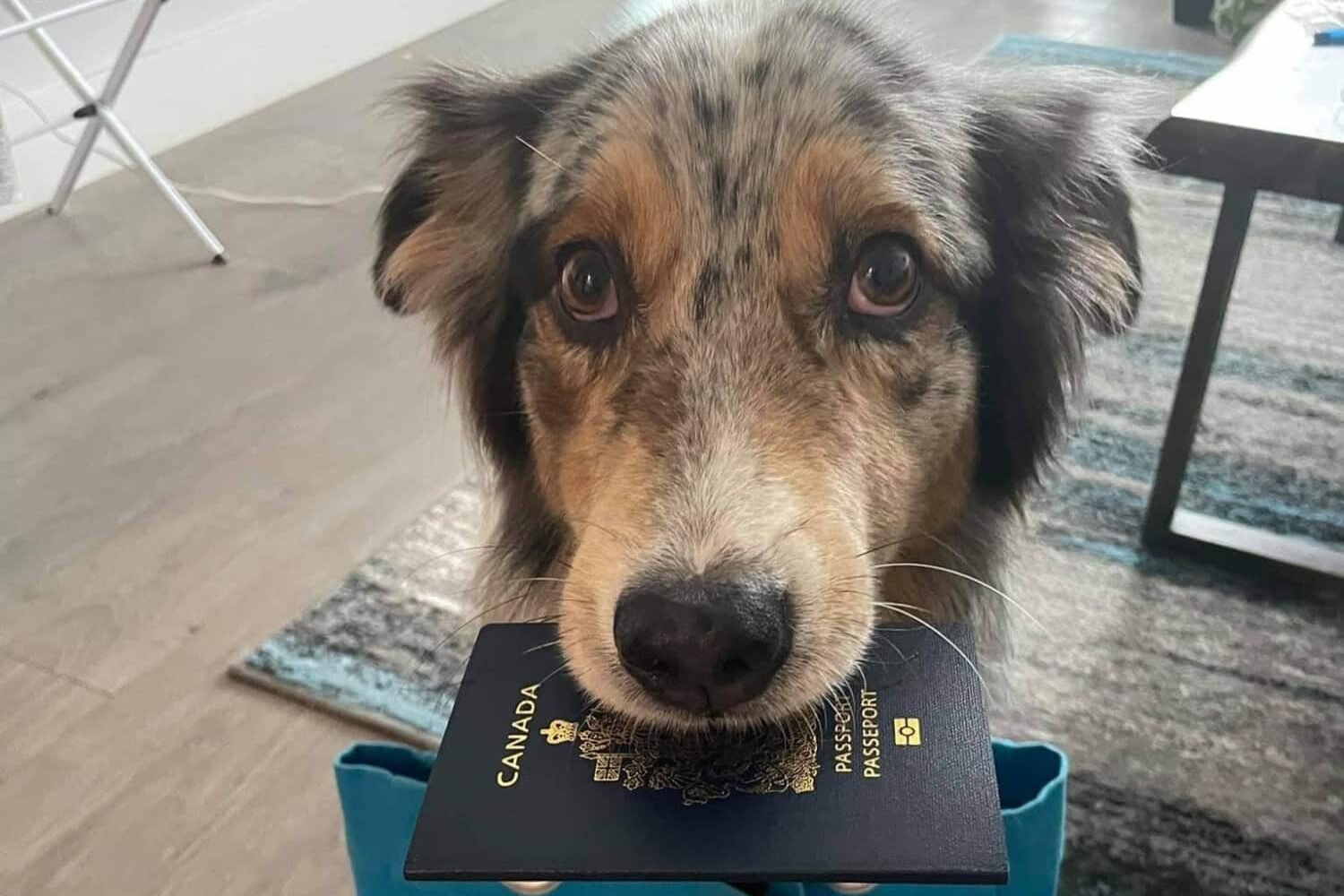
In recent years, you may have noticed a significant rise in the number of pets at airports, in lounges, and even in the cabin itself. Airlines and airports have become increasingly accommodating, making it easier for travelers to bring their furry companions along throughout the entire journey.
Whether you’re bringing home a new puppy, relying on a service dog, or traveling with an emotional support animal, it’s evident that an increasing number of people value having their four-legged friend by their side wherever they go.
This guide covers everything you need to know about traveling with your pet, including size and weight requirements, costs, and other important considerations before bringing your companion on board.
General Guidelines of Flying with a Pet
There’s no single universal set of requirements for flying with a pet, as each airline sets its own rules and guidelines. It’s essential to familiarize yourself with the specific requirements of the airline you plan to travel with well before your trip, so you know what to expect and can properly prepare for traveling with your pet.
Some airlines ask very little of you as a pet owner when checking in for a flight with a pet and simply want to confirm the size and weight of your pet. Other airlines may go as far as requiring additional documentation, such as a certificate from a licensed veterinarian stating that the animal is fit to travel.
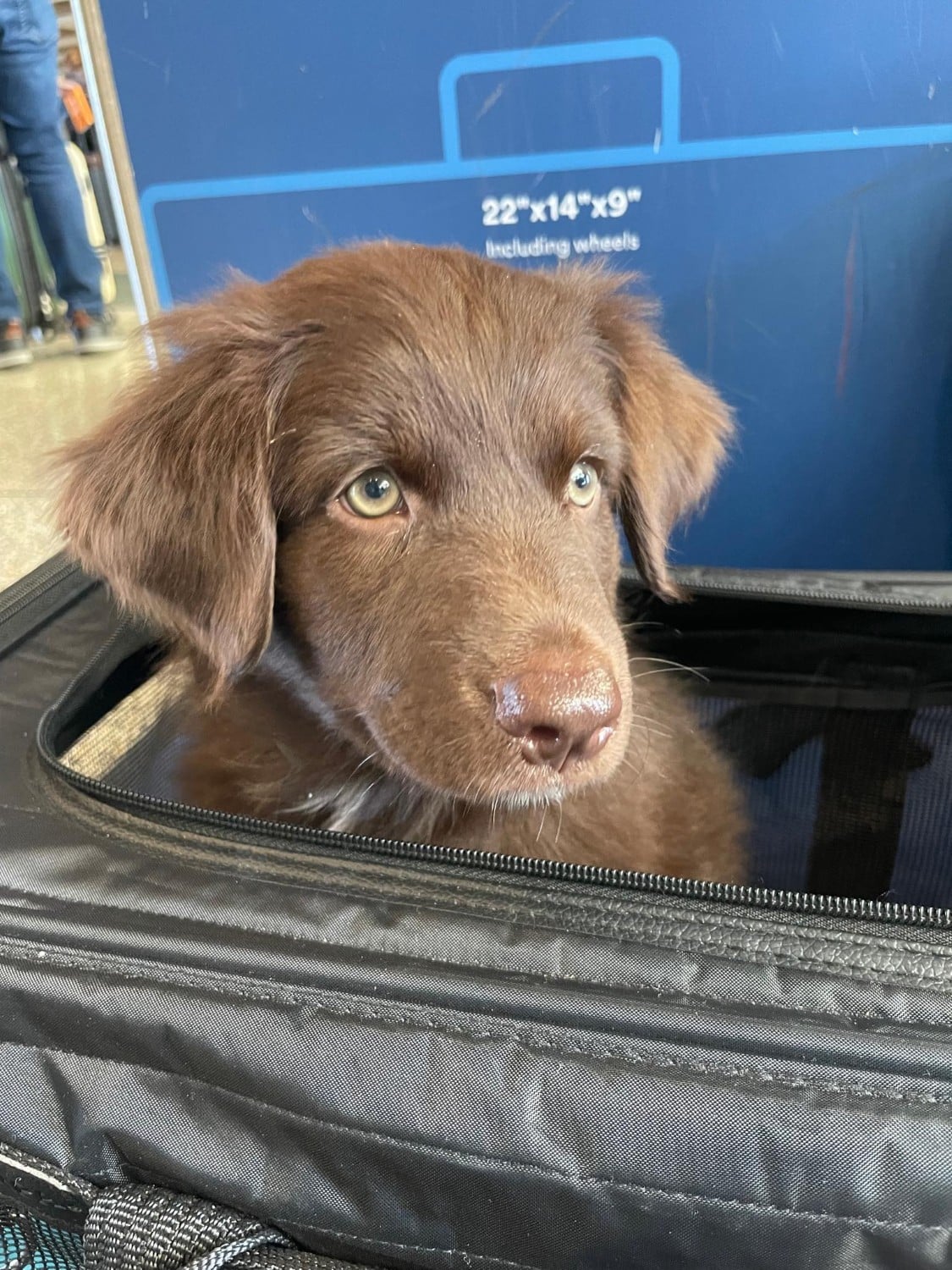
Additionally, many countries have strict regulations and quarantine procedures for bringing in animals, which may take weeks to coordinate. It’s best to begin planning well in advance and confirm both your airline’s pet policy and the entry requirements for your destination country.
I’d also recommend doing some research on both your departure and arrival airport to familiarize yourself about where the pet relief areas are.
Flying with a Pet in the Cabin
Flying with a pet can be surprisingly straightforward if your pet is small enough to travel in the cabin. In most cases, a pet traveling this way is treated as a piece of carry-on luggage or personal item and may not incur any additional fees. Some airlines, however, charge a fee for bringing a pet on board, even if it counts as your single carry-on item.
The most important consideration is each airline’s specific policy for in-cabin pets, as rules can vary greatly. Generally, animals that can fit comfortably in a soft-sided carrier are allowed to fly in the cabin, but they must remain in their carrier and stowed under the seat for the entire flight.
Kennel requirements are generally consistent across the industry and typically include the following specifications:
- The pet must be small enough to move comfortably inside the kennel without touching or extending beyond the sides.
- The kennel must fit underneath the seat directly in front of you.
- The soft-sided kennel must be leakproof and ventilated.
- Maximum carry-on kennel dimensions depend on the airline and aircraft, as under-seat space varies. Check airline for specific kennel dimension recommendations.
- Your pet must remain inside the kennel at all times while in the boarding area, during boarding and deplaning, while in the lounge, and on the aircraft.
Larger animals aren’t permitted in the cabin, except for certified service dogs or emotional support animals. Additionally, at the discretion of the airline or destination country some breeds may not be allowed.
Other factors to be aware of include the type of aircraft and cabin, as airlines often restrict pets from seating in certain cabins and rows. Most airlines also limit the total number of animals allowed on a flight; a common limit is six pets per aircraft. Plus, many airlines require pets to be a minimum age before traveling in the cabin.
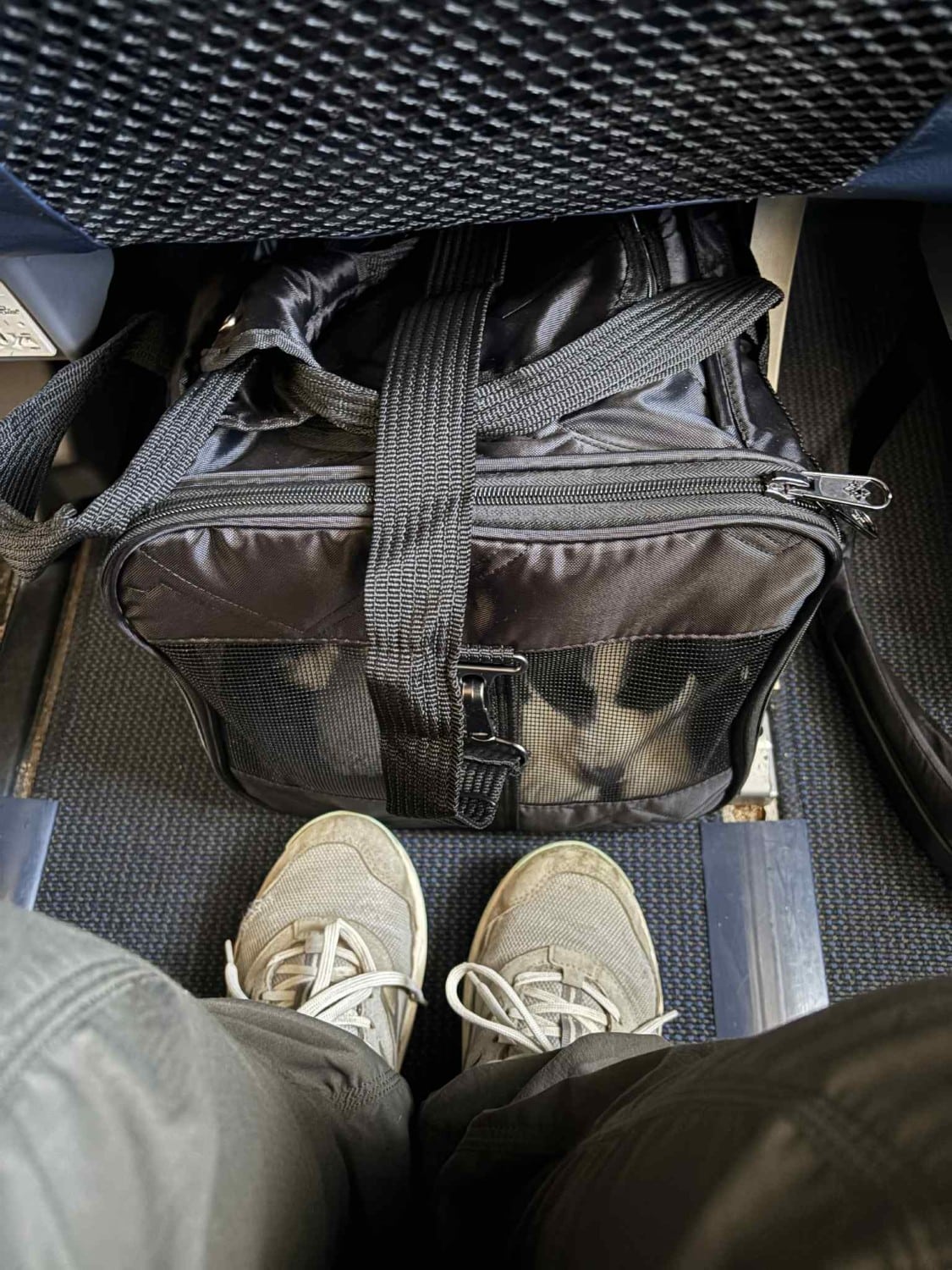
In most cases, traveling with a pet in the cabin across North America is relatively easy, as most airlines and airports are set up to accommodate animals. However, international travel can complicate matters significantly. Pets and animals in the cabin may not be as socially acceptable in other countries or on foreign airlines, and some nations prohibit animals from flying in the cabin altogether.
When traveling with a pet in the cabin, you won’t be able to use the airline’s online check-in or an airport self-service kiosk. You will need to see a check-in agent to confirm that your pet and its carrier meet the requirements of the airline before receiving a boarding pass.
Flying with a Pet in the Baggage Compartment
If your pet is too large to travel in the cabin, it may be possible for them to fly on the same aircraft in the checked baggage compartment. This option comes with its own set of rules and requirements that vary depending on the airline.
In Canada, only Air Canada and WestJet currently allow pets to travel as checked baggage. In the United States, none of the three major airlines, United Airlines, American Airlines, or Delta Air Lines, permit pets to travel as checked luggage except when accompanied by active-duty U.S. military and U.S. State Department Foreign Service personnel who are traveling on official orders.
Airlines also limit pet travel in checked compartments to ensure the safety and comfort of the animal. Pets may not be accepted on routes where temperatures at the origin, destination, or any connecting point are subject to extreme heat or cold. Furthermore, many narrowbody aircraft, such as the Airbus A320 family and Boeing 737 series, all have minimal heating in the cargo hold, which means that it may not be safe for animals under certain conditions.
During peak summer and winter travel periods, pets may not be accepted into the checked luggage compartment due to increased passenger and cargo loads.
The requirements for pet carriers traveling in the checked baggage compartment are stricter than those for pets flying in the cabin. To be accepted for transport in the baggage compartment, the carrier must meet the following criteria:
- Only hard-shell kennels are permitted in the check baggage compartment. Soft-sided and mesh-style carriers may not be used.
- Collapsible or wire carriers are not accepted, as no part of your pet may extend outside the carrier.
- The carrier must be completely leakproof and able to close securely to prevent your pet from pushing it open.
- The carrier must be large enough for your pet to stand, turn around, and lie down comfortably, in accordance with international regulations.
Once a pet and its kennel are approved for travel in the baggage compartment, the airline will typically require the owner to secure the crate with reusable zip ties before transport. These ties will be provided by a staff member during check-in.

You might be wondering whether holding a co-branded airline credit card that offers a first free checked bag benefit would allow you to check your pet in its crate for free in the baggage compartment. In most cases, the answer is no.
Larger pets will require crates that exceed standard checked bag dimensions, and because live animals need extra handling and care from baggage staff, airlines almost always require you to pay the applicable pet fee, regardless of any free checked bag benefit.
Service Dogs and Emotional Support Dogs
If a passenger requires a service dog to assist with a disability, Canadian airlines are legally required to accommodate the individual and their service dog. However, a service dog must meet specific requirements in order to be accepted on board and allowed to perform its duties as a trained service animal.
Emotional support dogs, on the other hand, differ significantly from service dogs. They don’t possess the same training, certification, or legal status. As a result, emotional support animals are not granted the same rights or recognition as service dogs. While some airlines may allow emotional support dogs in the cabin, many don’t classify them as a service animal and instead treat them as regular pets traveling on board.
Unlike a standard in-cabin pet, which must stay in its carrier for the entire flight, service dogs and emotional support dogs are not required to be in a carrier, as they need to be accessible to perform their duties.
Service Dogs
Service dogs perform many duties tied to an individual’s disability, such as guiding a person with a visual impairment, alerting someone to physical changes preceding a seizure, or assisting a person with post-traumatic stress disorder, among other tasks.
A service dog must be individually trained by a specialized organization or trainer to carry out specific actions that help a person with their disability. Passengers flying with a service dog may do so at no additional cost.
Most airlines require the passenger to contact them at least 48 hours before travel and submit a Service Dog Request Form completed by the passenger or a veterinarian. This form confirms the dog’s health and behavior, and verifies that the animal has been trained to perform tasks assisting the passenger with their disability.
If your service dog is a larger breed, you can contact the airline ahead of time to arrange to be seated in an extra legroom seat for the flight.
Emotional Support Dogs
Unlike service dogs, emotional support dogs do not receive specialized training to perform specific tasks that assist individuals with disabilities. As a result, emotional support animals don’t share the same legal status or recognition as service dogs. Because emotional support dogs don’t have a formally recognized status, some airlines may treat them as regular pets, meaning standard pet travel rules and associated fees would apply.
Among the major airlines in Canada, Air Canada, Porter, and Flair accept emotional support dogs in the cabin, whereas WestJet doesn’t. For WestJet flights, standard pet policies and applicable fees apply when traveling with an emotional support animal.
Similar to traveling with a service dog, you’ll need to contact the airline in advance and provide documentation to support your request. This typically includes a form attesting to the animal’s behavior, a letter from a licensed mental health professional confirming that they are treating you for a condition requiring an emotional support dog, and a form signed by a licensed veterinarian verifying the health of the dog.
Summary of Fees When Flying with a Pet on Canadian Airlines
Below is a summary of pet fees charged by Canadian airlines for both in-cabin travel and transport in the baggage compartment. It’s important to note that when traveling with a pet in the cabin, a pet carrier will count as a standard carry-on item. However, policies vary widely between airlines, especially among low-cost carriers.
On full-service airlines, passengers flying on a standard fare or higher ticket are typically allowed to bring one carry-on and one personal item, which may allow you to bring your pet without incurring extra baggage fees. However, some airlines will charge a pet fee regardless of your carry-on allowance.
| Airline | Travel Type | Within Canada / Canada–U.S. | International |
|---|---|---|---|
| Air Canada | In the Cabin | $50 – $60 | $100 – $120 |
| In the Baggage Compartment | $105 – $126 | $270 – $324 | |
| WestJet | In the Cabin | $50 – $59 | $100 – $118 |
| In the Baggage Compartment | $100 – $118 | $200 – $236 | |
| Porter | In the Cabin | $50 | n/a |
| In the Baggage Compartment | n/a | n/a | |
| Flair | In the Cabin | $79 (online), $99 (airport) | n/a |
| In the Baggage Compartment | n/a | n/a |
My Experience Flying with and Managing a Pet at the Airport
Our last two dogs came from breeders in the United States, and we have traveled home with our new puppies on both major U.S. airlines and low-cost carriers. In our experience, there’s minimal difference between airlines when it comes to traveling with pets, as most carriers are now very pet-friendly.
If you’re traveling with a small pet as a carry-on, you will need to remove your pet from its carrier at security. You will carry your pet with you through the security process while the empty carrier passes through the X-ray machine.
After security, it’s a good idea to locate the nearest pet relief area. Most major airports in Canada and the United States now have at least one pet relief area in each terminal, often both before and after security.
Once you are past security, your pet can accompany you anywhere in the airport as long as it remains in its carrier. This includes public seating areas, most restaurants, and airline lounges. While some lounges and restaurants may have their own restrictions, it’s increasingly common to see pets throughout airport terminals today.
While pets in airport lounges can be a controversial topic, they’re most often service dogs or service dogs in training. These animals are typically very well behaved, and in my experience, have never caused any issues.
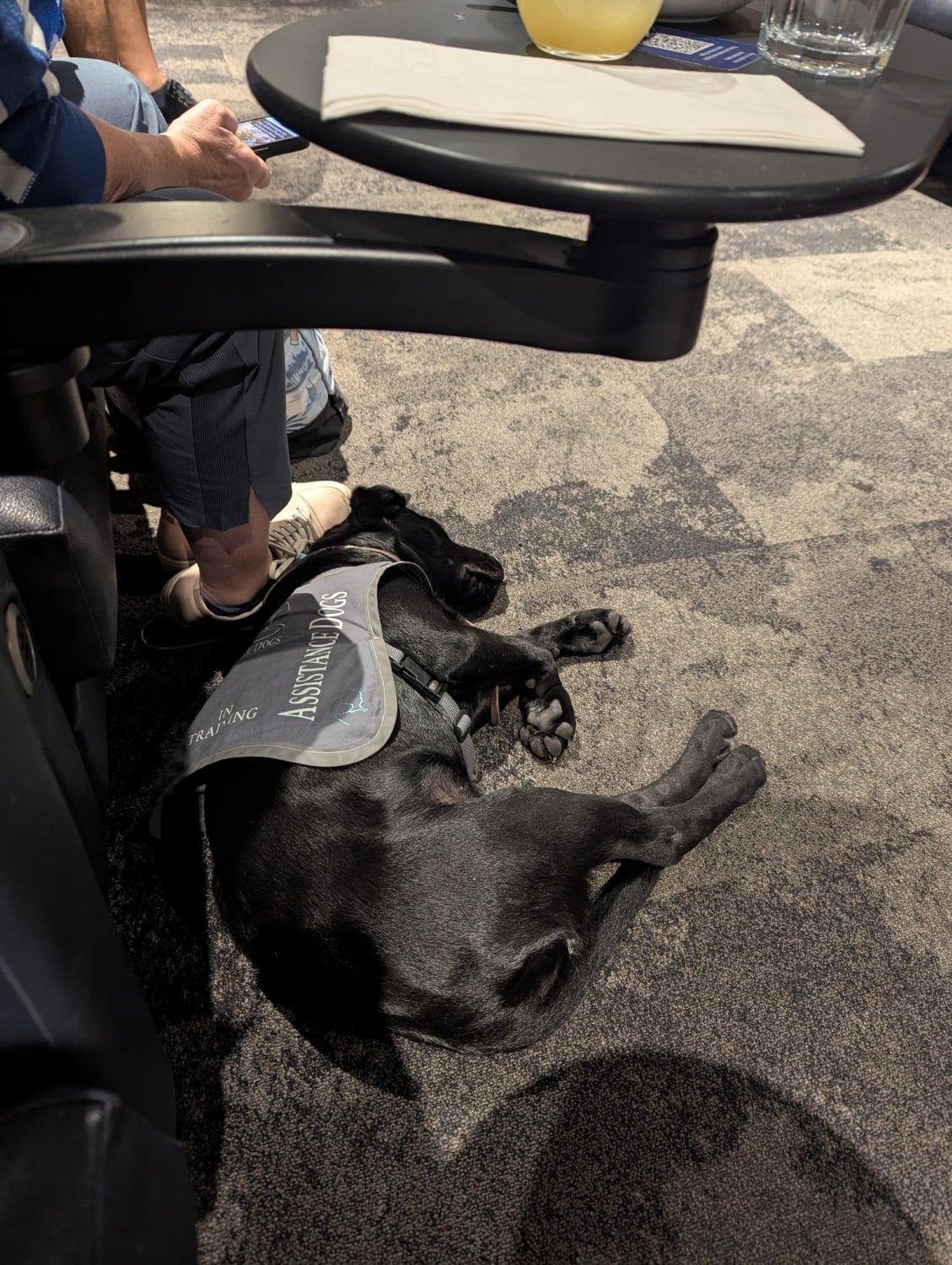
On the airplane, your pet’s comfort should be the main priority since it will be confined to its carrier for several hours. To help keep your pet relaxed, place a familiar blanket or toy inside the carrier and make sure your pet is hydrated before boarding, but avoid giving too much water right before the flight.
Conclusion
Each year, more people are choosing to travel with their pets, and it can be a rewarding experience for both the owner and the animal. In North America, airlines and airports have become very accommodating, making traveling with a pet much easier than in the past.
By familiarizing yourself with airline policies, properly preparing your pet, navigating the airport efficiently, and prioritizing your pet’s comfort during the flight, you can ensure a smooth and stress-free journey.
Frequently Asked Questions
Most airlines allow small animals to travel in the cabin if they fit comfortably in a soft-sided carrier that can be stowed under the seat in front of you. Larger pets must travel in the baggage compartment.
Fees vary by airline and route, but in-cabin pet fees usually range from $50 to $100 per direction. Some airlines count the pet as your carry-on bag, while others charge an additional fee.
For larger pets that must travel in the aircraft’s baggage compartment, fees typically range from $100 to $300, depending on the destination.
Each airline sets its own restrictions. The carrier must fit under the seat and provide enough room for your pet to stand, turn around, and lie down comfortably.
Most airlines place a limit of one pet per passenger. There is also a limit to the total number of pets allowed on each flight, so booking early is important.
This will vary by airline and your destination country. Common requirements are a health certificate from a licensed veterinarian, proof of vaccinations, and in the case of traveling to the U.S. verification that your pet has been microchipped.
Certified service dogs are allowed to fly in the cabin free of charge and do not have to be secured in a pet carrier. However, some airlines no longer recognize emotional support animals as service animals, meaning they must meet standard pet travel requirements.
Use an airline-approved carrier that is leakproof, well-ventilated, and large enough for your pet to move comfortably. Soft-sided carriers are preferred for in-cabin travel because they can flex to fit under the seat.
Pets must remain in their carrier during the flight, so feeding is generally discouraged.
Larger pets may be required to travel as checked baggage in the aircraft’s baggage compartment. This compartment is both temperature- and pressure-controlled; however, acceptance of your pet is subject to several factors, including the temperature at the departure and arrival airports, the type of aircraft, and any seasonal restrictions.

Jeff Jamieson
Latest posts by Jeff Jamieson (see all)
- Review: W Macau – Studio City - Oct 14, 2026
- Review: Singapore Airlines First Class Suites (A380) - Sep 30, 2026
- Review: Alaska Airlines Business Class Suites (787-9) - Sep 23, 2026
- Chexy Plus: Does It Make Sense? - Sep 11, 2026
- Review: The St. Regis Al Mouj Muscat Resort - Aug 26, 2026