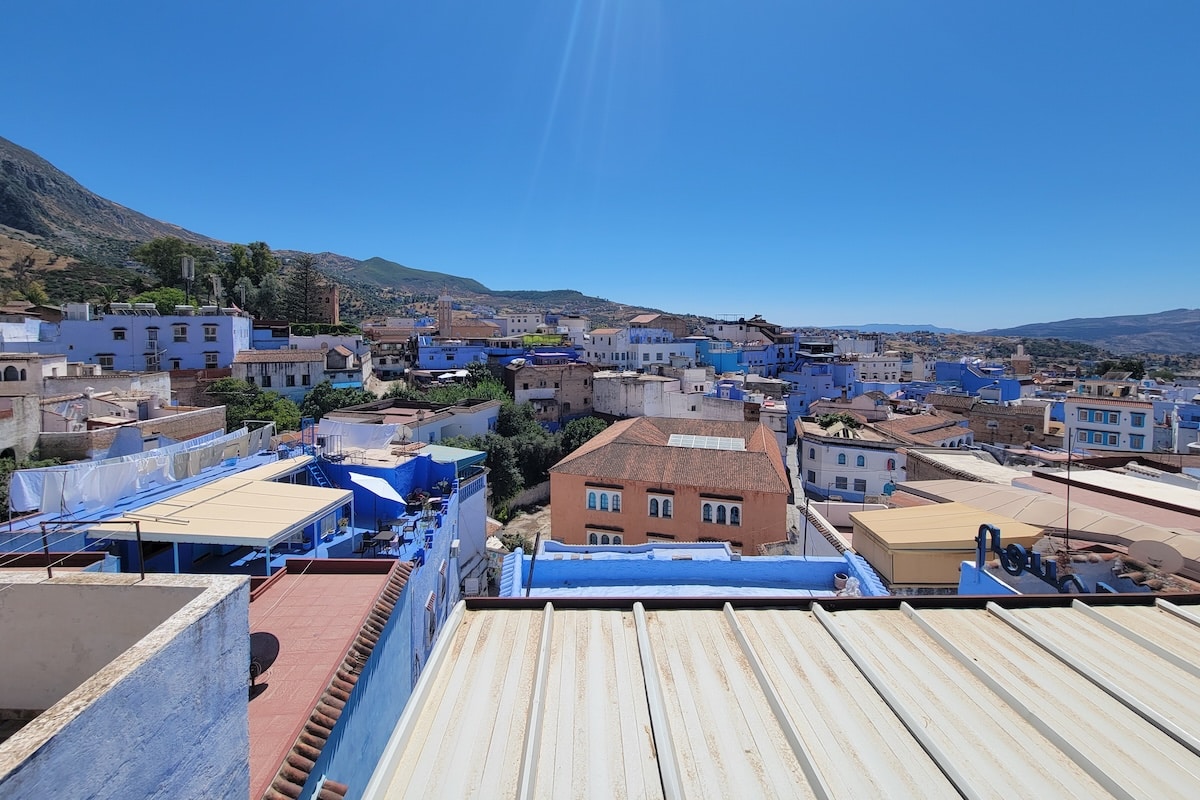
As I began researching transportation options for our travels in Morocco, it became clear that there was a somewhat convoluted and difficult to navigate public transportation system in the country. Additionally there was not a great deal of useful or seemingly reliable information available online.
After a lot of digging and research, and after experiencing multiple modes of transportation first hand myself in the country, from taxis to rideshare apps, to private transport and high speed trains, I finally had a good grasp of how things worked and how to optimally navigate around the country.
Thus I wanted to share what I learned in this comprehensive guide to transportation in Morocco, with a focus primarily on public ground transportation.
Overview of Getting Around Morocco
Getting around Morocco feels like stepping into mildly organized chaos. The roads are poorly signed, and many drivers maniacally weave in and out of traffic. I saw no form of traffic enforcement at any point during my travels here.

Logistically, the country’s transportation network is a patchwork of modern high-speed trains, comfortable long-distance buses, aging shared taxis, and a growing presence of rideshare apps and private drivers (however even the rideshare apps are a bit confusing and contentious).
On the one hand, Morocco offers rather affordable travel compared to North America or Europe; on the other, reliability, comfort, and safety can vary greatly depending on the mode of transport you choose.
You should be prepared for longer-than-expected journey times, occasional confusion at stations, and the need to negotiate or haggle prices in some situations. While this may feel overwhelming at first, once you understand the main options and how they work, navigating Morocco becomes less intimidating.
In summary:
- Public transport is cheap and widely available, but don’t expect Western standards of punctuality or comfort across the board.
- Trains (ONCF) are the most reliable way to travel between Morocco’s big cities. The Al Boraq high-speed train offers a surprisingly modern and efficient service.
- Buses like CTM and Supratours cover additional destinations that the trains don’t reach and are generally the best option for smaller towns.
- Taxis come in two forms: grand taxis for intercity routes (shared with strangers) and petit taxis for short city rides. Both are inexpensive but can feel cramped, and scams are not uncommon.
- Ridesharing apps (Careem, InDrive, Heetch) are growing in popularity, offering more transparent pricing and ease of use, though coverage is limited to larger cities.
- Private transfers—such as those arranged through services like TangierTaxi—are often the most comfortable, safe, and stress-free option, particularly for airport pickups, families, or travelers with lots of luggage.
- Driving yourself is possible and sometimes necessary if you want to explore rural areas or the desert. However due to chaotic city traffic and challenging road conditions, I would strongly recommend not renting a car to drive anywhere near a major urban center.
Morocco has a mode of transport for every budget and travel style. If you’re looking for reliability, trains and private transfers are your best bet. If you’re traveling on a shoestring budget and don’t mind a little unpredictability, taxis and buses can get you almost anywhere in the country too.
Trains (ONCF Rail)
ONCF is Morocco’s national railway operator. Their network has a north-south track between Tangier to Casablanca (via Rabat) and from Casablanca to Marrakech, connecting all major cities along or close to the Atlantic coast. There is also an east-west track from Oujda via Fes and Meknes to Rabat connecting to the north-south tracks in Kenitra.


A particular highlight for train enthusiasts is the first African high speed train – the Al Boraq. At present, this is only available on the route from Casablanca to Tangier. Al Boraq trains are scheduled to depart Casablanca and Tangier every hour from 06:00 until 21:00 (from 07:00 on Sundays). As shown in the image above, extensions are planned in the future.


We took this train in combination with a private transfer during our trip to get from Casablanca to Tangier and onward to the St. Regis Tamuda Bay, respectively. It was a good experience, particularly compared to the taxi and rideshare experiences we’d had prior to that.
You can book the Al Boraq train in advance through the ONCF Voyages website or ONCF Voyages mobile application. Note that neither the website or the app work very well when outside of Morocco. Alternatively you can use Rail Ninja, although the prices seemed a little inflated vs. booking directly.
There is an elevated class of seat on the train called Comfort class or First class. It was only about $20 more than the regular economy class, and granted us access to the First class lounge at the Casablanca railway station (Casablanca Voyageurs). There is also a First class lounge available at Tangier Ville station.


The ONCF trains would definitely be a preferred method of intercity transport for me between any major hubs in Morocco like Casablanca, Rabat, Marrakesh, Tangier, Fes, and others. They are safe, reliable, and inexpensive.
As you’ll see later on in the guide, intercity taxis are shared and can be a less comfortable experience. Of course private transport is another option but it won’t save you any time and will be more costly for long routes between cities.
Buses
For cities not reachable by ONCF trains, there are two main bus companies that reach smaller towns and destinations. CTM (Compagnie de Transports au Maroc) is the national bus company of Morocco while Supratours is a subsidiary of ONCF, the railway company of Morocco. CTM and Supratours both operate modern, air-conditioned, and safe buses with reserved seating. They stop at designated terminals and stations and are known to be relatively timely.


There are smaller bus companies in Morocco with local operators as well. To be perfectly honest, I would avoid these as they are known to be dirty, overcrowded, unreliable, and less safe.
CTM
I took the CTM bus on a trip from Tetouan to Chefchaouen. I had a relatively smooth experience booking the tickets in advance online, although the website is only offered in Arabic and French so I had to use Google Translate to be able to navigate it (alternatively there is a solid guide to using the app for English speakers here).


We showed up to the CTM station 30 minutes before departure, as advised on our tickets. There was a waiting area beside the entrance to the bus bay.

The process for boarding the bus ended up being reminiscent of my experience boarding my Royal Air Maroc business class flight with a general chaos and lack of clear processes. Instead of forming a line, everyone stood in groups around the entrance and then rushed towards the gate out of turn when the CTM staff indicated the bus was ready for boarding.
Furthermore, even though we had pre-selected specific seats on our tickets, nobody seemed to pay attention to the assigned seats. We found two people were in our seats, and when we indicated this they indicated that two people were already in their assigned seats. We grabbed two nearby seats and observed the chaos as essentially everyone else boarding the bus either sat down without paying attention or struggled to figure out where they were supposed to sit.


In terms of the actual bus experience, the seats were definitely not as clean or modern as advertised. There was a piece of kleenex stuffed into the air vent above us, the seat was an older model than I’d seen pictures of online, with no reclining ability. There was no WiFi on the bus. There was air conditioning, so temperature was not an issue at least.
Overall, the experience was fine for what was only a 1 hour and 15 minute bus ride to our destination. But I would not characterize the bus as having a high level of comfort, and would hesitate to choose this mode of transport for a trip much longer than a couple of hours in Morocco.
Supratours
You can expect a fairly similar experience with Supratours buses, although many hail CTM as offering a slightly better experience than Supratours.
On the flip side, Supratours has the added convenience of being tightly integrated with ONCF trains. If you’re arriving by train you will find a Supratours station close by, whereas CTM stations can be less conveniently located or outside the medina sometimes.
You can book Supratours buses via the Supratours website. However, you will need to translate the page to view it in English. Alternatively I would recommend booking via the ONCF Voyages mobile app or website, as you do with ONCF trains.
Taxis
I won’t sugarcoat it: my experience using the taxi system in Morocco was not good. The taxi system here is chaotic and impoverished. Taxi drivers routinely drive recklessly, few if any of the taxis have functioning seat belts, and they regularly try to overcharge you by turning off their meters (in the case of petit taxis).
Nonetheless, in many situations taxi is the only or most convenient option for getting around within cities, so if you visit here you will likely need to figure out how to use the system. This guide provides some of the information I wish I’d had readily available prior to my visit to Morocco.
There are two types of taxis in Morocco: Grand Taxis, which are for intercity travel, and Petit Taxis, which are for travel within cities. They each look different and operate differently as well.
Grand Taxis (Shared Long-Distance Taxis)
As mentioned, Grand Taxis are long-distance taxis for travel between cities, towns or villages. Grand taxis are shared between strangers, seating up to six passengers. They have fixed routes and a fixed price per seat.


The taxis used to be exclusively an older style Mercedes-Benz W123 sedans. However, many of these older models have now been replaced with Dacia Lodgy and other seven seat vans as depicted above.
You can hail a Grand Taxi by standing at the side of the road and putting out your fingers extended corresponding to the number of passengers you have. For example if you are a party of two, you’d extend two fingers.
One good place to flag these taxis down for a ride, particularly if you’re in a more local place, is at bus stations by the side of the road.

We used a Grand taxi when we needed to get from our hotel in Tamuda Bay to the city of Tetouan. The experience was fine for this short trip, and better than we’d had on some of the Petit taxis in Casablanca.
Nonetheless, Grand taxis, while affordable, can be crowded and suffer from the same safety problems as other taxis. You may want to consider other options for travel between cities like buses, trains, and private transfers, depending on your comfort level and budget.
Petit Taxis (City Taxis)
Petit taxis only travel within city limits. They are smaller cars, usually older models such as Fiat Uno or Peugeot 205 or similar.


Something quite interesting about Petit taxis in Morocco is that their color is specific to the city. For example, in Casablanca they are red, and in Tangier they are blue. The color of taxis in a few major cities is listed in the table below.
| City | Petit Taxi Color |
|---|---|
| Casablanca | Red |
| Marrakech | Orange |
| Fes | Red |
| Rabat | Blue |
| Tangier | Light blue |
| Tetouan | Light yellow |
| Chefchaouen | Blue |
Petit taxis are meant to be quite cheap and to have a metered rate. However, and perhaps because we stood out as tourists, we experienced every single Petit taxi driver try to charge us an up front and inflated amount for the trip rather than using their meter. If you ask for them to use the meter, they will often try to tell you it’s broken.
Along with the lack of seatbelts, and the reckless driving, this is part of what made the taxi experience a bit uncomfortable for us. You have to either haggle or turn down a taxi driver and look for another multiple times to get a normal rate in Morocco, or just give in and accept an inflated price.
For those reasons, taking a Petit taxi was my least preferred form of transportation in Morocco, but in certain cases you don’t have many other options so it’s something to get comfortable with if you’re traveling here.
Ridesharing Apps
Ridesharing apps do exist in Morocco and are gaining in popularity. Careem, InDrive, and Heetch are the most popular. I only had experience with Careem and InDrive so I will only speak to those personally.


Note that ridesharing apps are not operational in every city, and they are heavily contentious amongst taxi drivers. Therefore there are some definite things to be aware of and precautions to take if you decide to use them.
Many will say that these apps are illegal, but it’s my understanding that it’s actually more of a gray area as they are unregulated right now. Nonetheless, other taxi drivers do not like individuals using these apps, so it’s always best to order your ride to an area away from where taxi drivers congregate. Even trying to call one up to the front of your hotel would not be advisable.
Despite that inherent sketchiness of using these apps, it’s on the other hand a better experience to riding in a Petit taxi for a few reasons:
- You can set the price set up front and know you’re not being scammed and don’t need to haggle or negotiate
- The driver comes directly to you, no need to hail them
- The vehicle you ride in is generally newer and has working seatbelts
- Anecdotal, but I found the few rideshares I took drove more safely
Careem
Careem is a Dubai-based ridesharing app that has since expanded to other countries. Careem is available in Casablanca, Rabat, Marrakech, and Tangier, at the time of writing.
Careem is a similar app functionally to Uber/Lyft/Bolt if you’ve used them before. The trip rate is set up front, automatically decided for you, and charged to a credit card you add to your wallet in the app.


The interesting thing about Careem was that you could order Petit taxis via the app, not just regular drivers. This provided a little less risk of getting caught in a taxi mafia fight, while still allowing you to conveniently order a taxi and set your price up front.
Careem works very well within the city, but has a limited service range outside of the city. Overall, I preferred Careem to InDrive and would recommend using the former in cities where it is available.
InDrive
InDrive is a straightforward rideshare app as well, but requires a bit more manual input to order a ride. With InDrive, you manually set the price in the app, and the price along with your trip route is broadcast to drivers on the app. Drivers can then choose to accept your offer, ignore your offer, or counter it with a higher price.
InDrive takes a bit of tweaking to get the right price, and I often found I needed to offer more than was suggested by the app to efficiently secure a ride.


Unlike Uber and Careem, all InDrive rides are paid with cash, not through the app. So you’ll need to make sure you have the appropriate amount of cash to pay for any offers you make.
Private Transports in Morocco
Another viable option for getting around in Morocco is to hire a private driver or private transport. Although it’s one of the more expensive options, it gives you the most convenience and safety. These companies are typically much safer and more professional than taxi services with more modern vehicles.

There are a number of companies that offer this type of service. We researched and hired one called TangierTaxi (read reviews here) for several transfers during our trip to Morocco, including from:
- Tangier train station to our hotel in Tamuda Bay
- Chefchouen medina to our hotel in Tamuda Bay
- Our hotel in Tamuda Bay to Tangier airport
The cost was around 100 euros for each trip, which was quite reasonable. The service was professional, always arrived on time and provided a clean comfortable ride. In my view it was money well spent.
Car Rentals in Morocco
I personally would not dare to rent a car in Morocco… but there could be scenarios where it makes the most sense like for rural travel, exploring desert routes or the Atlas Mountains. For what it’s worth, the highways in Morocco did seem pretty navigable and weren’t congested.
I would definitely not recommend renting a car in Morocco for any extended amount of city driving, unless you enjoy being stressed out.
Renting a car will entail providing your passport, credit card, and your drivers license from your home country. An international drivers permit (IDP) is not required.
Conclusion
In Morocco, you’ll always be able to find a way to get where you’re going. However, choosing the right mix of trains, buses, taxis, rideshares, or private transfers can make the difference between a smooth journey and a stressful one. I hope you found this guide helpful and feel better about whatever transportation requirements you find yourself needing in this unique northern African country.

Reed Sutton
Latest posts by Reed Sutton (see all)
- What Happens to Your Points When You Die? A Guide for Collectors, Executors and Heirs - Oct 16, 2026
- Rogers Red Credit Cards: Changes Inbound - Aug 18, 2026
- Review: The Brown Palace Hotel and Spa, Autograph Collection - Aug 12, 2026
- Earn up to 70,000 WestJet Points & $125 FlyerFunds! - Aug 9, 2026
- LIMITED TIME OFFER: BMO Ascend World Elite®* Mastercard®* - Aug 2, 2026