
Planning a hotel stay can be overwhelming, whether you’re trying to maximize your points or searching for the best value on a paid booking. With thousands of properties across major hotel chains and constantly changing award availability and pricing, to me, finding the perfect stay at the right price can feel like searching for a needle in a haystack.
Enter MaxMyPoint and MaxFHR: these two complementary tools are designed to transform how you book hotels. MaxMyPoint specializes in tracking award availability and dynamic pricing across major hotel loyalty programs, while MaxFHR focuses on finding the best deals and comparing benefits for Fine Hotels & Resorts bookings. Together, these platforms provide a comprehensive solution for both points enthusiasts and travelers seeking premium paid stays.
In this guide, we’ll explore how both tools work, when to use each one, and how they can help you unlock incredible value on your next hotel booking.
Introducing the Max Tools: MaxMyPoint and MaxFHR Explained
What Makes These Tools Different from Other Hotel Search Platforms
Unlike traditional hotel search engines that only show cash rates, MaxMyPoint and MaxFHR are purpose-built for sophisticated travelers who understand the value of loyalty programs and premium booking platforms. MaxMyPoint displays both cash and award pricing side-by-side, making it easy to calculate the cents-per-point value of redemptions. The platform also tracks award availability over time, which is crucial for properties that play games with their award calendars (ahem… looking at you Hyatt).
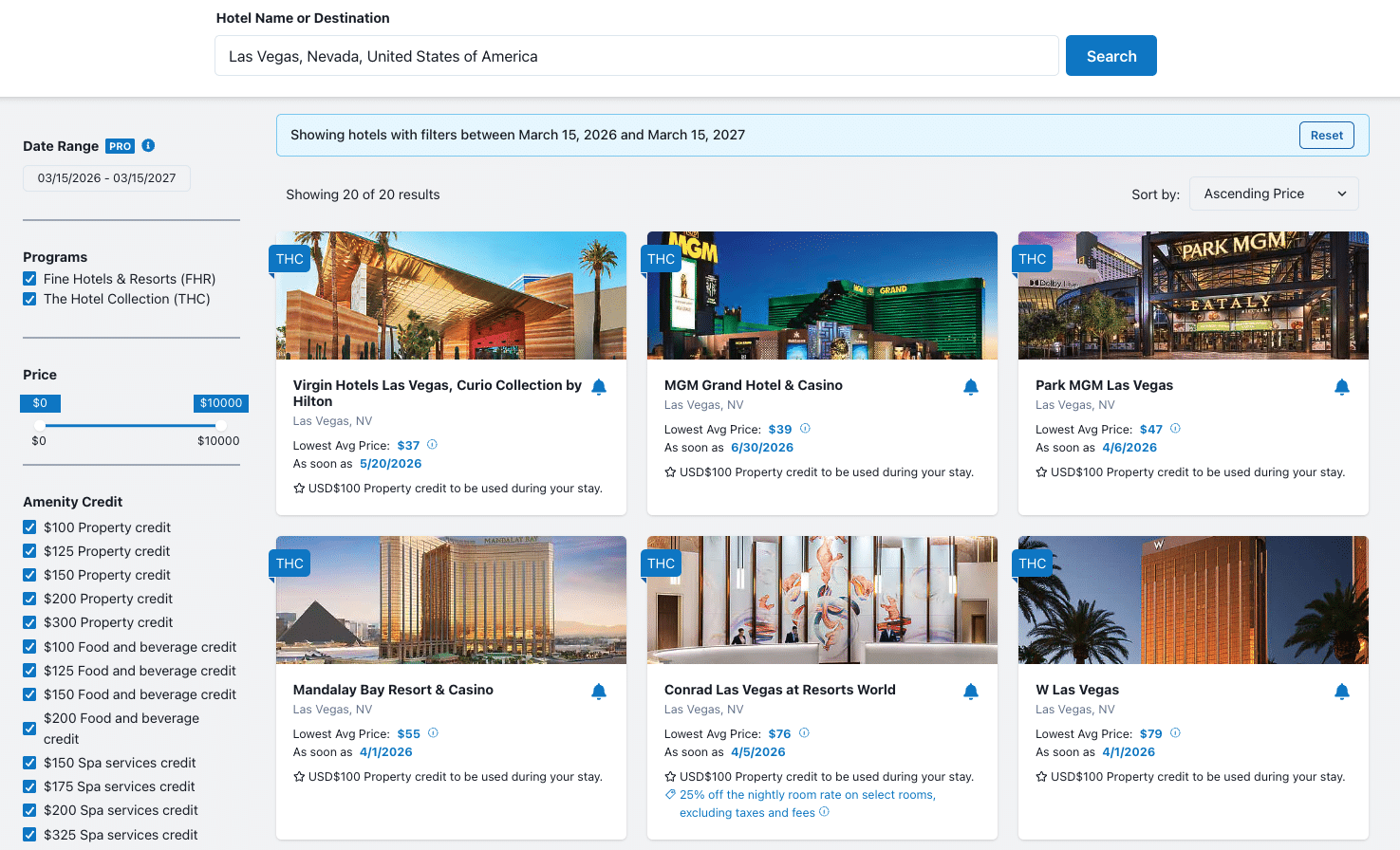
MaxFHR, on the other hand, focuses specifically on American Express’s Fine Hotels & Resorts program (FHR), aggregating FHR rates and benefits across properties to help you compare options efficiently. Since FHR benefits can vary significantly by property, having this information centralized saves hours of manual research.
Who Should Use MaxMyPoint and MaxFHR
MaxMyPoint is ideal for travelers who accumulate hotel points through credit card spending, transfers from flexible points programs, or frequent stays. If you’re sitting on a stash of World of Hyatt, Marriott Bonvoy, or Hilton Honors points and want to maximize their value, this tool is invaluable. It’s particularly applicable for those targeting high-demand properties where award space is scarce, such as luxury resorts in the Maldives or exclusive properties like Alila Ventana Big Sur.

MaxFHR caters to a different audience: travelers who prefer paid stays but want to ensure they’re getting exceptional value and benefits. If you hold an American Express Platinum Card and want to leverage your FHR booking privileges, MaxFHR helps you identify the best opportunities. It’s useful when you’re choosing between multiple properties in a destination and want to compare which offers the best combination of rate and amenities.
The American Express Platinum Card is a premium card that offers cardholders over $1,000 USD in annual statement credits and benefits.
Check out our American Express Platinum Card (US) review for more details.
80,000 Membership Rewards points
$12,000
$1,600+
$895
No
–
Many travelers use both tools. They might check MaxMyPoint first to see if award availability exists at a reasonable redemption rate, then compare against MaxFHR to see if a paid FHR booking might offer better overall value when factoring in the additional benefits like room upgrades, daily breakfast, and property credits.
Pricing Tiers and Membership Options
MaxMyPoint operates on a freemium model with three tiers: Member, Gold, and Platinum. The free or ‘Member’ plan allows one active alert that refreshes every six hours and provides 10 hotel detail views per day. This limited access works if you’re casually monitoring a single property, but serious award travelers will quickly find it restrictive.
| Member | Gold | Platinum | |
|---|---|---|---|
| Monthly Cost | FREE | $3.99 / month | $7.99 / month |
| Yearly Cost | FREE | $39.99 / year | $79.99 / year |
| Full refund in 3 days | N/A | ✅ | ✅ |
| SMS Alert | ❌ | ❌ | ✅ |
| Total Alerts | 1 | 10 | 25 |
| Any Day Alerts | 0 | 4 | 25 |
| Daily Change Alerts | 0 | 0 | 5 |
| Holiday Alerts | 0 | 0 | 5 |
| Alert Frequency | Every 6 hours | Every 3 hours | As soon as available |
| Hotel Detail Views | 10 per day | 20 per day | 50 per day |
| Refresh Calendar | 12 | 24 | 60 |
| Ads Free | ❌ | ✅ | ✅ |
| MaxFHR Alert (Beta) | 1 | 1 | 10 |
| MaxFHR Date Range Filter | ❌ | ❌ | ✅ |
The Gold membership costs $3.99 USD per month and unlocks 10 active alerts, including 4 any-day alerts. Alerts refresh every three hours, and you get 20 hotel detail views daily plus ad-free browsing. This tier works well for travelers who actively monitor several properties or destinations.
Platinum membership, priced at $7.99 USD monthly, is the ultimate option for power users. You receive 25 active alerts, 25 any-day alerts, 5 daily change alerts and 5 holiday alerts, with near real-time refreshes. The platform notifies you almost instantly when availability changes, giving you a competitive advantage for hard-to-book properties. You also get 50 hotel detail views daily, which can be useful if you’re comparing many properties across different destinations.
MaxFHR usage is included within the pricing tiers of MaxMyPoint. The Free and Gold tiers allocate you only 1 MaxFHR alert, whereas with the Platinum tier you get 10 alerts and access to the date range filter.
Let’s get into the specifics of what these different tools can do.
MaxMyPoint: Finding the Free Stay
How MaxMyPoint Works: The Basic Search Interface
The MaxMyPoint homepage presents a clean, intuitive search interface. The search box allows you to enter a specific property name or browse by location.
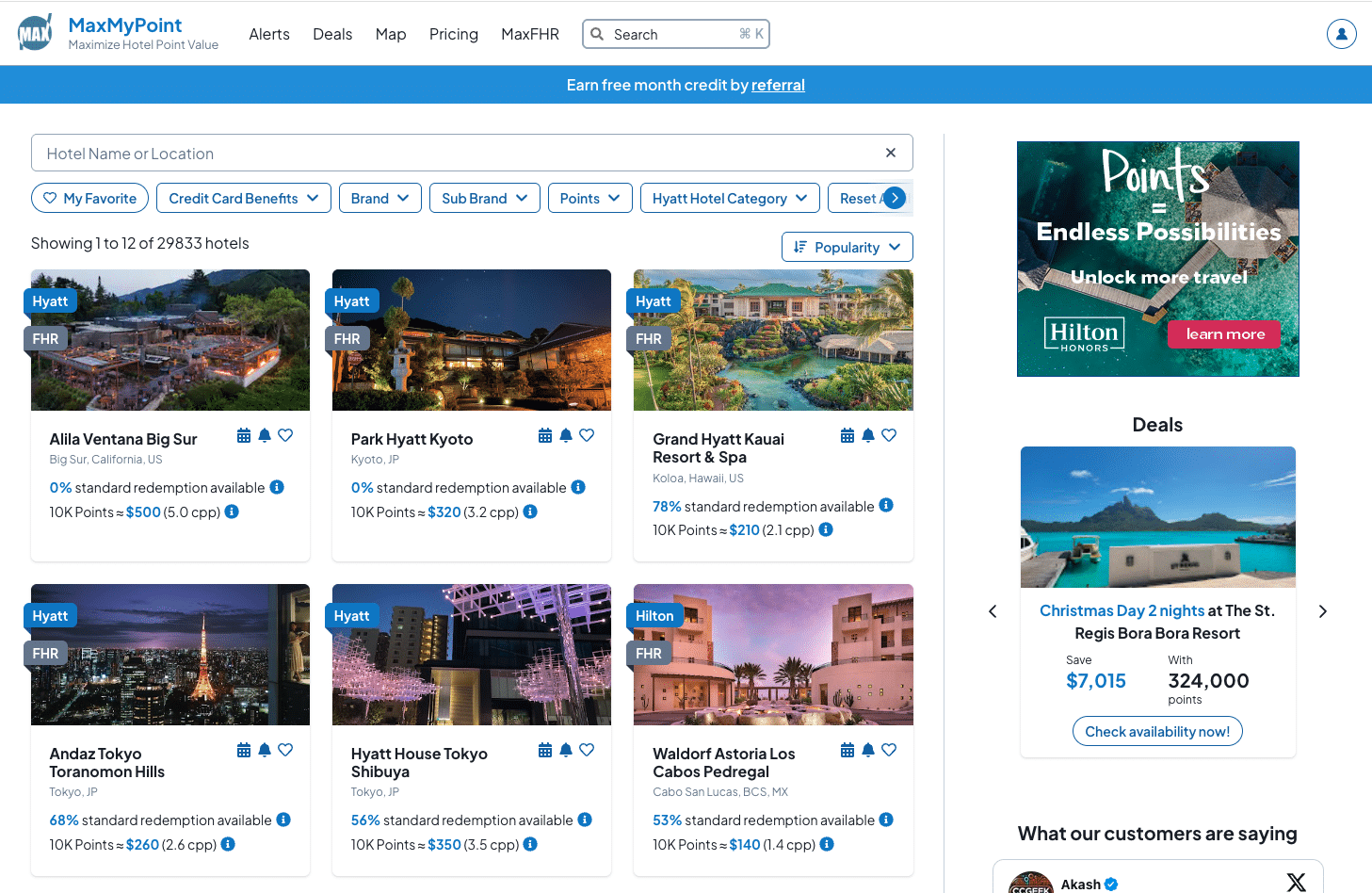
There are several filters available to fine tune your search results, including hotel brands such as Marriott Bonvoy, Hilton Honors, or World of Hyatt. You can also filter by sub-brands, which is helpful if you only want to see luxury properties like Park Hyatt or St. Regis, or if you want to exclude budget brands like Moxy or Tru by Hilton.
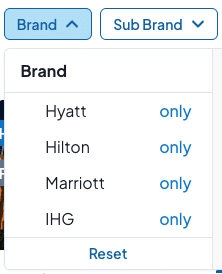
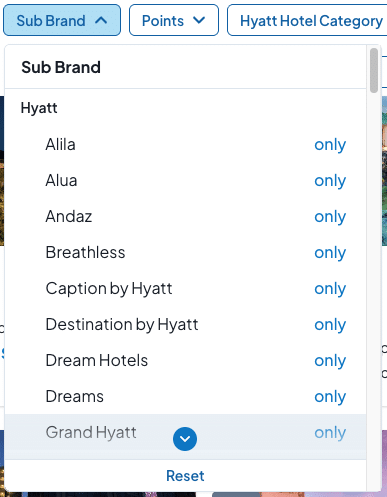
The other available filter options include:
- Favorites
- Credit Card Benefits
- Points Per Night
- Hyatt Hotel Category
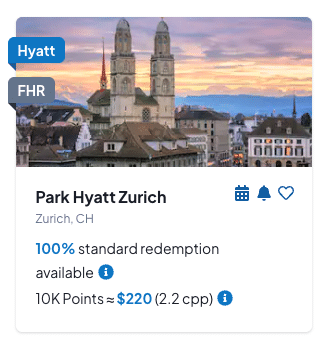
Once you search, results display with each hotel showing a percentage indicating how many nights over the next year have award availability. This percentage is incredibly revealing. A hotel showing 100% availability is likely easy to book, while a property showing 1% or less is either exceptionally popular or deliberately restricting award space.
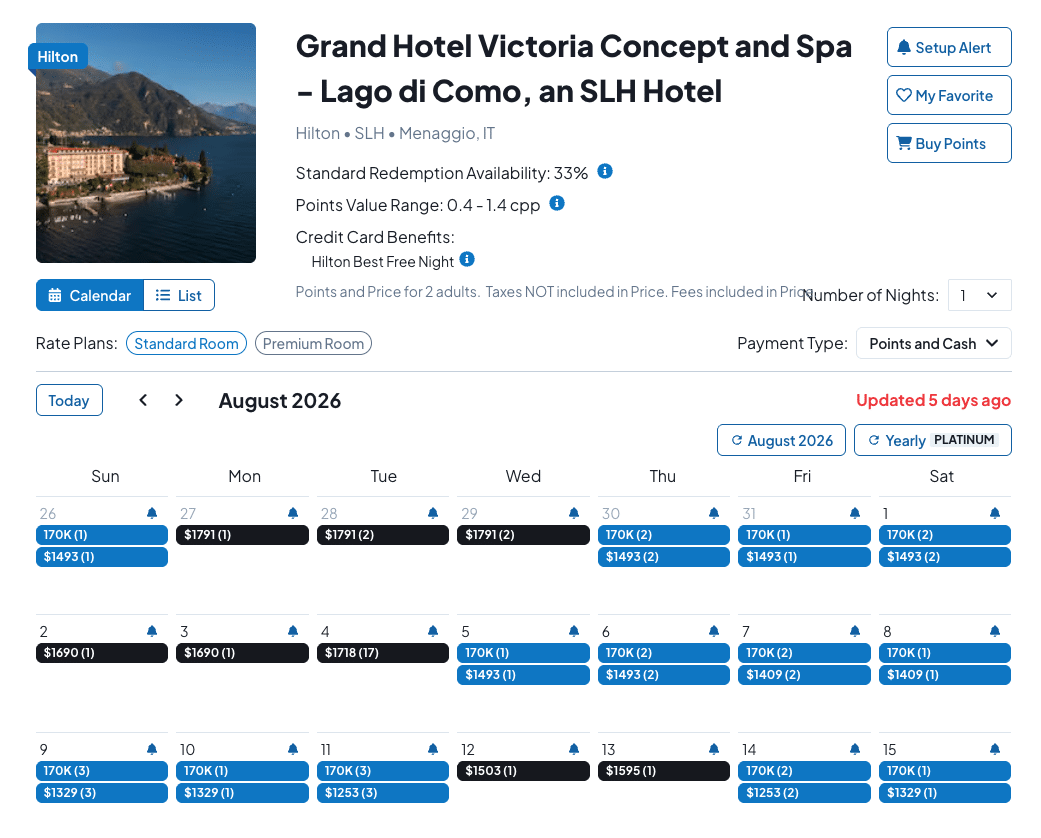
Clicking on any hotel name opens a detailed calendar view that displays the next 12-13 months of availability. This calendar is color-coded, with different shades representing different room types and award pricing tiers. At a glance, you can identify patterns in availability, spot blackout periods, and find windows of opportunity for bookings.
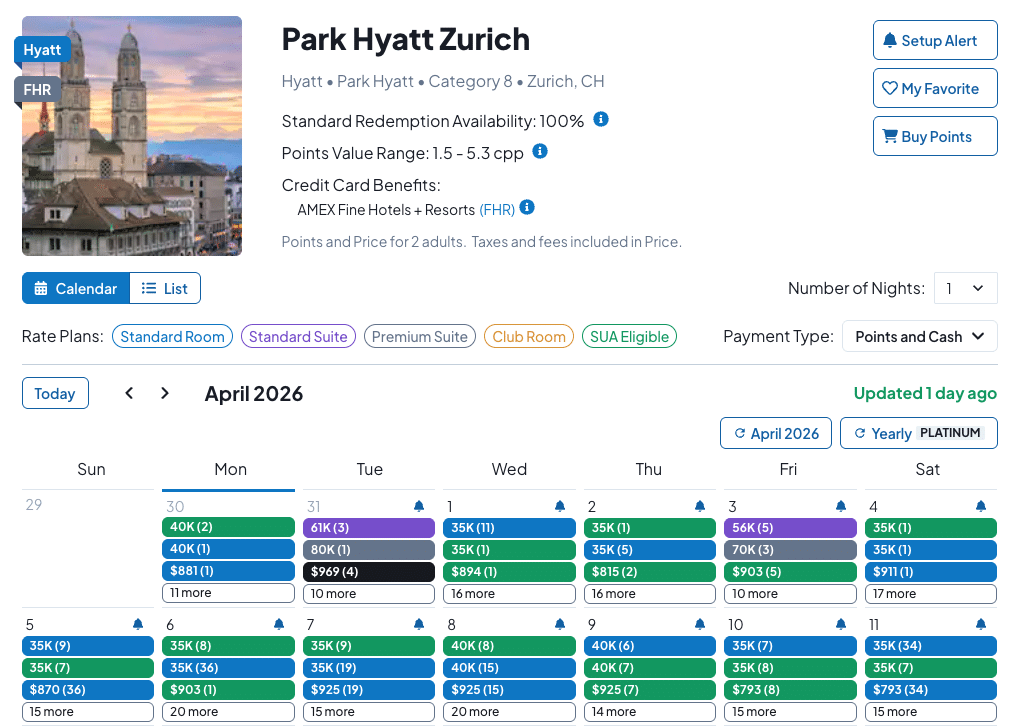
Note that opening up this view counts as a “hotel detail view”, of which you are only allowed to do 10 times per day with the free version of MaxMyPoint.
Supported Hotel Programs: Marriott Bonvoy, Hilton Honors, World of Hyatt, & IHG One Rewards
MaxMyPoint currently supports the three largest hotel loyalty programs in North America, each with its own nuances that affect how you should use the tool.
World of Hyatt maintains a published award chart with fixed redemption rates for standard rooms, though peak and off-peak pricing can vary by 5,000-10,000 points per night at many properties (though pricing will be changing from three to five tiers come May 2026). At present, Hyatt’s consistency makes redemptions particularly valuable, and MaxMyPoint excels at finding the rare award availability at sought-after properties. Since Hyatt guarantees standard room availability whenever standard rooms are bookable with cash, MaxMyPoint helps you identify when hotels are manipulating their room inventory to restrict points bookings.
Marriott Bonvoy uses dynamic award pricing, meaning the points required for a night can fluctuate dramatically based on demand and cash rates. MaxMyPoint tracks these price changes over time, allowing you to spot trends and book when rates dip. The calendar view shows point requirements ranging from standard to peak pricing, and you can set alerts to notify you when prices drop below your target threshold.
Hilton Honors also employs dynamic pricing, often with even wider point swings than Marriott. A hotel room might cost 40,000 points one week and 95,000 points the next. MaxMyPoint’s historical data becomes invaluable here, helping you understand whether current pricing is reasonable or inflated.
MaxMyPoint also recently added support for IHG branded hotels, which utilize fully dynamic award pricing similar to Hilton and Marriott.
Understanding the Calendar View: Points Required and Award Availability
The calendar view is MaxMyPoint’s most powerful feature, presenting a wealth of information in an easily digestible format. Each date shows the minimum points required for a booking, the corresponding cash rate, and availability status. Different colors indicate different room categories, from standard rooms to suites.

When viewing a World of Hyatt property, you’ll see standard, off-peak, and peak award pricing clearly distinguished. For a property like the Hyatt Regency Maui, you might see dates requiring 25,000 points (off-peak), 29,000 points (standard), or 33,000 points (peak). This transparency helps you choose the most economical dates for your stay.
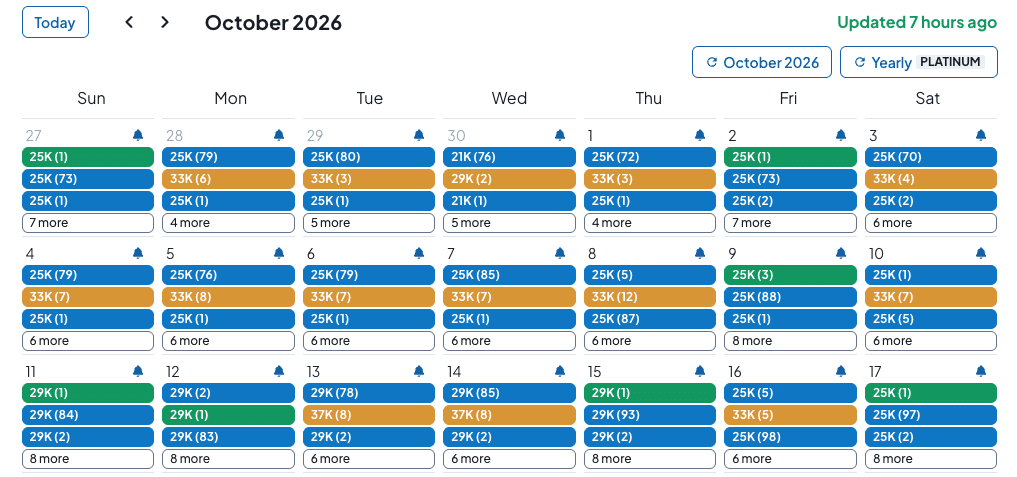
The cash rates displayed alongside points requirements enable quick value calculations. If a night costs 50,000 points or $350 in cash, you’re getting 0.7 cents per point in value. But if another date shows 40,000 points or $400 cash, you’re getting 1 cent per point, a significantly better redemption. The platform even calculates and displays the cents-per-point range for each property, giving you a quick value assessment.
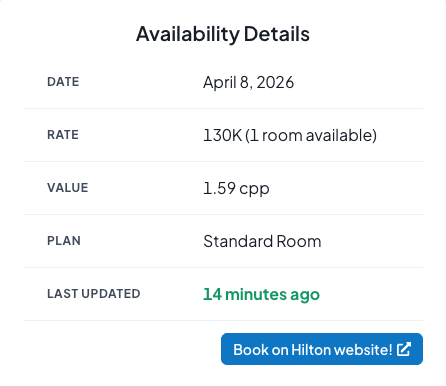
You can view specific details of the availability by clicking on the individual rate bars. This is where you can see the rate, how many rooms are available, the CPP value, and the room type (eg Standard).
Pay attention to the “Updated” timestamp at the top right of the calendar. Popular properties refresh daily, but less frequently searched hotels might show data that’s a few days or weeks old. If the data isn’t current and you’re making a time-sensitive decision, setting an alert ensures you get real-time updates.
You can also refresh the calendar if it hasn’t been updated for a while, but be mindful of your quota depending on your plan.
Setting Up Award Availability Alerts
The alert system is where MaxMyPoint transforms from a useful search tool into an indispensable booking companion. To set an alert, click the bell icon next to any hotel in your search results. This opens the alert configuration screen where you can customize several parameters.
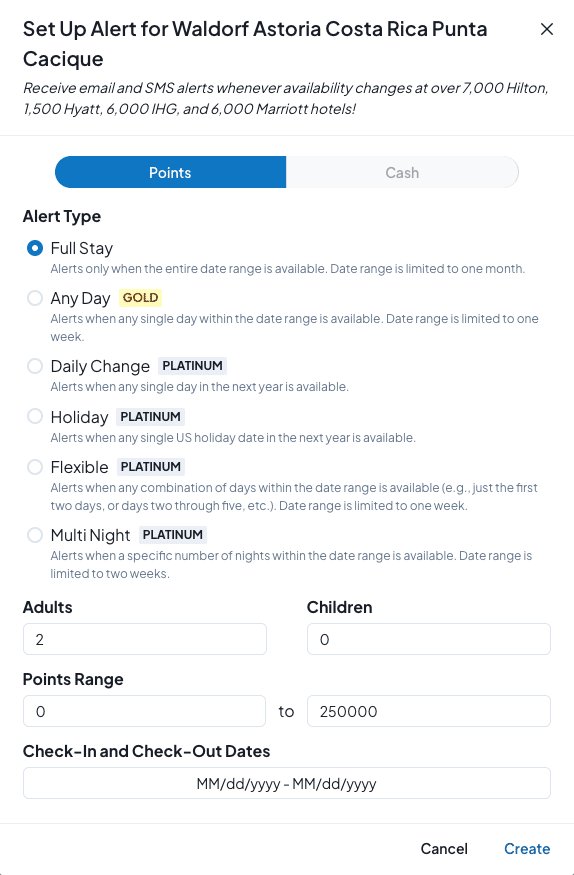
Full Stay alerts monitor your entire date range and notify you when the average cost for all nights falls below your specified points threshold. This works well when you have firm dates and want to book a complete stay. For example, if you want a five-night stay at the Park Hyatt Maldives averaging no more than 40,000 points per night, a Full Stay alert will notify you when this condition is met.
Any Day alerts are perfect for flexibility. Instead of monitoring a complete stay, the system notifies you if any single night within your date range becomes available below your threshold. This is invaluable for highly competitive properties where you might need to grab a single night first, then add additional nights as they become available.
Daily Change alerts don’t require specific dates at all. The system simply notifies you whenever standard award availability appears at the property, regardless of when. If you’re flexible and just want to visit a particular hotel sometime in the next year, this alert type keeps you informed of all opportunities.
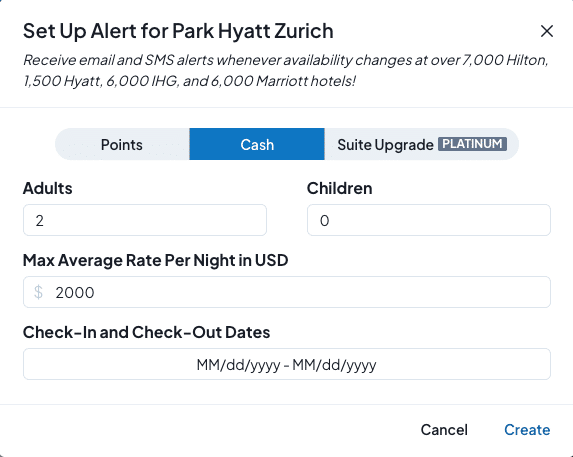
For Marriott and Hyatt properties, you can also set cash price alerts. This feature monitors the paid rate and notifies you if prices drop below your target. Combined with flexible cancellation policies, this allows you to book now and rebook later if prices improve, a strategy that can save hundreds of dollars on longer stays.
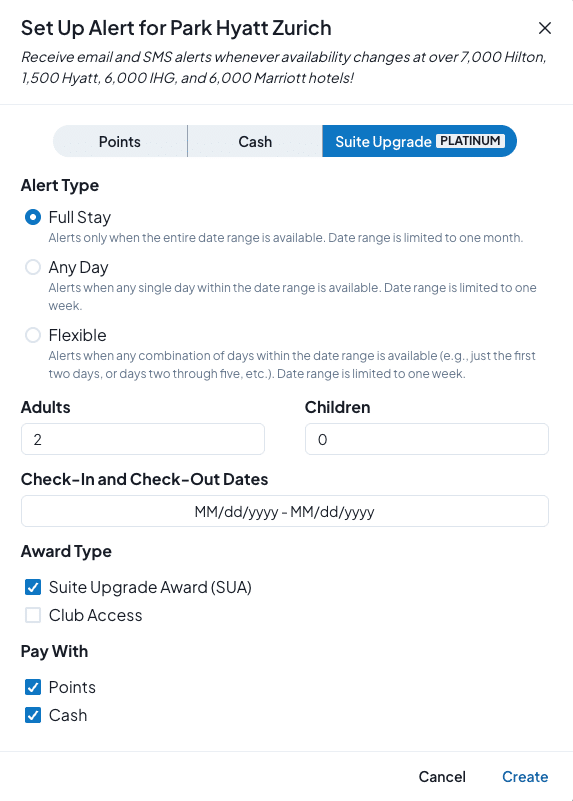
As a Platinum subscriber, you can also set Suite Upgrade alerts for World of Hyatt properties. If you’re a Globalist member sitting on suite upgrade awards (SUAs), MaxMyPoint can notify you when suite award availability opens at your target property. Since suite availability is often even more restricted than standard room awards, these alerts are particularly valuable for high-demand properties where suites disappear quickly. This takes much of the manual legwork out of burning those hard-earned upgrade certificates before they expire.

I’ve also recently noticed a new alert feature for Platinum subscribers, seemingly only available on Marriott properties, where you can configure a cash alert with corporate or promo codes. This could come in very useful for those with access to such codes, industry rates, or similar.
Best Use Cases for World of Hyatt Properties
World of Hyatt properties are where MaxMyPoint truly shines, largely because of how certain hotels manipulate award availability. Many Hyatt properties, particularly in Hawaii and other resort destinations, have learned to game the system by restricting standard room inventory or implementing minimum stay requirements during peak periods.
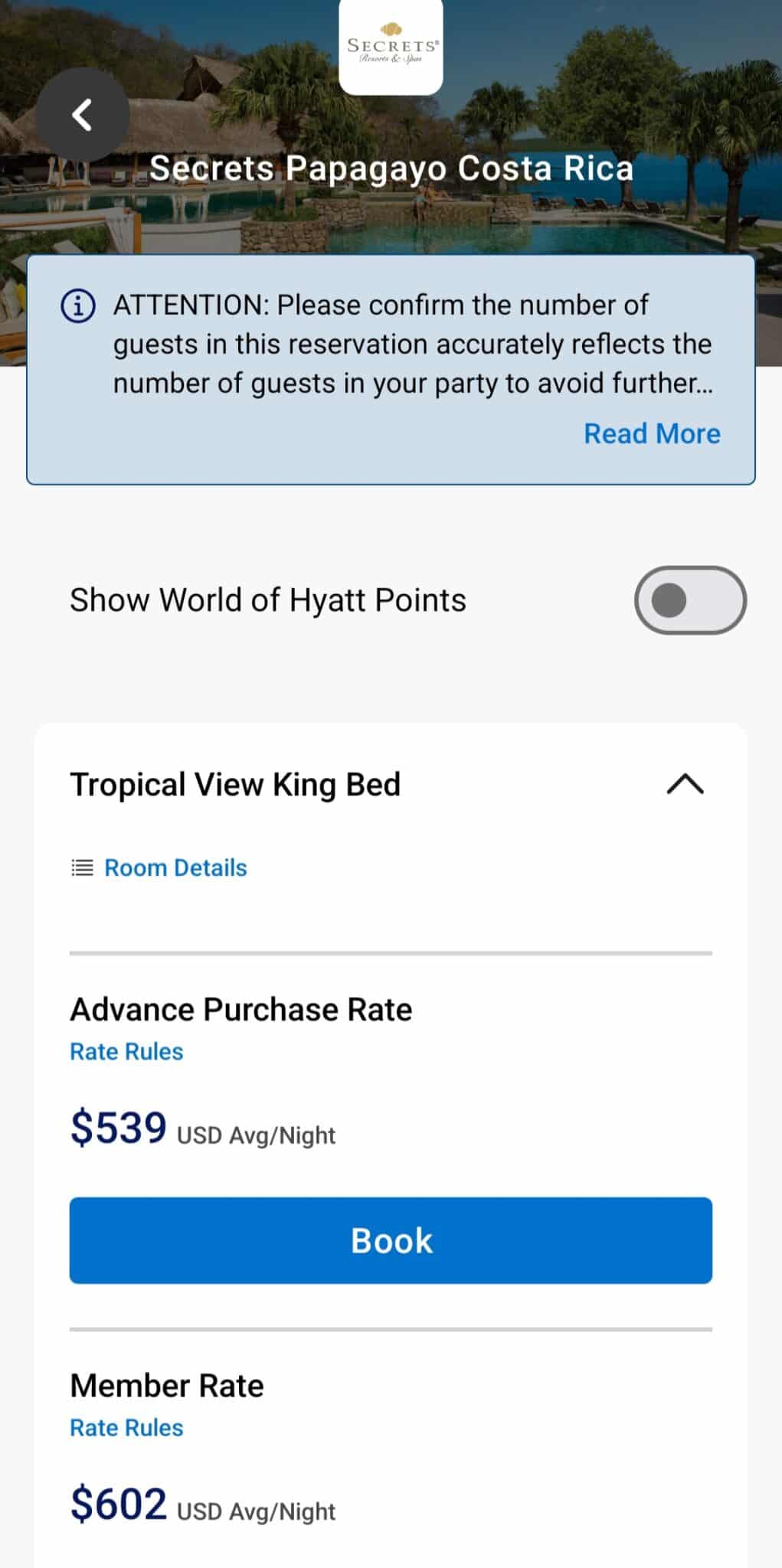
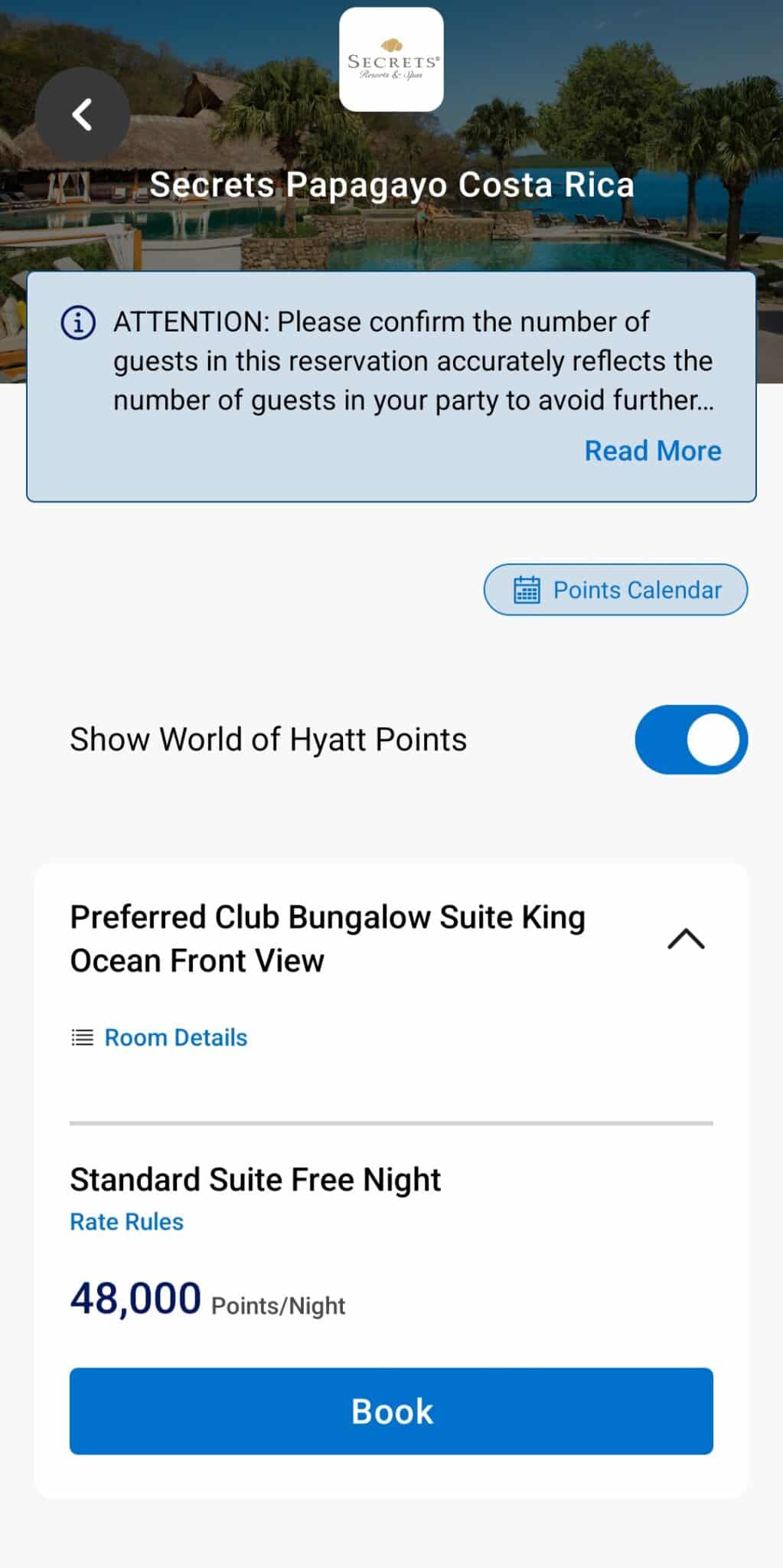
Take the Secrets Papagayo Costa Rica all-inclusive resort as an example. MaxMyPoint reveals that this property shows standard award availability only 0.1% of nights over the next year. This isn’t due to overwhelming demand, but rather a deliberate strategy to minimize points bookings. The calendar view exposes this manipulation clearly, showing that only standard suites are available to book on points even though standard rooms are available at standard member cash rates throughout August.
MaxMyPoint helps you work around these restrictions by identifying the small windows when award space does open. Set up alerts for your target properties, and you’ll be notified within hours when availability appears. For truly competitive properties like Calala Island in Nicaragua or the Alila Ventana Big Sur, this early notification can mean the difference between booking your dream stay and missing out entirely.
The tool also excels at finding hidden value. Some Hyatt properties consistently offer excellent award availability and redemption rates but aren’t well-known. By browsing the full property list sorted by cents-per-point value, you can discover hidden gems that deliver outsized value for your points.
Tracking Dynamic Pricing for Marriott and Hilton
Dynamic pricing at Marriott and Hilton means constant vigilance is required to find good value. Award costs can change daily, sometimes even multiple times per day, based on demand forecasting algorithms. MaxMyPoint’s tracking and alert systems help you navigate this volatility.
For Marriott properties, you’ll often see point requirements that closely track cash rates. A $200 night might cost 40,000 points, while a $400 night costs 80,000 points. This correlation makes the cents-per-point calculation crucial. Sometimes you’ll find anomalies where the points price hasn’t caught up to a cash price increase, or vice versa, creating opportunities for exceptional value.
The Waldorf Astoria Costa Rica Punta Cacique demonstrates the power of tracking Hilton’s dynamic pricing. This ultra-luxury property can cost anywhere from 112,000 to over 140,000 points per night depending on the date. By setting an alert at 115,000 points, you can wait for off-peak dates when availability opens at the lower rate, potentially saving nearly 30,000+ points per night.

Historical data becomes particularly valuable for understanding price patterns. If you notice that a Marriott property typically drops to 35,000 points during your target travel month, but it’s currently priced at 50,000 points, you can set an alert and wait for the price to normalize. This patience, informed by data, regularly results in savings of 30-40% on award bookings.
The Hotel Map Feature: Finding Properties by Location
The beta Map feature adds a geographic dimension to your hotel search. Instead of searching for specific properties, you can explore what’s available in a region, still with the ability to filter by brand and sort by value metrics. This map view creates a very similar interface to the hotel award search tool: Awayz.
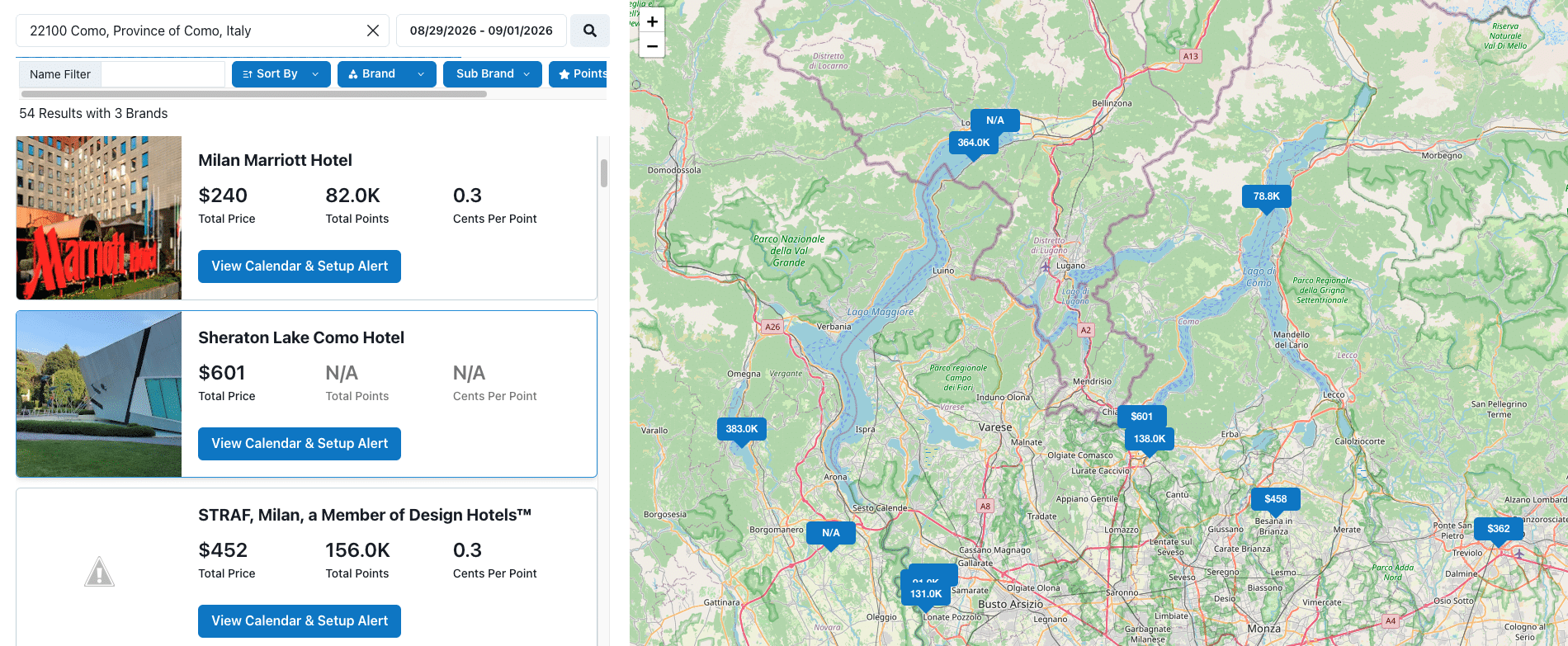
The map displays hotels as pins, with each showing either the redemption cost in points or the maximum cents-per-point value available at that property. This visualization makes it easy to compare multiple properties in a single destination and identify which offers the best value for your points.
Suppose you’re planning a trip to Tokyo and want to stay near Disneyland. The map reveals three hotels: the Hyatt Regency Tokyo Bay, Hilton Tokyo Bay, and Sheraton Grande Tokyo Bay Hotel. At a glance, you can see that while the Hyatt offers the best redemption value per point, the Hilton and Sheraton are significantly closer to the park entrance, which might justify their slightly lower value given the time and transportation costs saved.
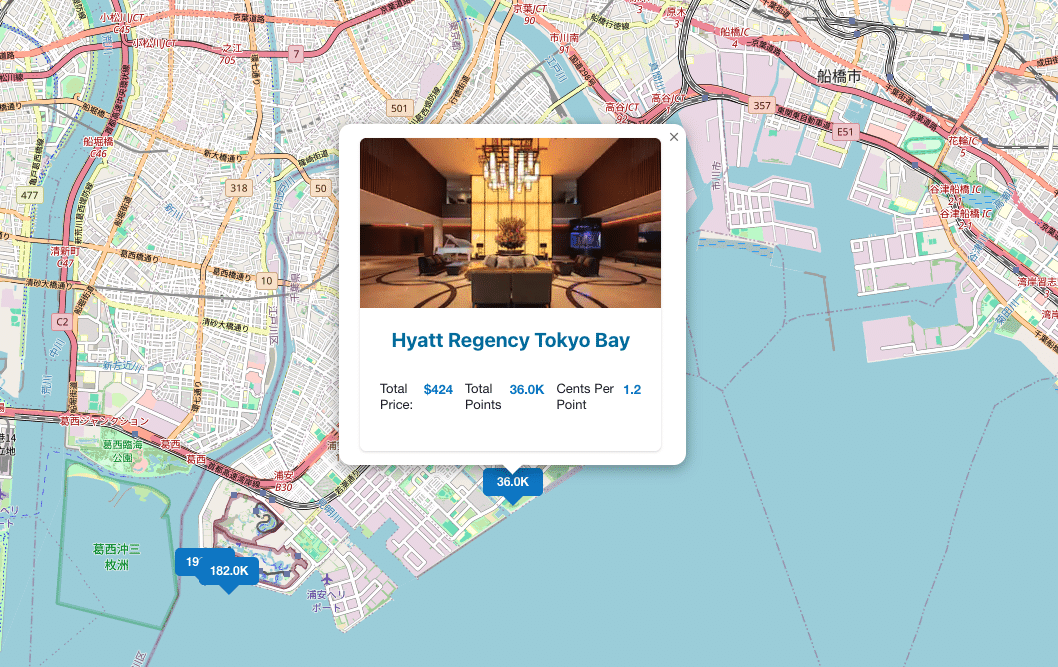
The map also helps with spontaneous travel planning. You can zoom into a region you’re interested in visiting and see which points-bookable properties are nearby. Filter by sub-brands to find only luxury properties, or expand the search to include all options. This geographic approach often reveals hotel options you might not have considered when searching by name alone.
One limitation to note: the map displays general value information but not real-time availability. You’ll still need to click through to the calendar view to confirm that award space exists for your specific dates. Think of the map as a discovery tool that narrows your options before you dive into detailed availability checking.
Current Limitations to Be Aware Of
While MaxMyPoint is powerful, it has several limitations worth understanding. The most significant is that it doesn’t track minimum stay requirements. Some hotels, particularly resort properties, require multi-night stays for award bookings, especially on weekends or during peak seasons. MaxMyPoint might show availability for a Saturday night, but when you go to book, the property requires a three-night minimum that includes Friday and Sunday. Always verify minimum stay requirements directly on the hotel website or by calling before assuming you can book the nights shown as available on MaxMyPoint.
Data freshness varies by property. Hot hotels with the flame icon refresh daily, ensuring you have current information. But less popular properties might update only weekly or monthly. Always check the “Last Updated” timestamp before making decisions based on MaxMyPoint data, especially for time-sensitive bookings.
The platform also doesn’t account for all award booking restrictions. Some World of Hyatt properties, particularly Destination by Hyatt and certain Inclusive Collection resorts, have capacity controls that limit the number of award stays available even when standard rooms are bookable with cash. MaxMyPoint can’t detect these invisible restrictions.
Suite availability can be tricky to interpret. While MaxMyPoint shows different room categories in different colors on the calendar, it doesn’t always clearly distinguish which color represents which room type. When suite availability is important to you, always cross-reference with the hotel’s official website to confirm exactly which room types are bookable with points.
Finally, remember that MaxMyPoint shows the minimum points required, which typically means the entry-level room category. If you want to book a premium room type or suite, the actual cost might be higher than displayed. Some properties, like the Ritz-Carlton New York Central Park, only offer their smallest rooms for award bookings, with suites requiring significantly more points or not being bookable with points at all.
MaxFHR: Maximizing the Paid Stay
What is Fine Hotels & Resorts (FHR)?
Fine Hotels & Resorts (FHR) is American Express’s luxury hotel booking program available to Platinum and Centurion cardholders. Unlike regular hotel bookings, FHR reservations include a suite of valuable benefits that can transform a good stay into an exceptional one.
Every FHR booking includes:
- Room upgrade upon arrival, subject to availability.
- Daily breakfast for two
- A hotel credit, typically $100, though some hotels offer $75 and others extend credits of $200 or more.
- Additional benefits: Guaranteed 4 PM late checkout and noon check-in when available
Many properties also add unique perks like welcome amenities, spa credits, or dining discounts that go beyond the standard FHR benefits package.
Read more: Definitive Guide to American Express Fine Hotels & Resorts
American Express Platinum (US) and American Express Business Platinum (US) cardholders also have access to an annual $300 hotel credit that can be applied toward eligible FHR bookings. When you factor in this credit alongside the daily breakfast, room upgrade, and property credit, the net cost of an FHR booking can drop dramatically, making a premium cash stay genuinely competitive with, or even better value than, a points redemption.
Read more: How to Maximize the Amex $300 Hotel Credit
How MaxFHR Finds the Best FHR Deals
MaxFHR aggregates FHR rates and benefits across properties, allowing you to compare options efficiently rather than visiting each hotel’s listing individually on the Amex Travel portal. The platform tracks not just the nightly rate but also the total value package including all benefits.
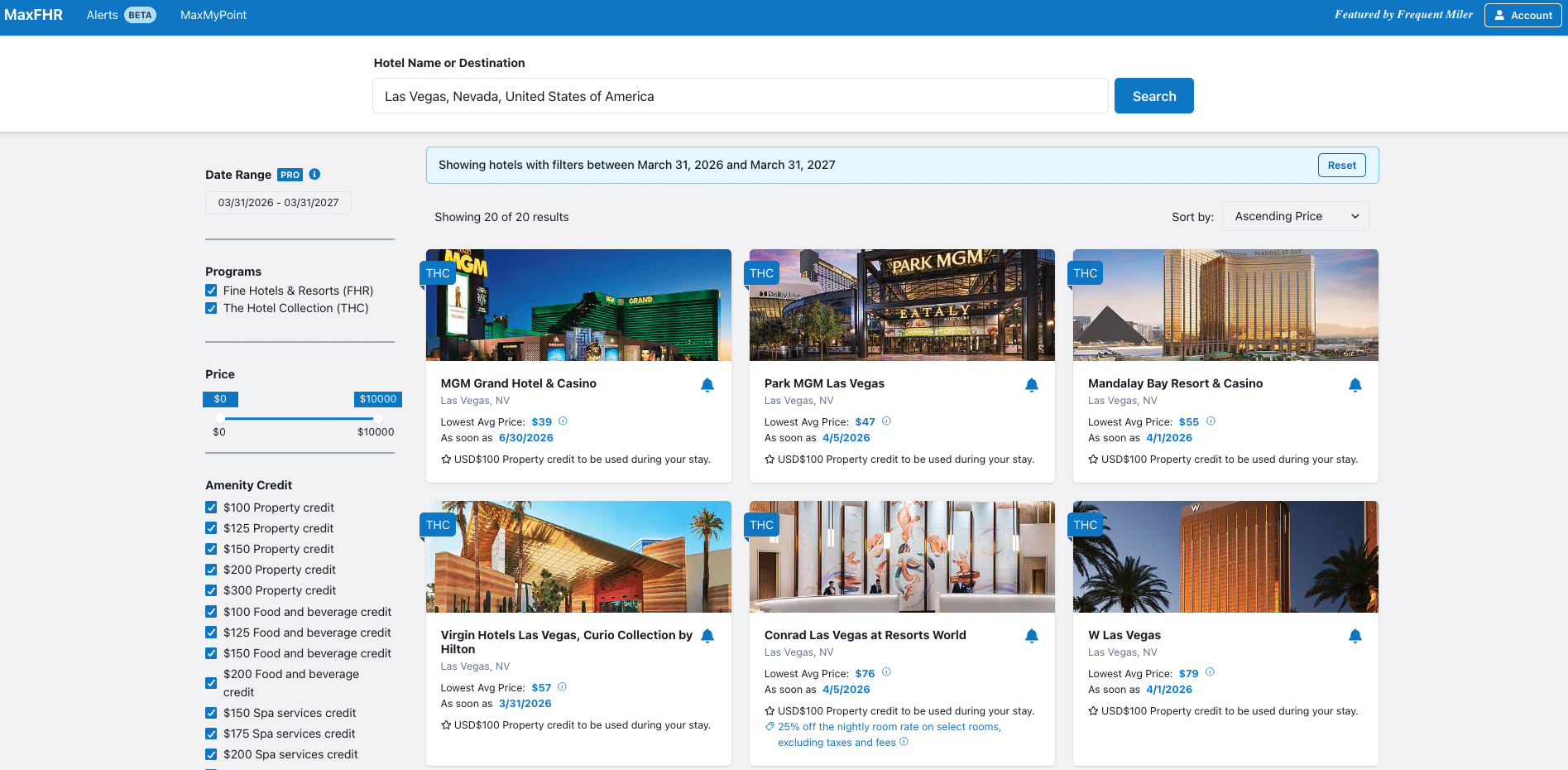
The tool helps you calculate the true cost of your stay after accounting for benefits. If a hotel charges $500 per night FHR versus $450 for a standard rate, but includes $160 in breakfast value and a $100 property credit, your net cost is actually $240 per night FHR versus $450 standard. This is a massive difference that isn’t immediately obvious when comparing rates alone.
MaxFHR also identifies properties where FHR rates are competitive with or even lower than standard flexible rates while still including all benefits. This happens more often than you might expect, particularly during shoulder seasons or when hotels are running promotions. In these cases, booking FHR is a no-brainer, as you pay the same or less while receiving significantly enhanced benefits.
The platform’s filtering capabilities help you find properties that match your preferences. You can filter by:
- Program (Fine Hotels & Resorts or The Hotel Collection)
- Region
- Hotel Brand
- Total Price
This is especially useful when you’re flexible on exactly which hotel to book but want to ensure you’re maximizing the value of FHR benefits.
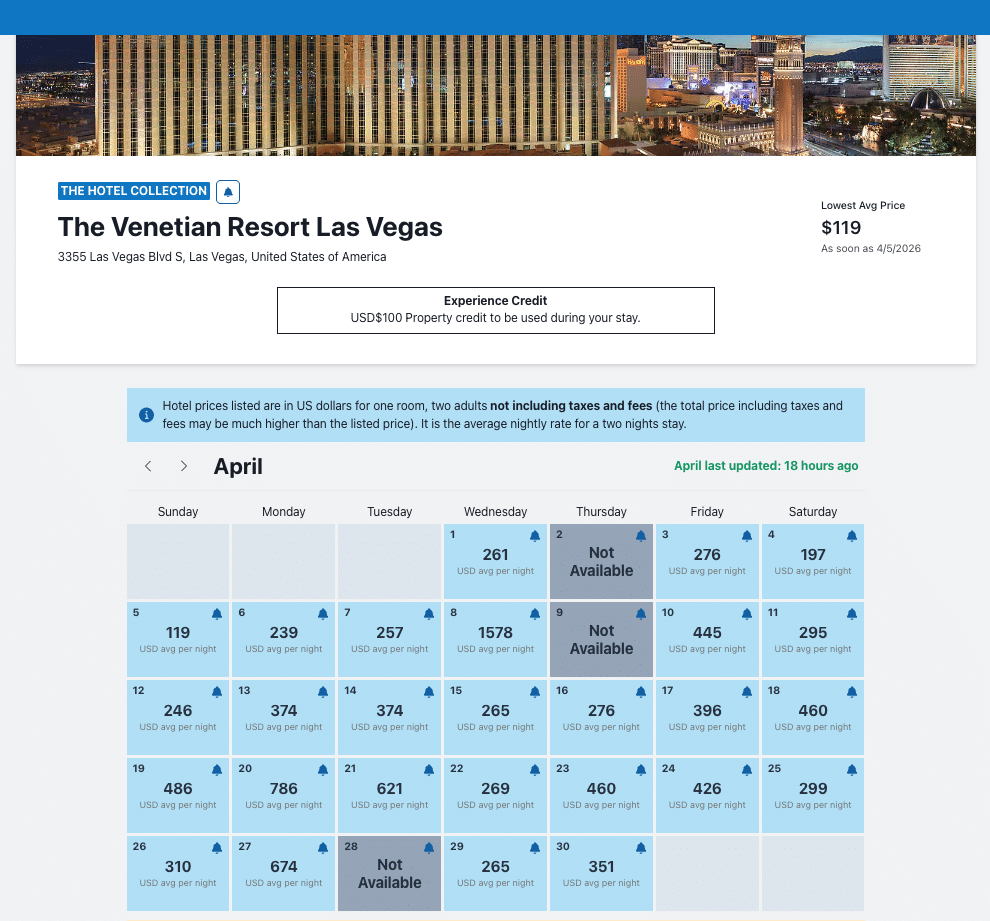
When you’re interested in a particular hotel, you can click through to go to the hotel detail page which will list the experience credit value and show a calendar view with rates, much the same as MaxMyPoint.
Setting Price Alerts for Premium Hotel Stays
Like MaxMyPoint’s award availability alerts, MaxFHR offers price monitoring for FHR bookings. These alerts notify you when rates drop below your specified threshold, allowing you to book at optimal times or rebook existing reservations at lower rates.
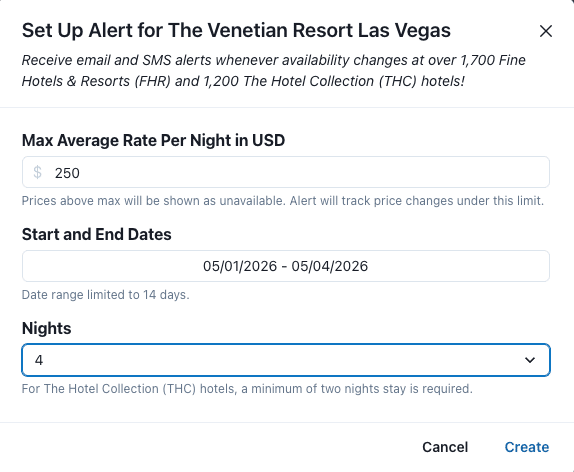
Price volatility exists even in the FHR program. A property might offer an FHR rate of $600 per night today and $450 in two weeks due to changes in demand forecasting or competitive dynamics. By setting alerts, you can wait for rates to reach your target price before committing.
The rebooking strategy works well with FHR bookings since they typically offer free cancellation up until a few days before arrival. If you book at $600 per night but receive an alert that rates have dropped to $500, you can cancel and rebook, saving $100 per night. For a four-night stay, that’s $400 in savings for a few minutes of effort.
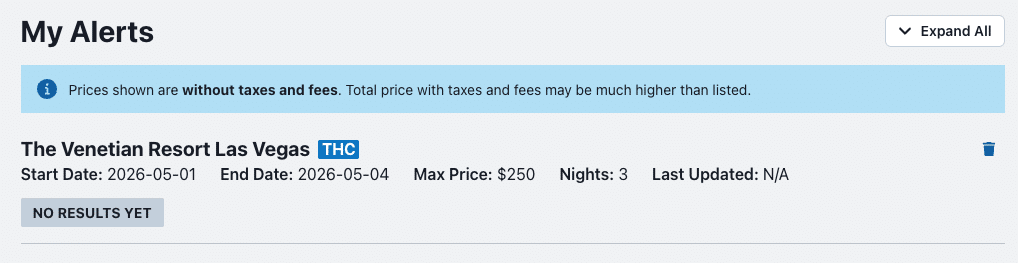
Alerts are particularly valuable when you have flexible travel dates. Instead of committing to specific dates immediately, you can set alerts for a range of dates and book when rates are lowest. This flexibility often results in 20-30% savings compared to booking fixed dates at current pricing.
When to Book FHR vs Award Stays — And How to Use Both Tools Together
The choice between FHR and award bookings isn’t always obvious and requires careful analysis of multiple factors. But using MaxMyPoint and MaxFHR in tandem gives you everything you need to make the right call.
Start by identifying your target property and dates, then check award availability and pricing on MaxMyPoint. Calculate the opportunity cost of your points: if you value World of Hyatt points at 1.5 cents each and a booking requires 30,000 points, that’s an opportunity cost of $450. Next, check the same property on MaxFHR to see FHR rates and benefits. If FHR costs $600 with $200 in benefits, your net cost is $400 — making it cheaper than the award stay while still earning points and elite night credits.
Consider your points balance and earning potential. If you’re sitting on hundreds of thousands of points with no immediate redemption plans, using points makes sense. But if you have a major aspirational redemption on the horizon, preserving points and booking FHR might be smarter. Also keep elite status in mind. FHR bookings can stack with your hotel loyalty status benefits. As long as you enter your loyalty number when making the reservation, you’ll be eligible to receive elite perks on top of the standard FHR benefits.
If you’re not ready to book immediately, set alerts in both systems and monitor how award availability and FHR rates evolve. This patience consistently yields better value than booking at the first available opportunity. You can also consider a hybrid approach within a single trip — using points for expensive weekend nights when cash rates are high, then switching to FHR for weeknights when rates are lower and benefits make cash bookings more attractive.


Ultimately, the best booking isn’t always the one with the lowest cost or highest points value. By mastering both tools, you’ll transform hotel booking from a frustrating, time-consuming task into a strategic advantage that consistently delivers exceptional value and memorable stays.
Conclusion
MaxMyPoint and MaxFHR take the guesswork out of hotel booking by putting the right data at your fingertips. Whether you’re hunting for award availability at an elusive Hyatt resort, tracking dynamic pricing swings on Marriott and Hilton redemptions, or weighing an FHR booking against a points stay, these two tools work best when used together. Set your alerts, let the data guide your decisions, and you’ll find yourself unlocking more value from every hotel booking!

Reed Sutton
Latest posts by Reed Sutton (see all)
- Rogers Red Credit Cards: Changes Inbound - Aug 18, 2026
- Review: The Brown Palace Hotel and Spa, Autograph Collection - Aug 12, 2026
- Earn up to 70,000 WestJet Points & $125 FlyerFunds! - Aug 9, 2026
- LIMITED TIME OFFER: BMO Ascend World Elite®* Mastercard®* - Aug 2, 2026
- Win a $500 Porter Airlines e-Gift Card from Frugal Flyer - Aug 1, 2026