
Points and miles are powerful tools — but they’re not always the right tool for the job. While it’s tempting to reach for your points balance at every checkout, doing so without a strategy can quietly erode the value you’ve worked hard to build. The truth is, knowing when not to use points is just as important as knowing how to earn them. From holiday sales to off-peak flights, let’s take a look at the scenarios where paying cash will actually leave you better off.
Understanding the Points vs. Cash Decision
Redeeming points comes down to one simple rule: the value you get from a redemption should exceed what you’d pay in cash. We’ve covered this in depth in our guide to how much loyalty program points are worth.
For example, American Express Membership Rewards in Canada are worth approximately 2 cents per point, mainly from American Express’ transfer program partners including Air Canada Aeroplan, British Airways Avios, and Marriott Bonvoy. Redemptions through these programs can often exceed the 2 cents per point value, especially for long-haul international premium bookings. These are much more valuable, and flexible, compared to using American Express’ statement credit redemption rates of 1 cent per point.
However, there are cases where paying for purchases with cash will be worthwhile versus using your points. For example, during a low flight season such as mid to late January, typically, cash will be better for purchasing these flights. Let’s go through some scenarios where paying cash will be more valuable than spending those hard-earned points!
When Retail Deals Beat Points Redemptions
Season Sales and Holiday Promotions
Retail offers are probably one of the more predictable times when spending cash would be better than using your points. Holidays such as Black Friday and Boxing Day typically see the best cash deals versus redeeming points, with additional earning multipliers if you shop online through portals such as the Aeroplan eStore and Rakuten. Other seasonal events where retail offers might outweigh redemptions would be end of summer sales and back-to-school events. If you’re looking for the best discounts, you might have to consult sources beyond a retailer, where online forums and social media can play a role in getting the best bang for your buck.
Exclusive Membership Programs
Some retailers may have their own exclusive memberships, where customers can pay for a subscription-like program, offered to unlock VIP tiered deals that you otherwise couldn’t get.
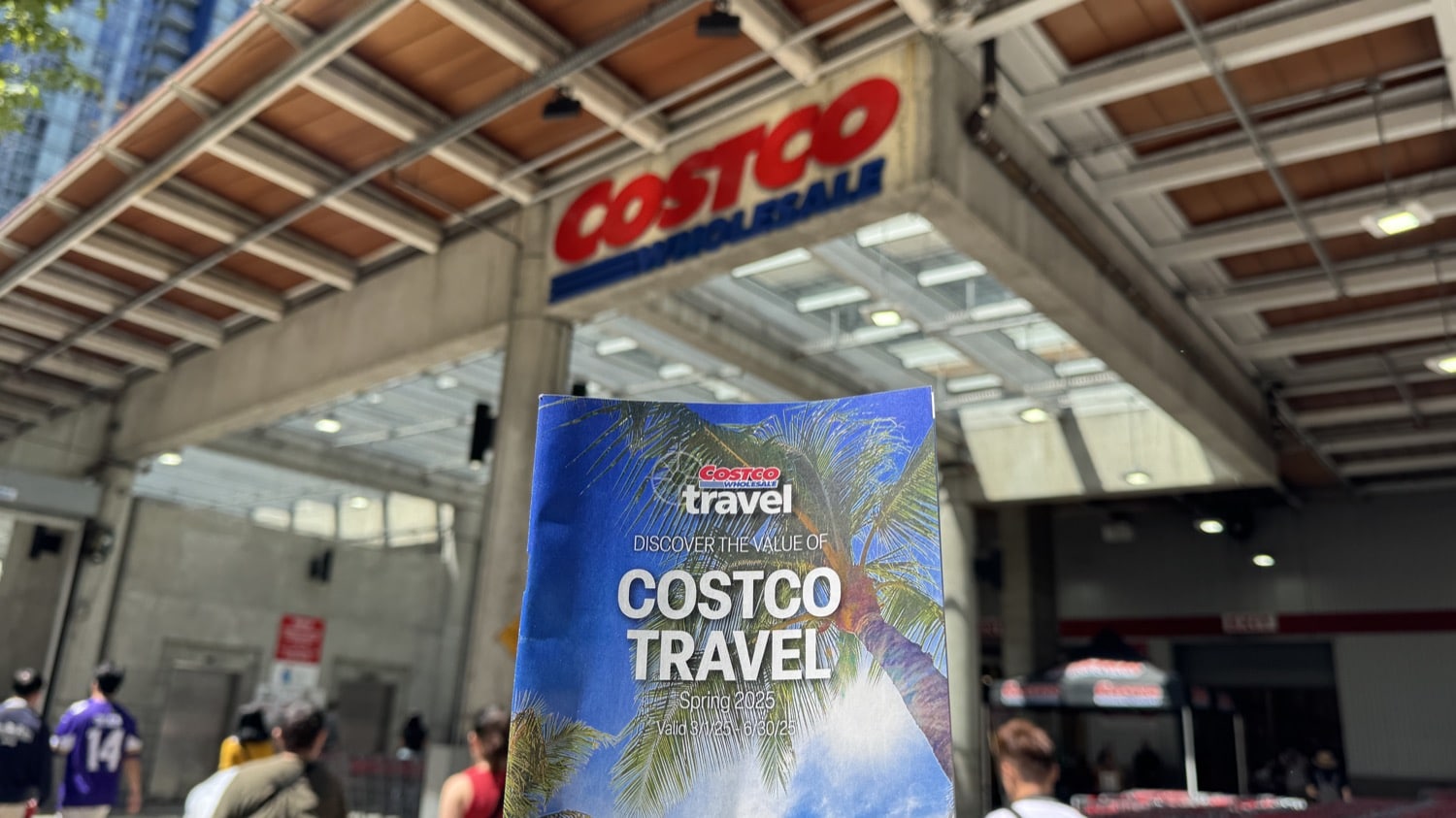
One of the most well-known retailers to do this is Costco, where its wholesale deals and bulk inventory typically beat the average grocery store in terms of pricing. You can save even more when you can find items that are on sale or marked down after being discontinued!
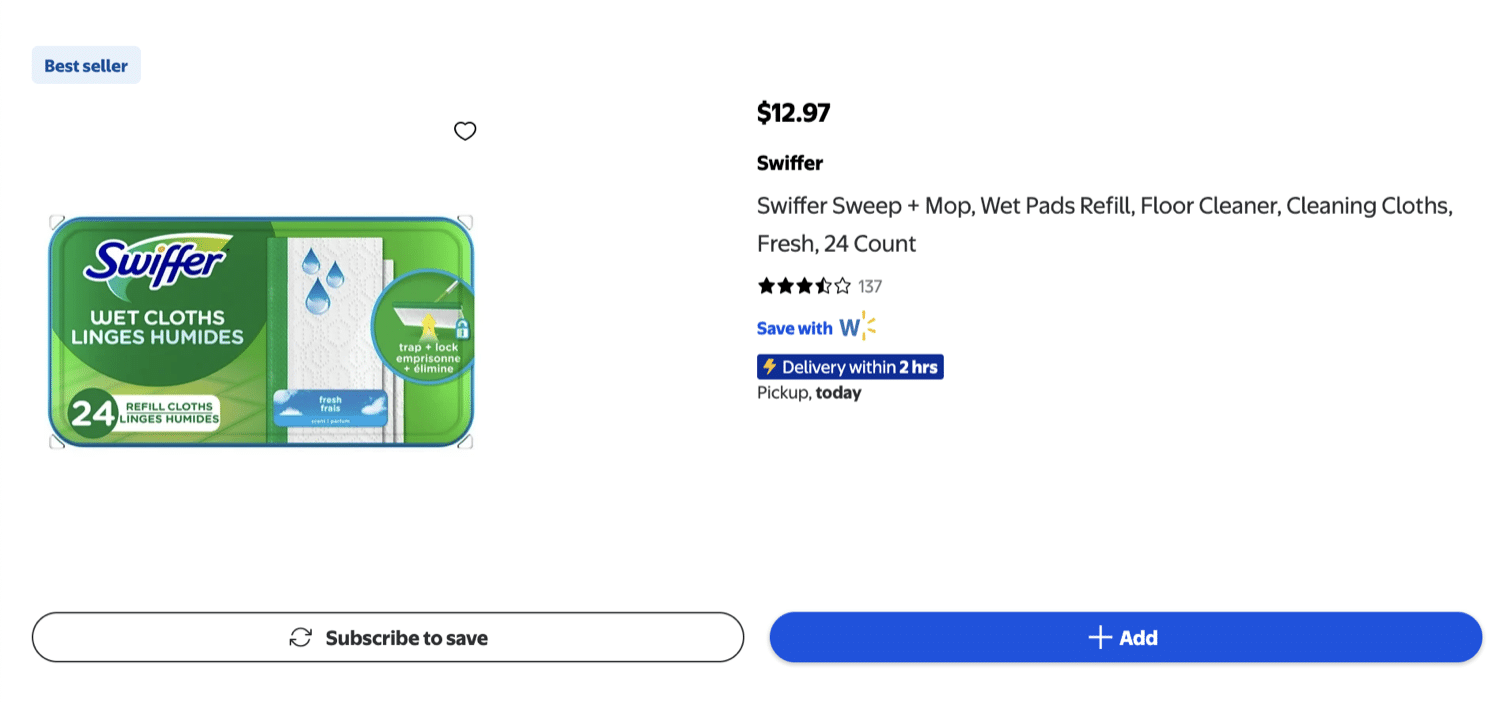
As an example, Swiffer Wet Cloth refill packs of 64 at Costco were $18.99 on sale (originally $23.99), whereas Walmart sells packs of 24 for $12.97. Even paying for full price, you would still be saving money.

Beyond groceries and household essentials, you can also take this approach when booking travel, as Costco has its own travel agency. Instead of booking a Marriott hotel on points, you may find the cash rates to be more reasonable than you think. See our article on how Costco can help you save on travel for full details!
Cash-Preferred and No-Rewards Retailers
Some retailers prefer to accept cash or debit cards to avoid credit card processing and interchange fees. A few ways retailers approach this include offering a discount for cash/debit card transactions, not accepting credit cards at all, or passing transaction fees to just those customers who choose to pay by credit card. In my experience, a notable Chinese restaurant chain in Metro Vancouver charges 2.5% on all credit card transactions.

Bank and Credit Card Offers Worth Choosing Over Points
Several banking institutions and card issuers offer limited-time promotions exclusive to their customers and/or cardholders. American Express is well known for its offers. Occasionally, banks may offer cash back on your chequing account or debit card.

During the summer, CIBC offered me a promotion requiring me to spend $150 with my Visa Debit card on an online bill payment or in-app purchase to receive $50 in cash back. Although 33% off might seem like a good deal, combining it with a loyalty program or credit card will increase the value of your savings.
This was perfect timing for me, as I was looking to buy new running shoes at the time of the offer. Finding a pair at Sportchek for around $180 and combining it with about $30 in Triangle Rewards credits, I got those shoes for over 44% off. In addition, I had some point multipliers activated on the Triangle app, earning about $10 worth of Triangle points back, increasing the value of the purchase.
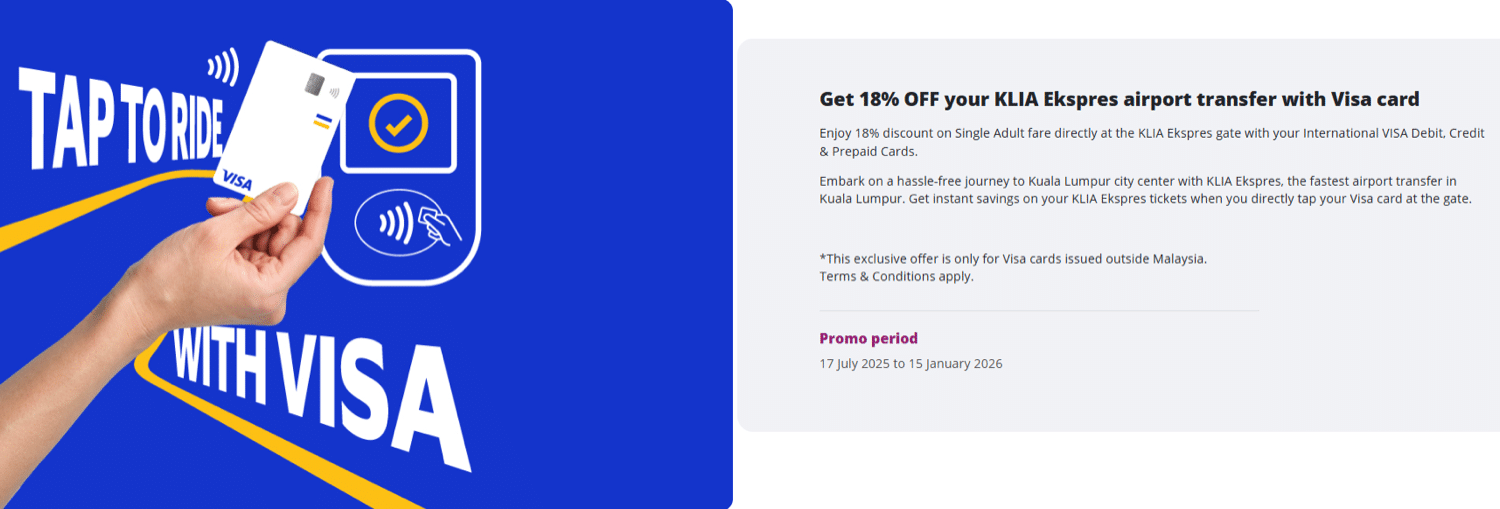
Beyond Canada, you can find similar card-specific deals. For example, in Kuala Lumpur, the express train from the airport to the city offered an 18% discount for foreign Visa cardholders when tapping in at the gate. The discount was also heavier than the 10% you would receive for booking in advance on the train operator’s website.
Travel Scenarios Where Cash Makes More Sense
Stay Vancouver/Stay in Edmonton Programs
During low-tourism seasons, some Canadian tourism boards offer hotel room deals with local and partner discounts, or gift card offers to encourage spending. Although it’s not booked through your favourite hotel loyalty program’s website, using programs such as Visit Richmond, Stay Vancouver, and Edmonton’s Best Hotels is not counted as a third-party agency, meaning that booking through their websites will count towards your status and points earnings. The sites book the hotel directly on your behalf, but you will need to call the hotel after booking to add your membership number to receive your status benefits or to earn points. These are absolutely great for status runs, especially when most dates fall within Marriott’s early-year promotions. Bookings are typically made in advance, so you won’t usually be able to book a night on short notice.
Check out our in-depth guide on Edmonton’s Best Hotels promotion!

Off-Peak Flight Pricing
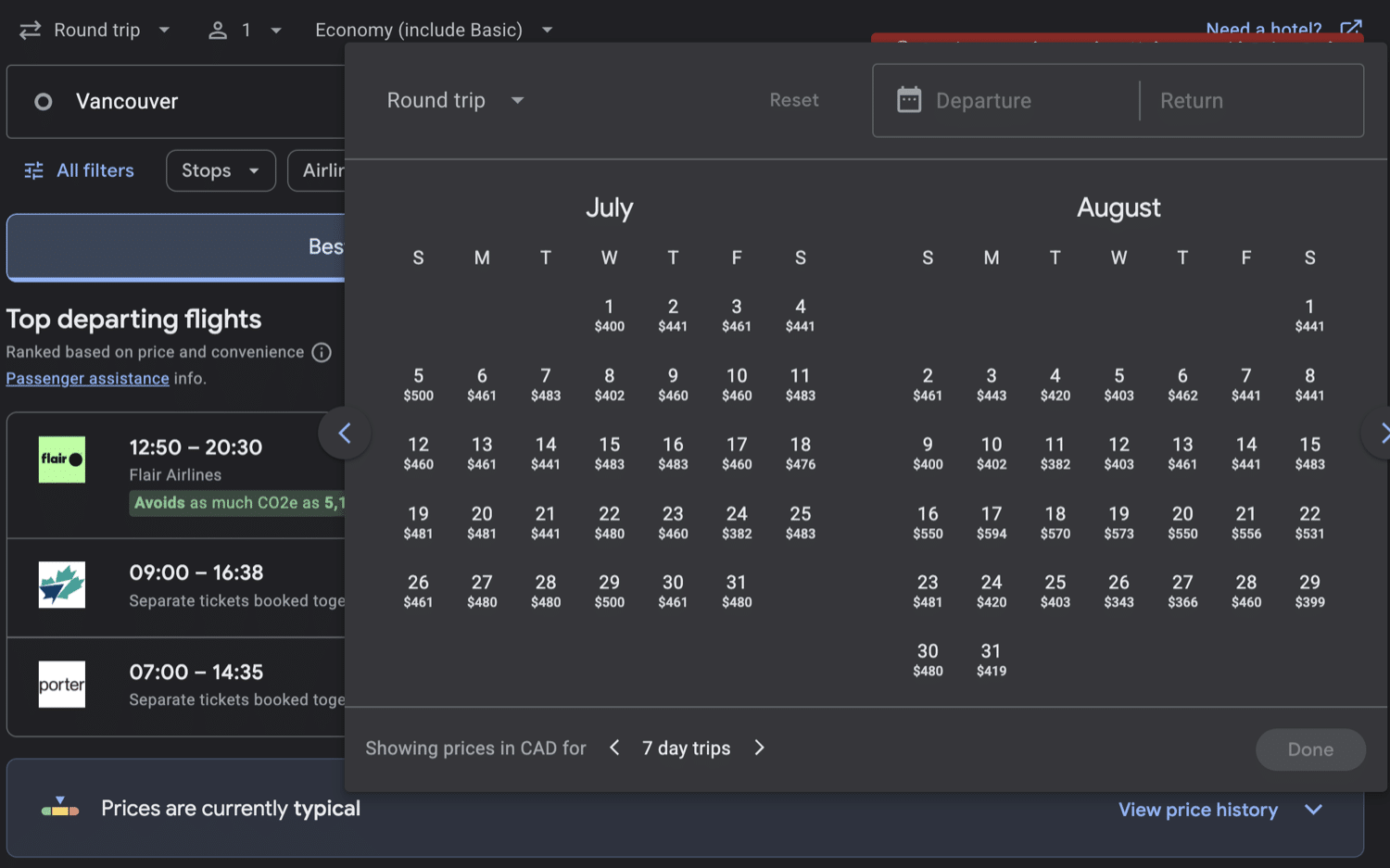
Looking to fly but flexible with your dates? Flying during off-peak periods can help you pay much less than even point redemptions. Some examples of off-peak periods include the 3rd-4th week of January and the last week of August, when flights are discounted significantly to encourage more travellers during back-to-office or school periods. For Canadians, the last week of August is an especially good time to fly, as American schools have already started their schedules, whereas most Canadian schools don’t start until the first week of September.
When You Need to Earn Elite Status or Credit Toward It
Redeeming points sometimes earns:
- no qualifying miles
- no qualifying dollars
- no qualifying segments
If you’re pursuing status such as with Air Canada Aeroplan (SQCs) or WestJet Rewards status lift, then booking cash flights could be more valuable long-term than saving a few points now, depending on your personal situation and travel patterns.
Tools to Help Decide Whether to Use Cash or Points
Online Communities
Forums such as Reddit and RedFlagDeals (RFD), as well as browsing social media, can help you identify which deals are best for you. Posts on forums such as RFD are community-submitted deals that people see in the wild. Josh’s chicken wings adventure from a few years ago is a great example of how useful paying attention to the forums can be, not only saving him a bunch of money, but also earning a bunch of points with his PC Optimum membership.
Deal Aggregators
A few people dedicate their time to helping the community find the best deals in the wild. One of the most notable aggregators is Chris Myden, who runs several sites that find the best flight and travel deals at most major Canadian airports. More or less, if you hear about a mistake fare or a really discounted flight being sold, your source probably found it on one of Chris Myden’s sites. These deals are best redeemed in cash, as using points wouldn’t make much sense given their lower value.

For all kinds of deals, coupon sites such as Groupon and Rakuten are also a good way to check whether a purchase is worth redeeming. If there’s a good deal on Groupon, or if a cashback rate with Rakuten’s rebates is higher than the redemption rate, it would be more valuable to pay in cash.
If you’re looking to get the best deals out of your points, tools such as AwardTool can really help you find the best flight itineraries. With help from AwardTool, I was able to find a great redemption on Turkish Airlines’ Business Class between Kuala Lumpur and Chicago aboard their A350 and 777 aircraft for 75,000 miles, with a 24-hour stopover in Istanbul. Considering that my other option was flying in the Economy cabin with either a 90-minute or time-limited overnight layover for $1,000 CAD, the redemption was much more worth it.
Browser Extensions
Browser extensions are a great tool for identifying cash or points redemption values whenever you’re shopping online. One of the more notable cashback browser extensions is Honey, which offers thousands of deals across a wide range of e-commerce sites. It’s a great way to save more money on your online purchases. Air Canada’s Aeroplan eStore operates in the same way, where users install a browser extension to earn bonus points from their e-commerce purchases.
One browser extension that can help you determine whether to use points or pay cash for your flight is PointsPath. This browser extension integrates with Google Flights, giving users insight into whether a deal is good or bad for their points.
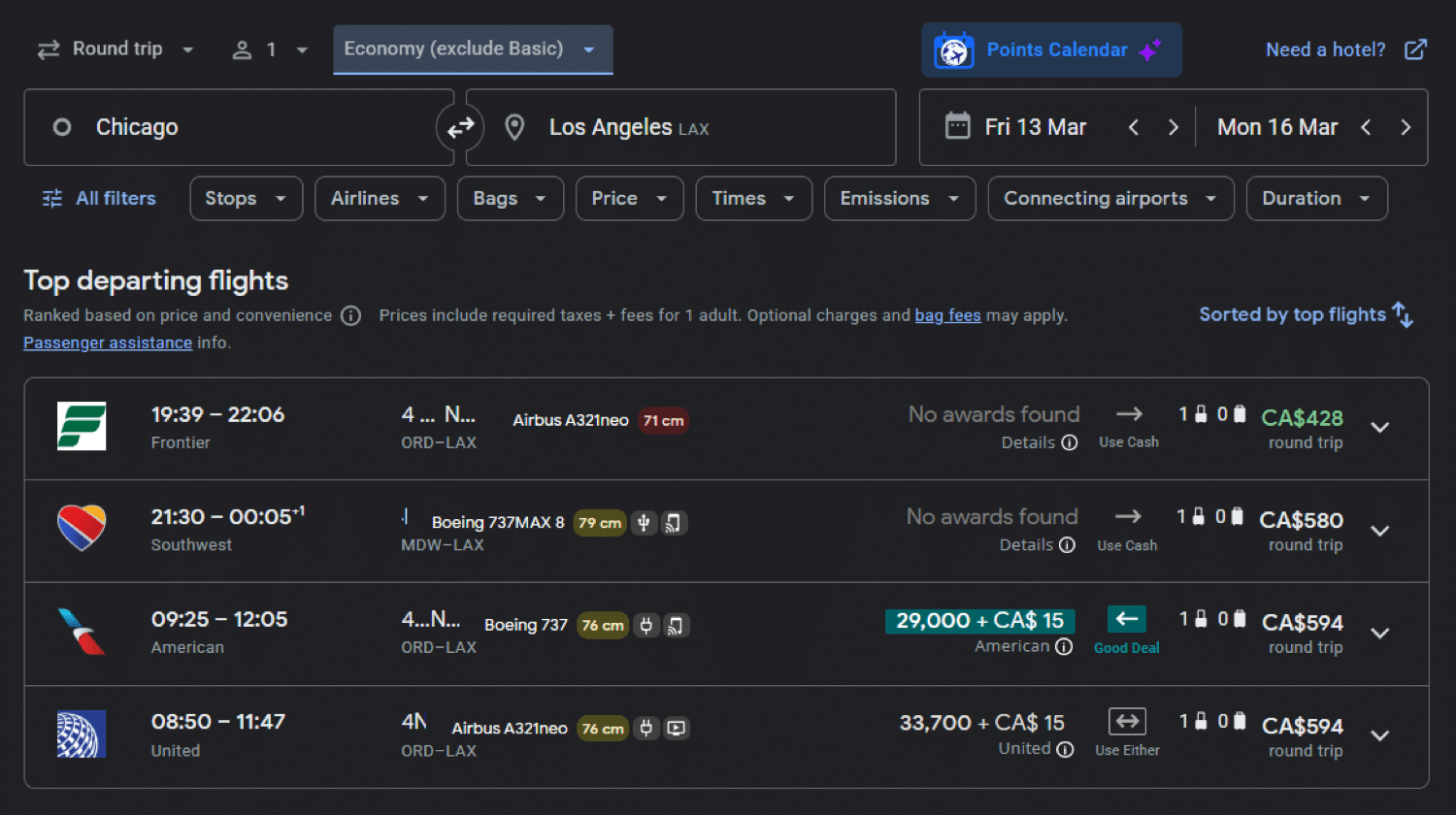
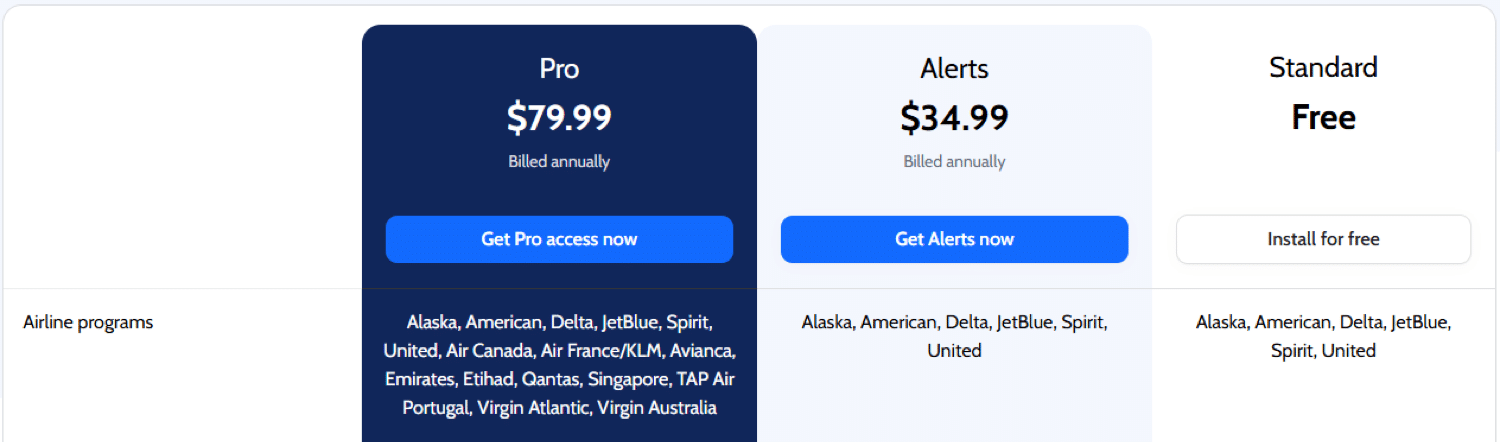
At the moment, it seems that the free version of PointsPath is limited to point programs on US carriers, including Alaska, American, Delta, JetBlue, Spirit, and United. They offer a subscription service that lets you unlock additional point programs, including Air Canada Aeroplan and Air France/KLM Flying Blue.
The Bottom Line: Choosing Cash or Points with Intention
The points-earning and redemption game is truly an art. Although most of our readers come to Frugal Flyer to find the best points opportunities and use cases, there are still many beginners, and even people who are unaware of when to use cash versus redeeming points.
To recap, if the cash fare is cheap, especially for domestic economy flights, off-peak flights or low-demand hotels, then redeeming points may waste potential value. For example, a $120 CAD flight costing 15,000 Aeroplan points + taxes gives you ~0.8 cpp when your target value should be ~1.8–2.0 cpp.
A good rule of thumb is that if you can’t beat your program’s fair-value benchmark, you may want to reconsider the redemption. That said, if a redemption you’ve made may not be the best in terms of monetary value compared with paying in cash, as long as you are satisfied, that’s all that matters. Hoarding points is never a good thing either, as points can be devalued at any time, which is why we say the catchphrase “earn and burn” in this hobby.
On the topic of devaluations, government legislation in Ontario will soon change regulations on points programs. This could shorten expiration periods, potentially leading to even more undesirable redemption rates and timing. On the other hand, the government argues that the new legislation allows consumers to seek legal action when a company suddenly removes their points, according to the bill. So far, it will only affect Ontarians; however, a bill like this could open a Pandora’s box that could affect the rest of the country. Something to keep on the radar for miles and points users.

Andy Leung
Latest posts by Andy Leung (see all)
- Financial Institution Partnerships with Sports Teams in Canada: How Can You Benefit? - Jul 31, 2026
- Review: Petaling Jaya Marriott Hotel - Jul 29, 2026
- Eurail Pass: Complete Guide to Saving Money on European Train Travel (2026) - Jun 8, 2026
- How to Get to Vancouver Island (With and Without Points) - May 4, 2026
- Amex Front of the Line®: Your Ticket to Exclusive Events and Presales - Apr 17, 2026