
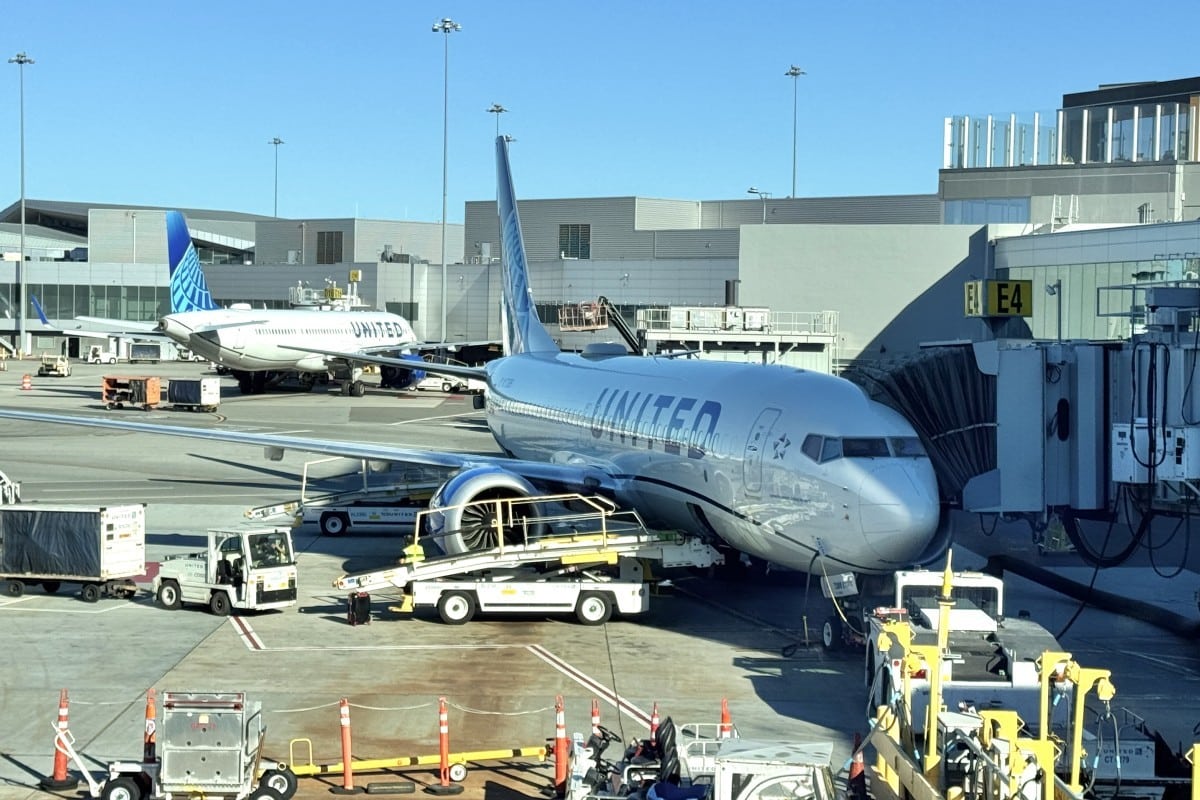
While coming back from visiting friends in California, a looming Air Canada strike led to the decision to rebook my flight with a cheap upgrade onboard United Airlines’ MAX 8 aircraft. I’ve previously flown on domestic business products on Air Canada and WestJet so I thought I would give United First a try given the opportunity.
Booking United Airlines First Class on the Boeing 737-8 MAX
| Business Class | Aircraft | Route | Flight Duration |
|---|---|---|---|
| UA 298 | Boeing 737-8 MAX | San Francisco (SFO) to Vancouver (YVR) | 2 Hours 18 Minutes |
My original itinerary included flying on Air Canada, however, due to the strike, I wanted to rebook for a flight on a different airline. YVR-SFO is frequently serviced by both Air Canada and United so I was sure that there would be seats on United. With a booked Flex fare and a goodwill no-change fee policy due to the strike, I could change my flight without paying any extra surcharges, just the fare difference.
Looking at the flight change options, I saw that there were some seats available to United First from my original Economy Flex ticket for just an additional $141 Canadian Dollars, including taxes and other air travel fees. Moreover, Air Canada’s agreement with United credits AC Flex (and Standard) Fares flown on United as Discounted Economy, earning just 25% of the SQM, whereas United business class fares are all credited at 150% or more, regardless of discounts or not. Value wise, I got about $30 bucks back just in Aeroplan points from this flight including my 35K status bonus.
It could also be worth redeeming United Miles for a flight like this if there is award seat availability. The United MileagePlus Neo World Elite Mastercard is the best and only option for Canadians who want to build their MileagePlus miles balance.
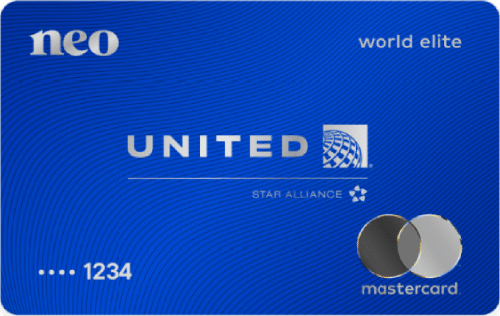
The United® MileagePlus® Neo World Elite® Mastercard offers cardholders benefits on United Airlines flights, including the first checked bag free for the cardholder and priority group 2 boarding for the cardholder and guests on their itinerary.

Earn when you apply through Frugal Flyer.
25,000 MileagePlus miles
$3,000
$425+
$89
Yes
–
Ground Experience – United Club
Flying from one of United’s hubs, United First Class passengers enjoy complimentary United Club access as well as access to other Star Alliance Business Class lounges. Since I was departing from the United terminal at SFO anyway, I thought it would make sense to go to the United Club.
United operates two United Club locations, one in the F concourse and one in the E concourse. This wasn’t my first time out of SFO, so I knew that the F concourse United Club would be my choice. Although a little dated and further from my departure gate, this United Club is more spacious than the other lounge, usually with no line up and ample seating. Moreover, there is never a lineup for the toilets which is a huge plus for privacy and guest comfort.

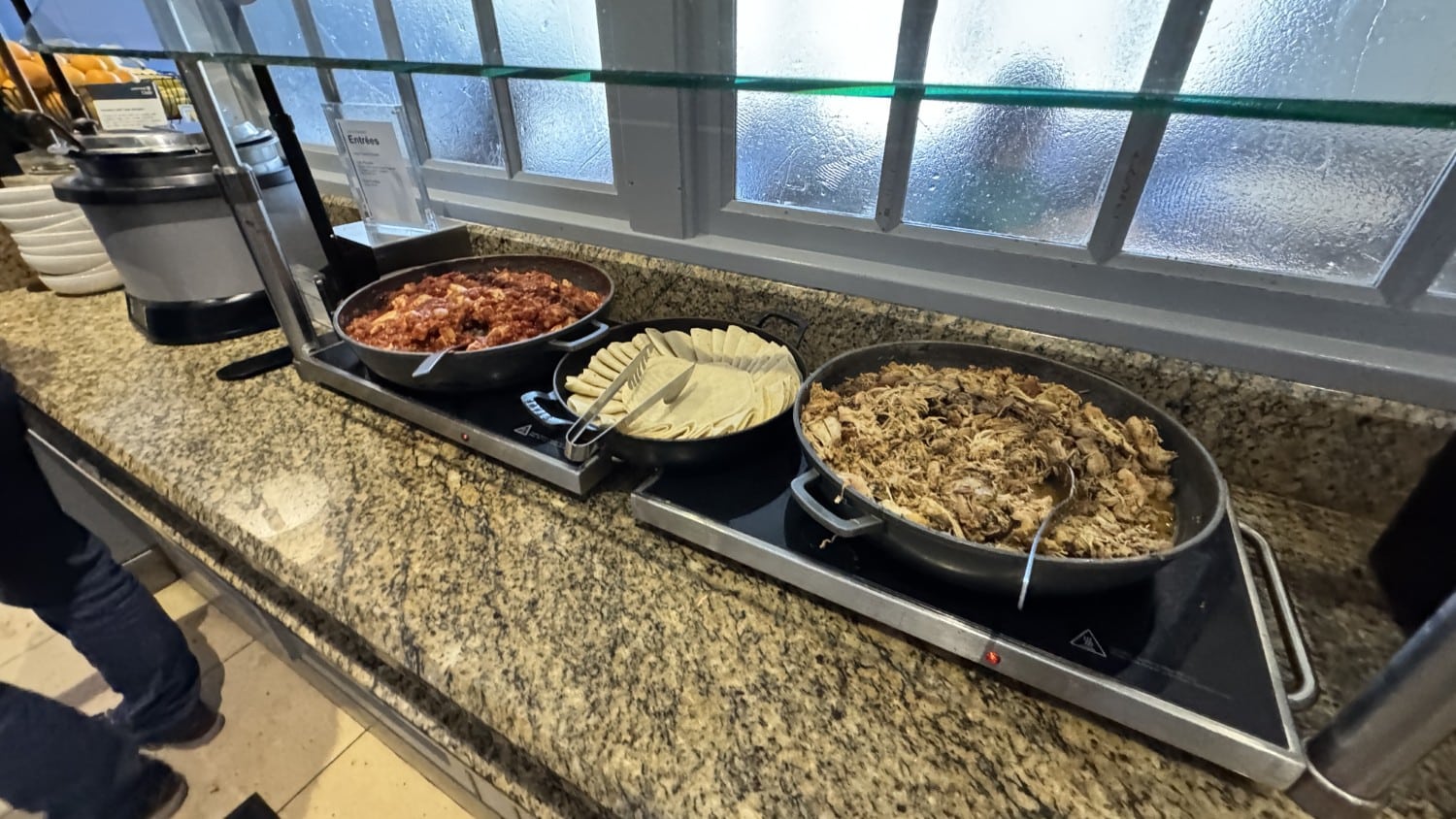
The United Club usually had a decent food selection, from wraps to DIY tacos and even a noodle bar. The food was warm and quite filling.

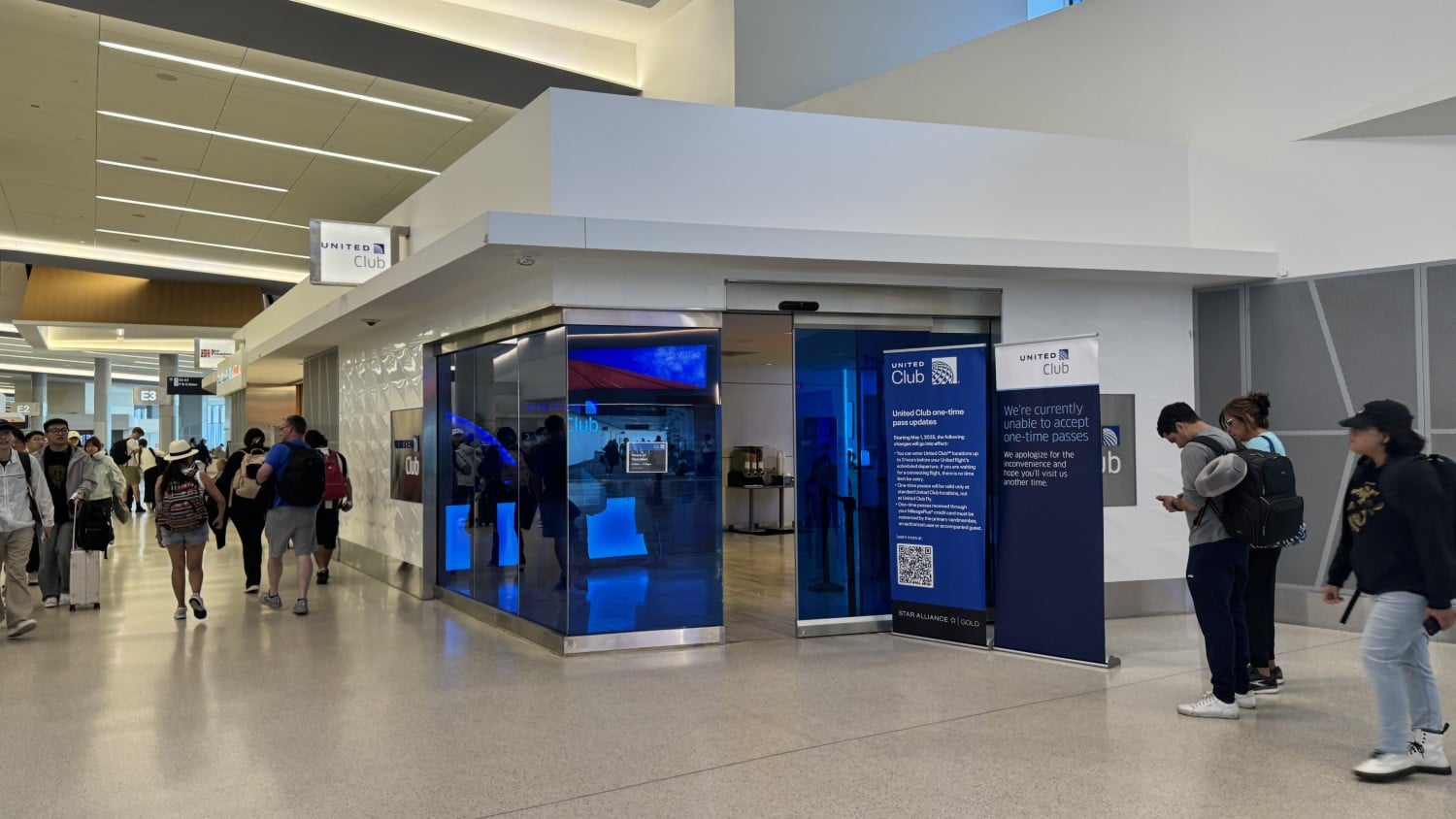
On the other hand, the E concourse lounge is usually overcrowded, with people usually queuing up. However, the day I flew this flight, there was not much of a line-up.
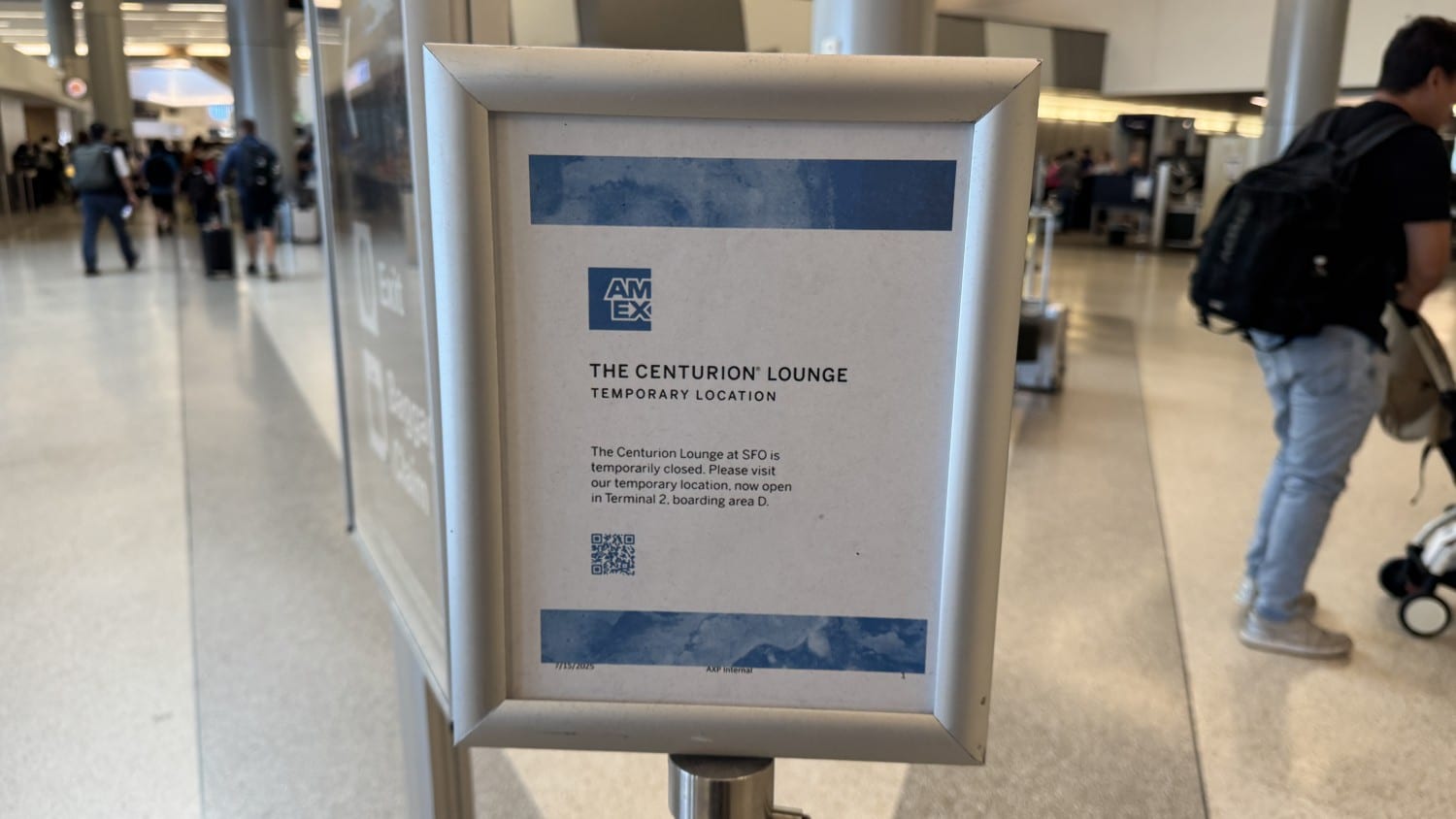
Another option for lounges at SFO would be the Centurion Lounge, however due to airport construction, American Express is only operating a temporary location in Terminal 2. The permanent lounge in Terminal 3 will be reopening in 2027 after renovations are complete. Centurion Lounge access is complimentary and only accessible for cardholders of specific American Express cards like the American Express Platinum and Business Platinum cards.
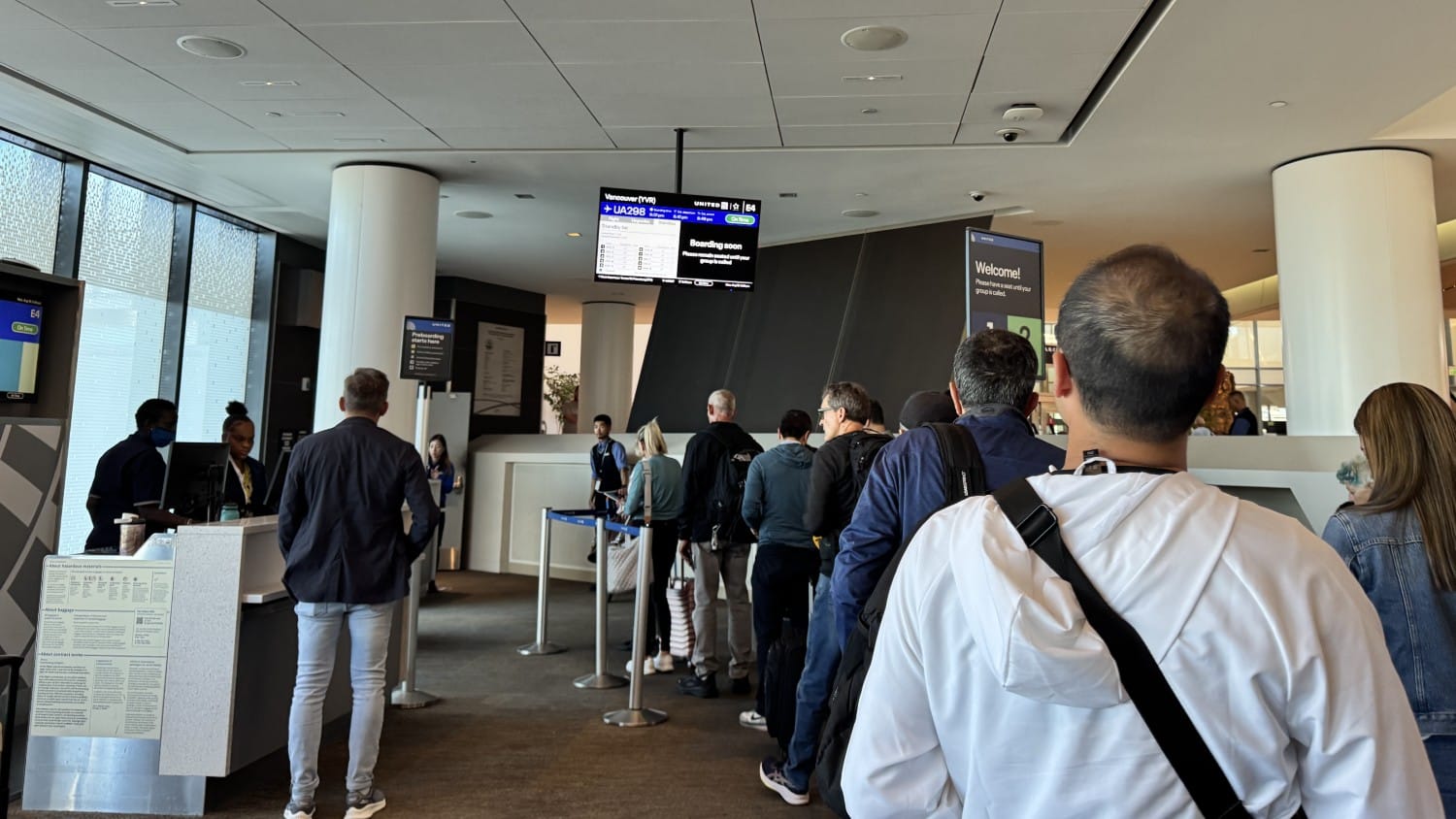
After visiting the United Club, I arrived at the gate where all the passengers were already crowding the boarding area 5 minutes before departure. Combined with the small boarding area, the Zone 1 line was already pretty long but I was thankful to be among the first to board the plane with priority boarding.
Cabin Arrangement
Most United flights between San Francisco and Vancouver are operated by similar sized narrowbody aircraft from the Airbus A320 and Boeing 737 NG/MAX families. They all feature a 2-2 configuration for the Business Class/First section of the plane. The MAX 8 seats 16 in the Domestic First cabin with a 36.7 inch pitch, and 150 in the Economy cabin, with 54 seats designated as Economy Plus with a few extra inches of legroom than standard Economy.
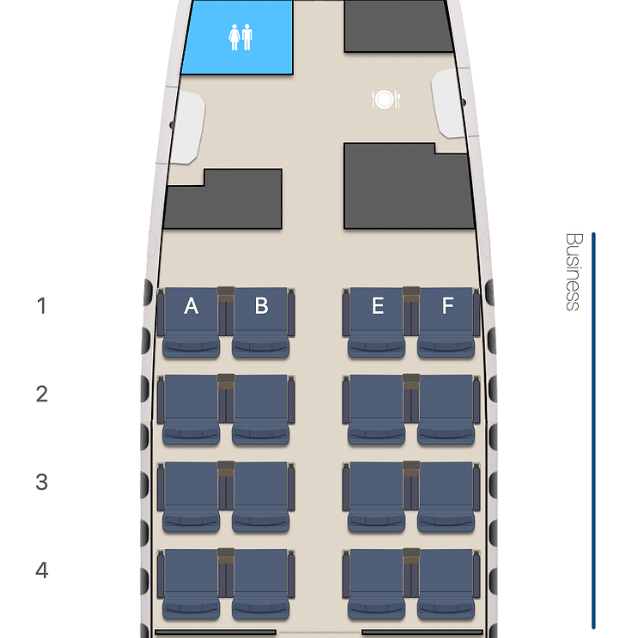
By the time I changed my original Air Canada flights to United, many of the seats were already occupied, with some presumably by other Air Canada passengers who also wanted to be cautious about the strike. As expected, this did end up being a full flight, with all Business and Economy seats filled, with the majority of standby passengers unable to get on.
Seat
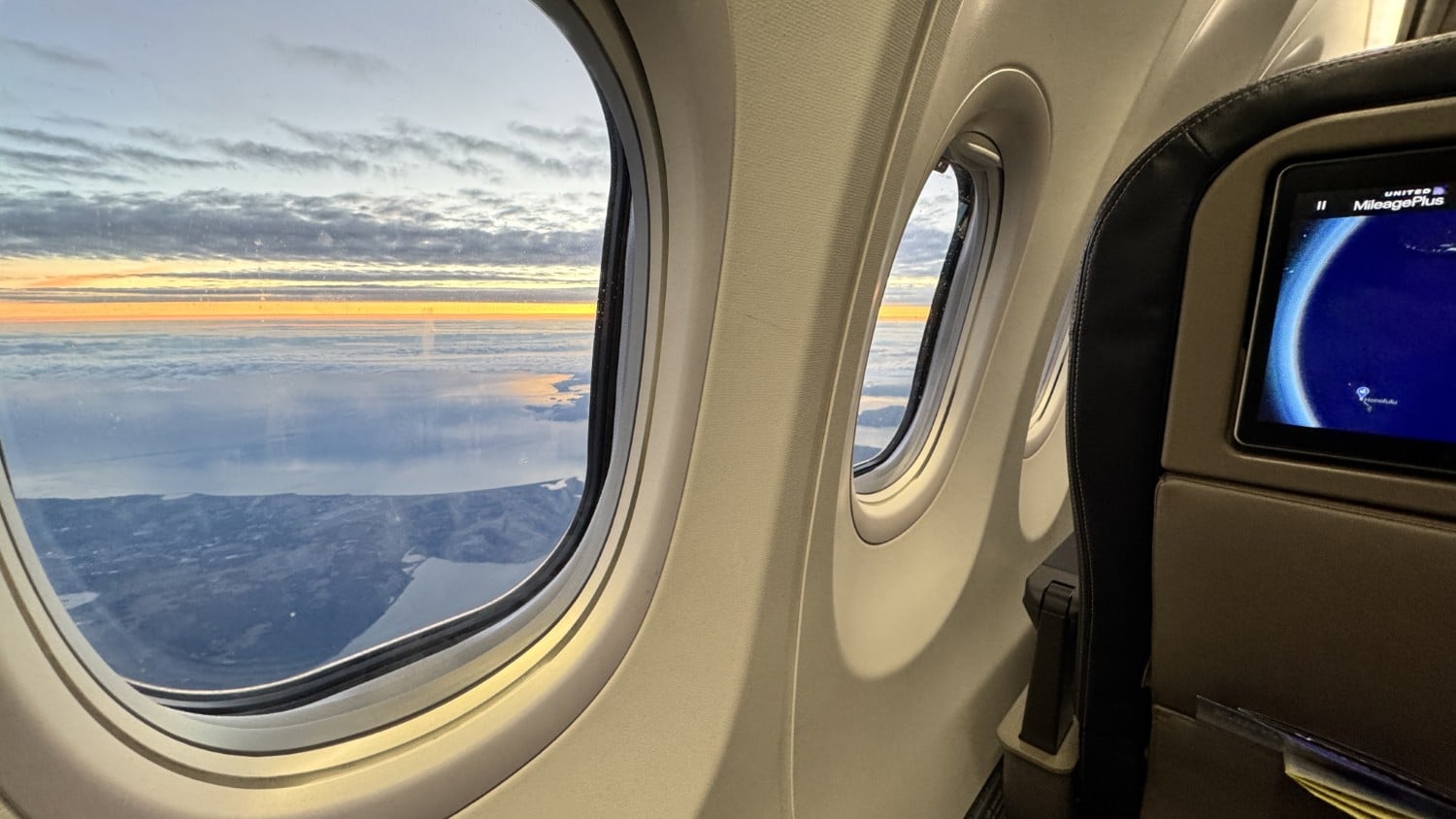
The seat is very typical of a domestic business class seat, with wider cushions and a more private feel. The aircraft was only two years old so the padding was still decent and the seat itself was comfortable.
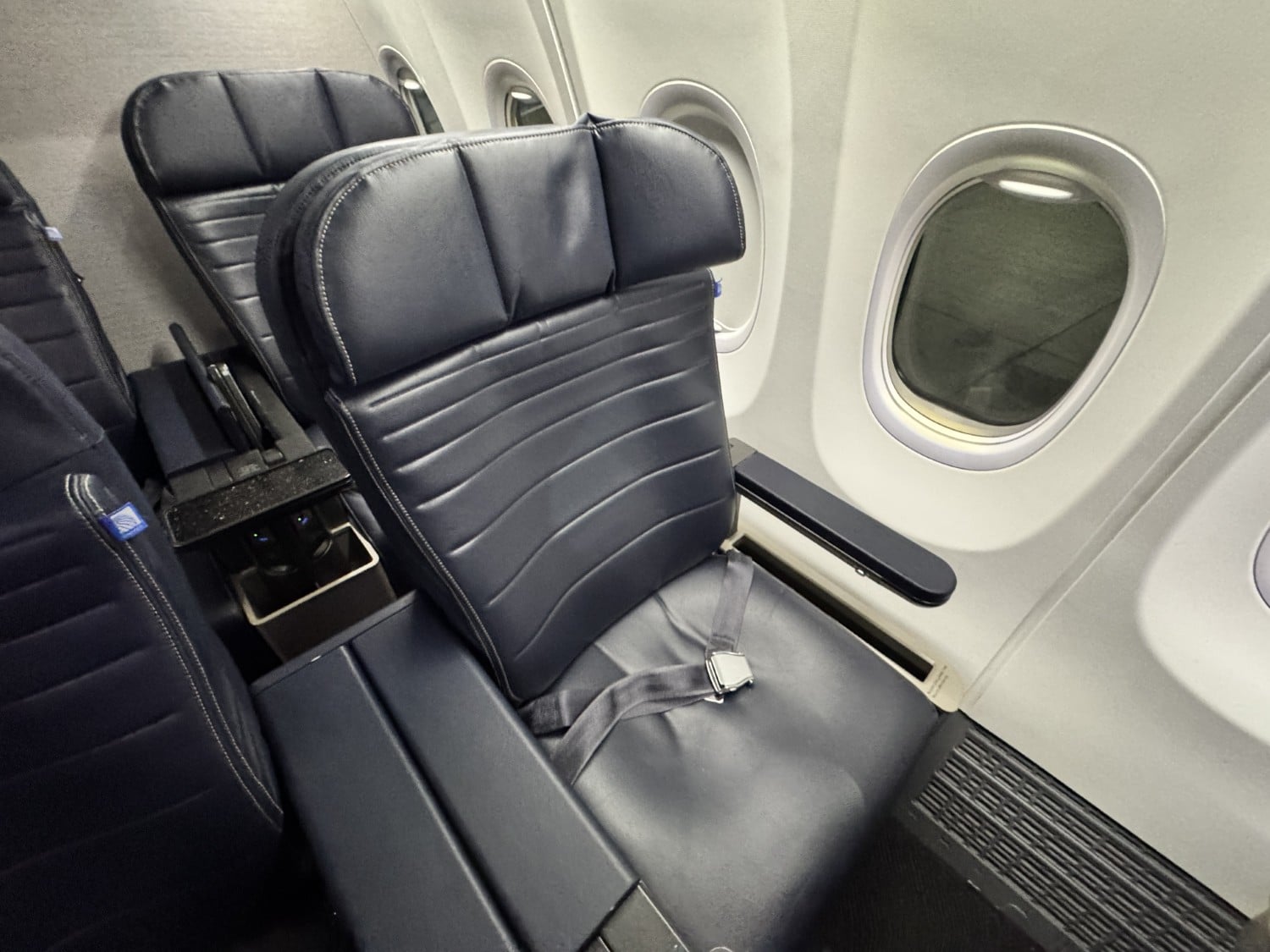
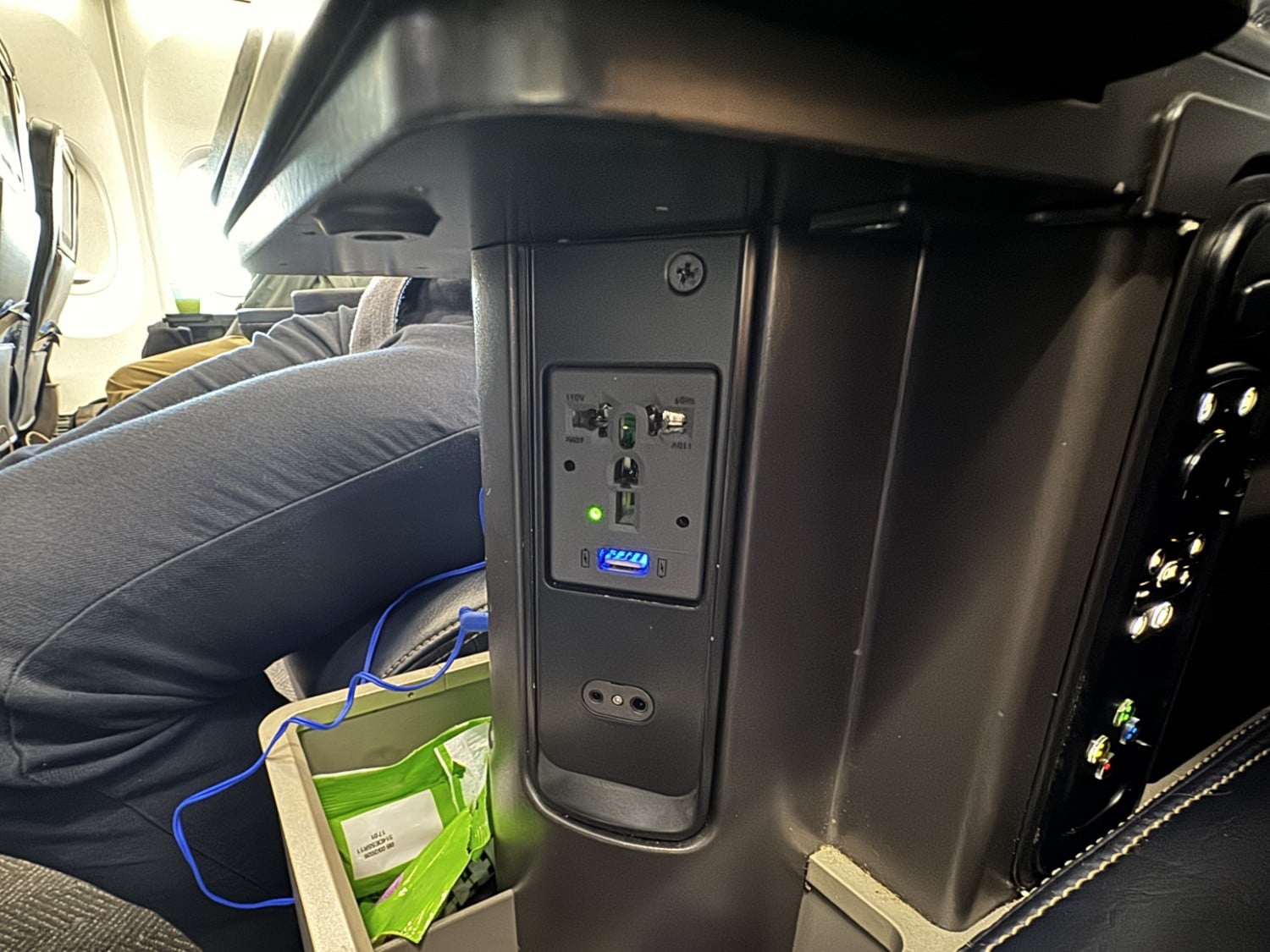
The seat comes with a universal power outlet and older style headphone plugs. There is also a USB-A port for devices that don’t need too fast of a charge.
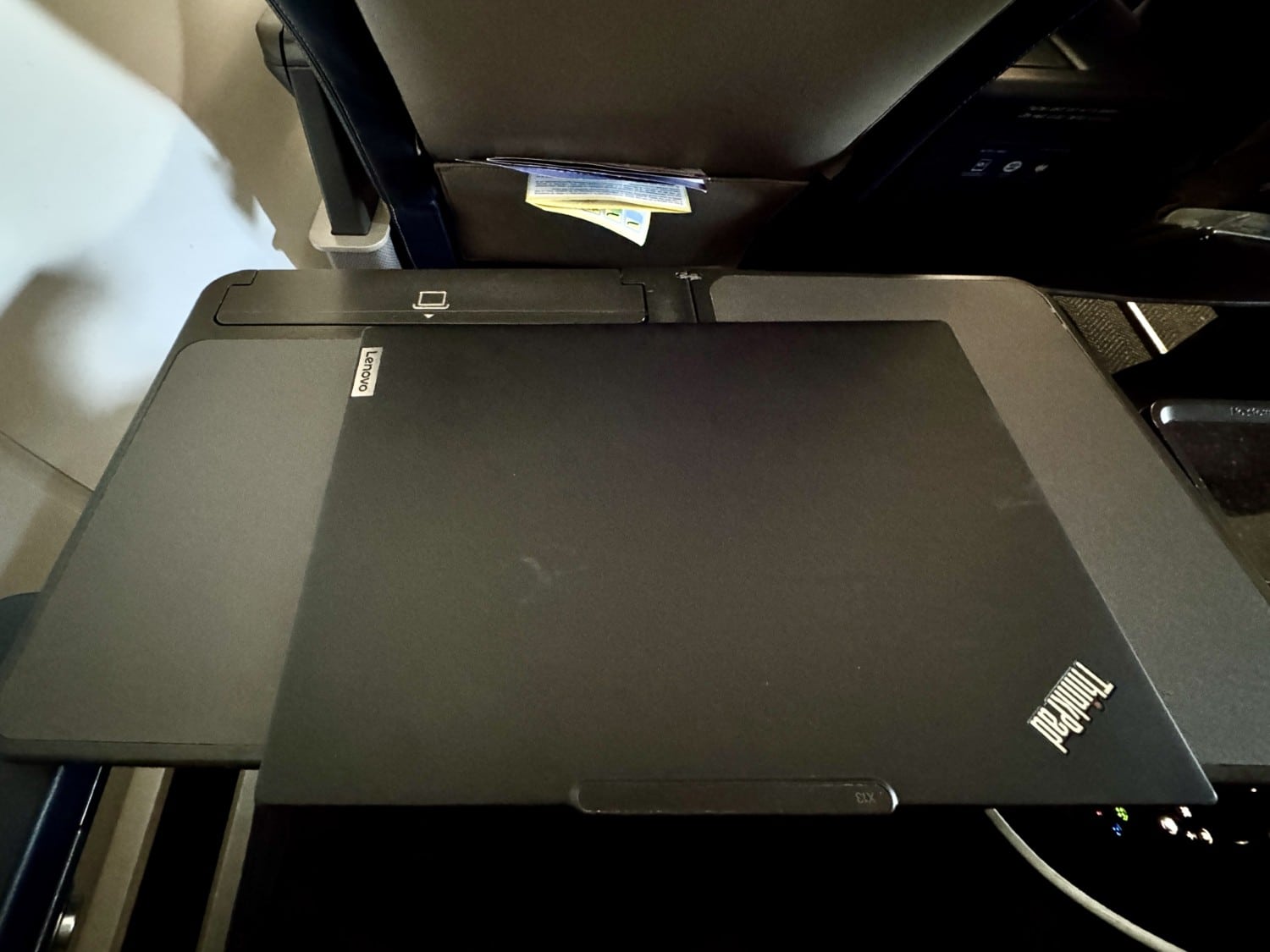
The tray table is decently sized, with enough room to comfortably place a 13 inch laptop. A flip out tablet stand comes out from the furthest part of the tray table as well.
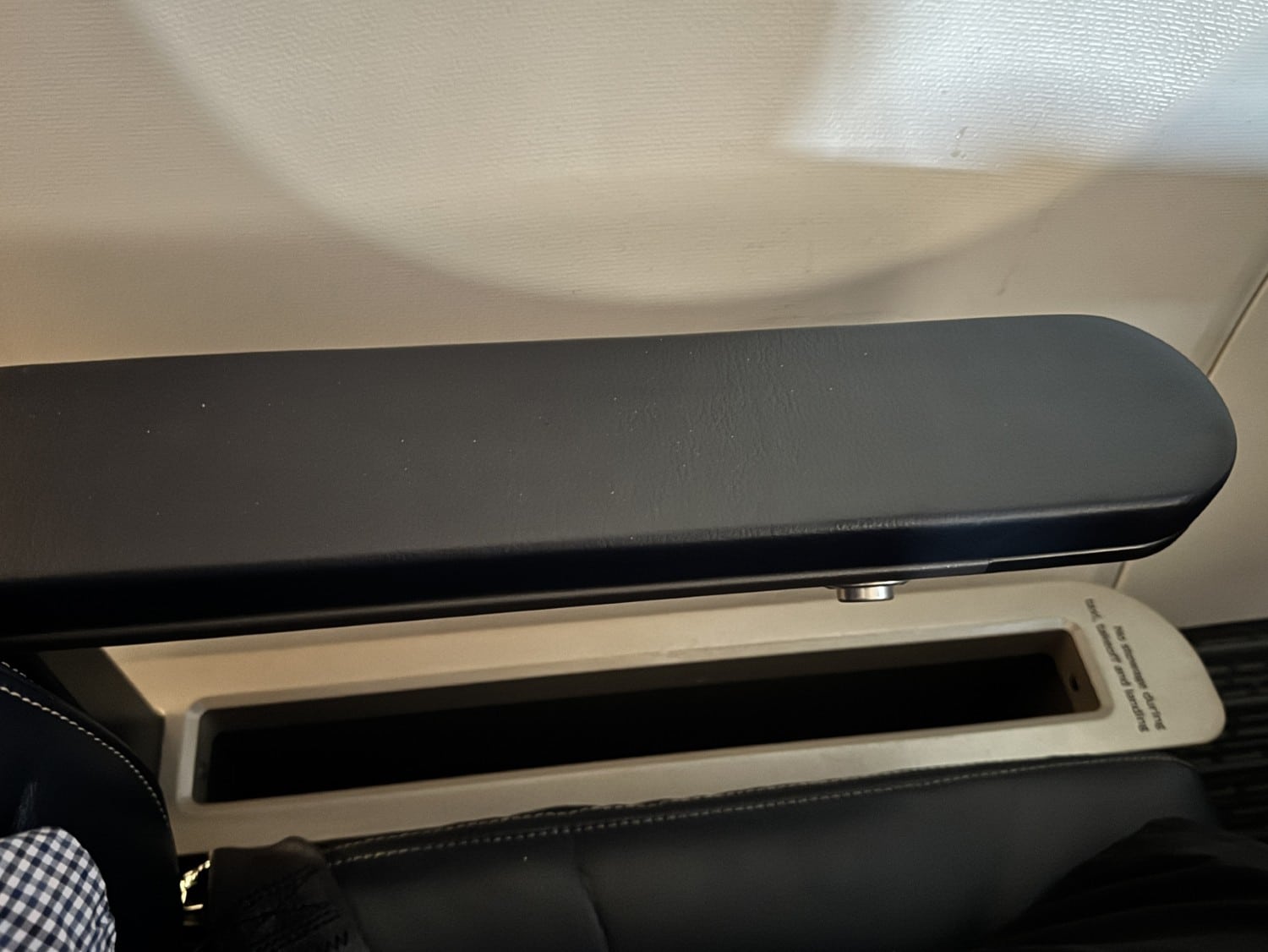
Other than the seat pocket, there is additional storage under the arm rest beside the window. It was large enough to fit my laptop.
Dining
For United flights under 900 miles, no hot meals are served in the business/first class cabin. Instead, passengers are offered premium snacks that aren’t served in Economy. Unfortunately, the lack of a meal service on short haul flights is the norm for the US’s largest three carriers. We also never received a welcome drink.
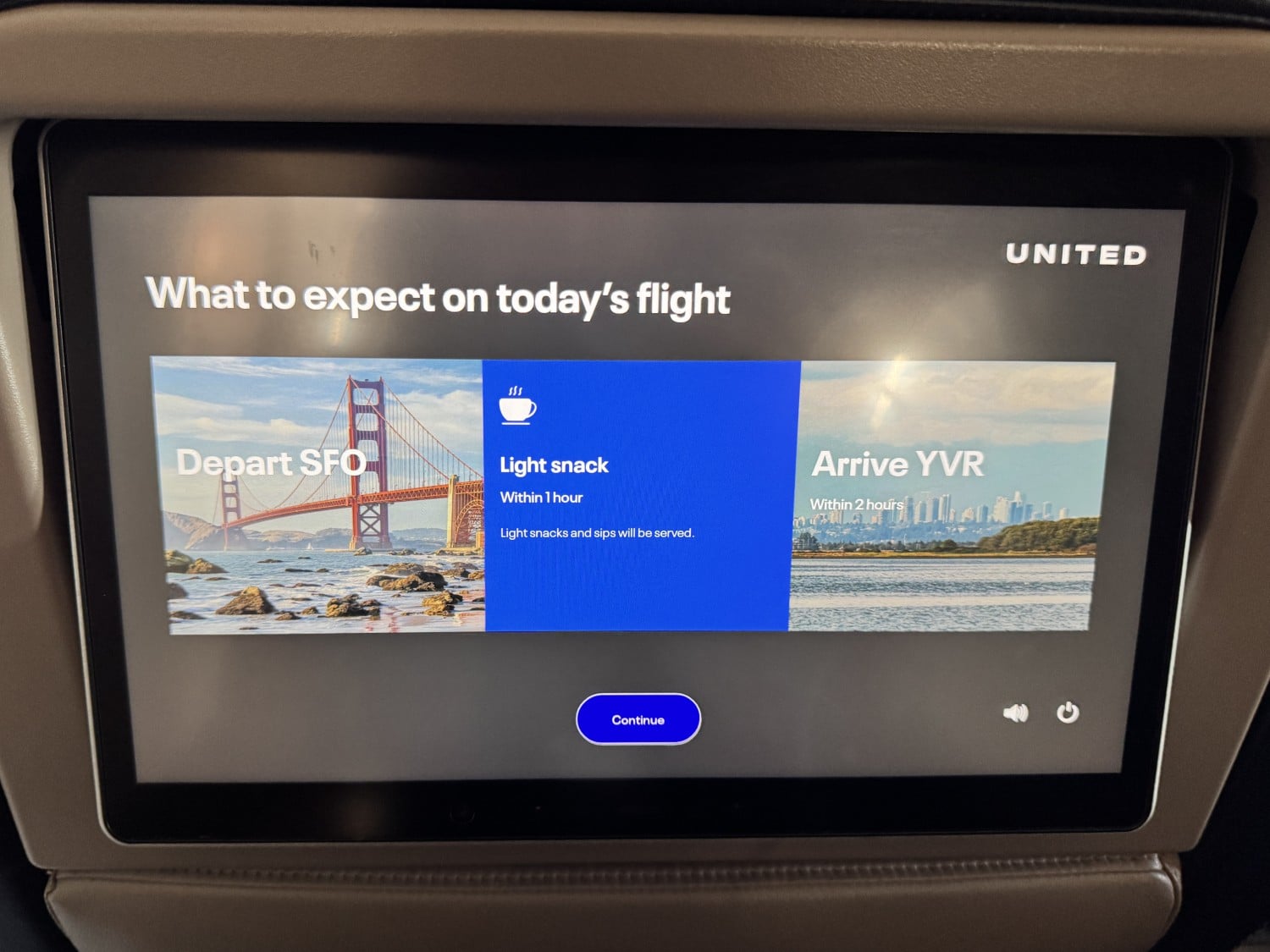
From a snack basket, I chose chickpea puffs. Being an avid stroopwafel fan, I also asked the flight attendant if she would be able to get a stroop or two for me from the economy cabin.
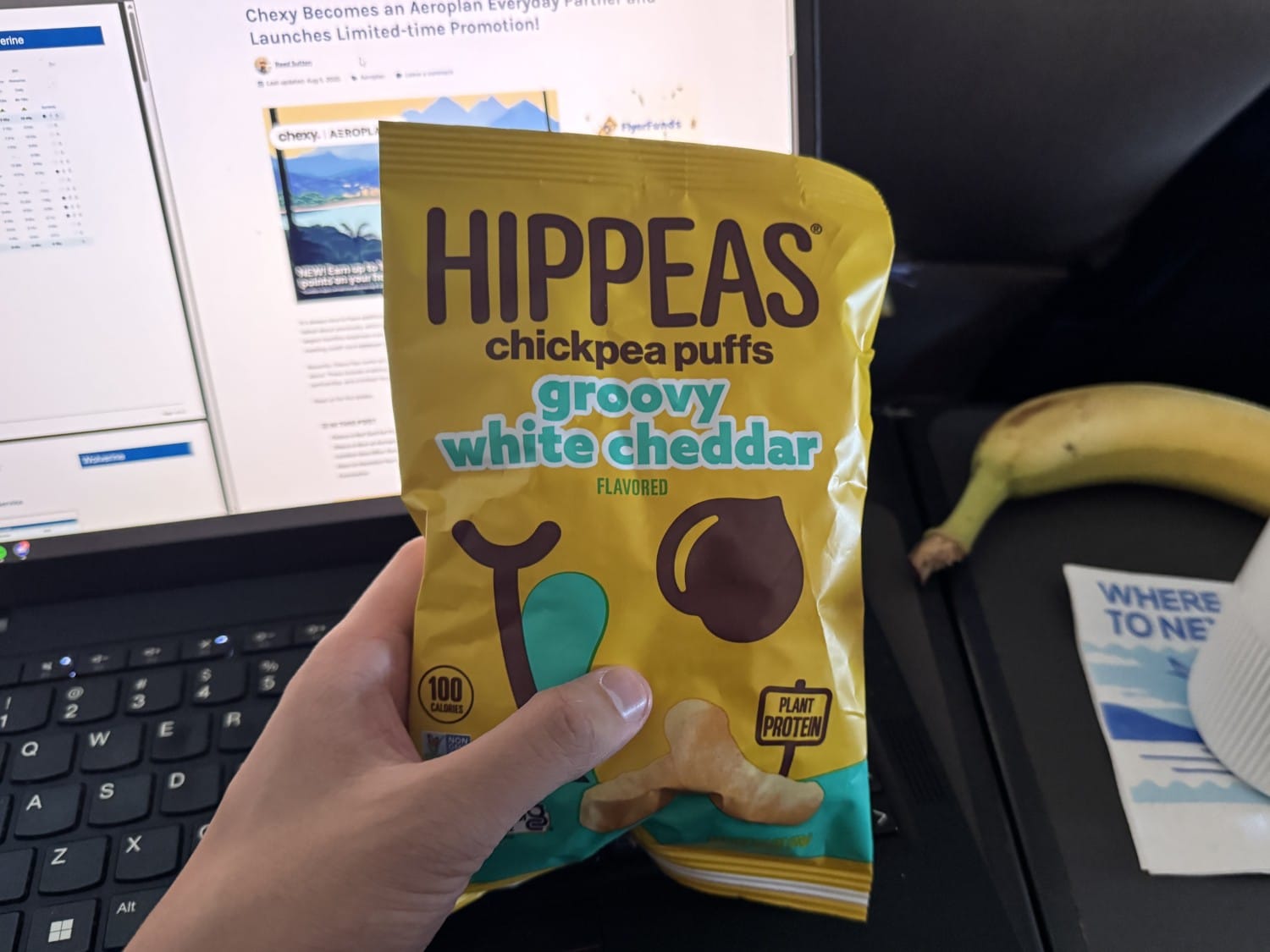
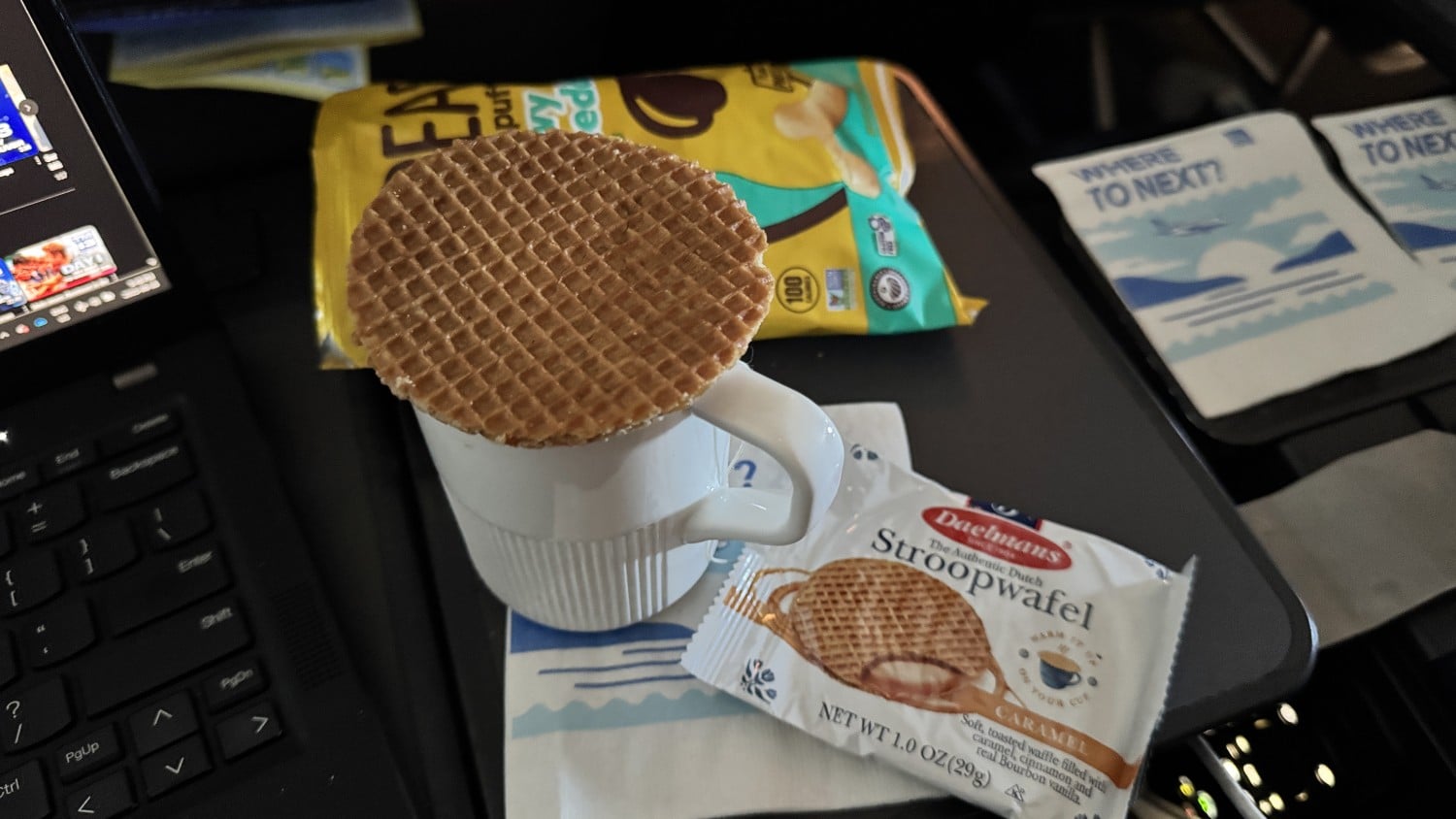
The flight attendant frequently came through the aisle and asked everyone if they wanted more drinks or snacks.
As a contrast, on Air Canada Express business class, hot snacks like quesadillas were served on a recent regional jet flight between Montreal and Boston with a distance just over 250 miles long.

Entertainment
Entertainment Console
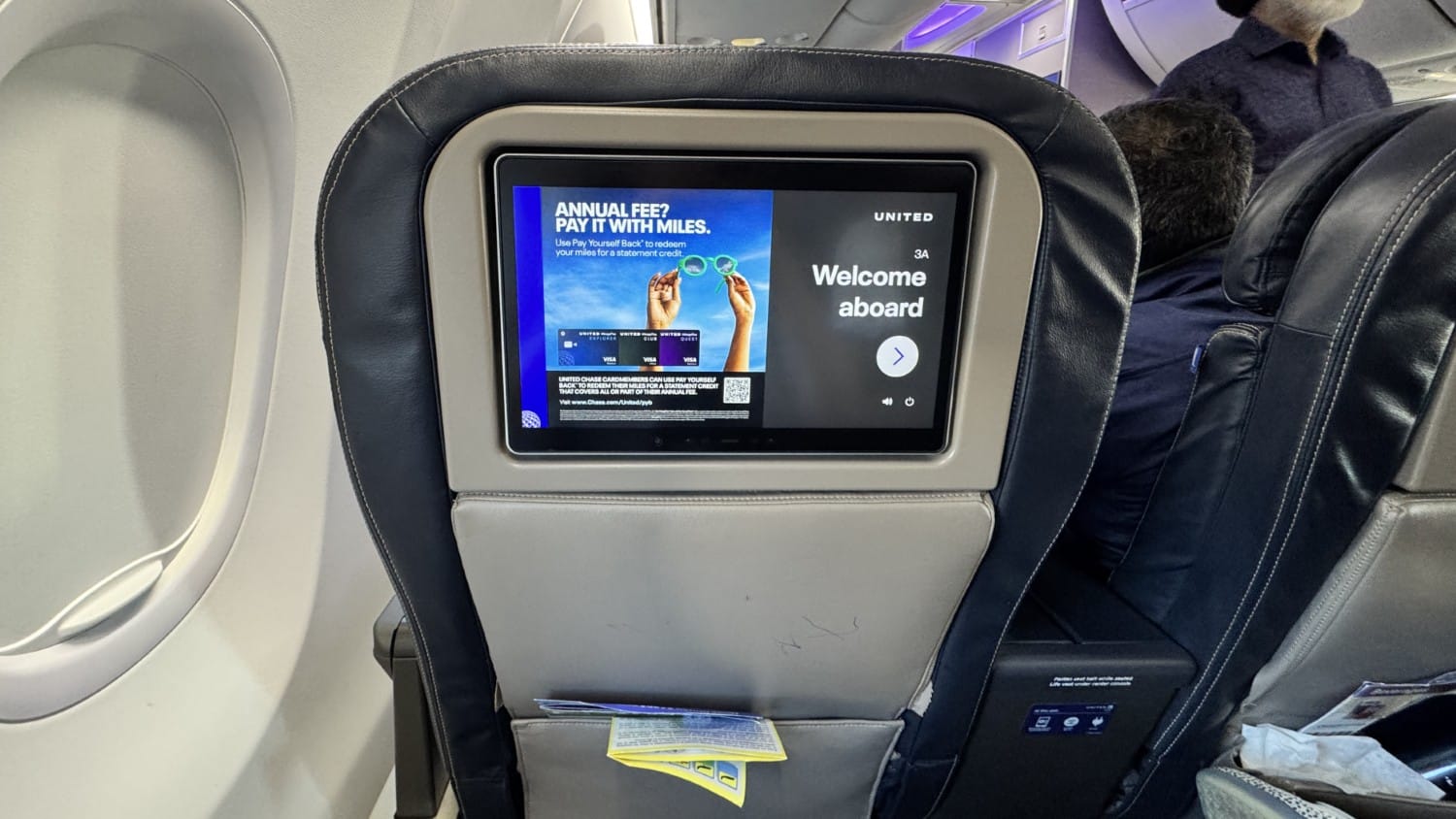
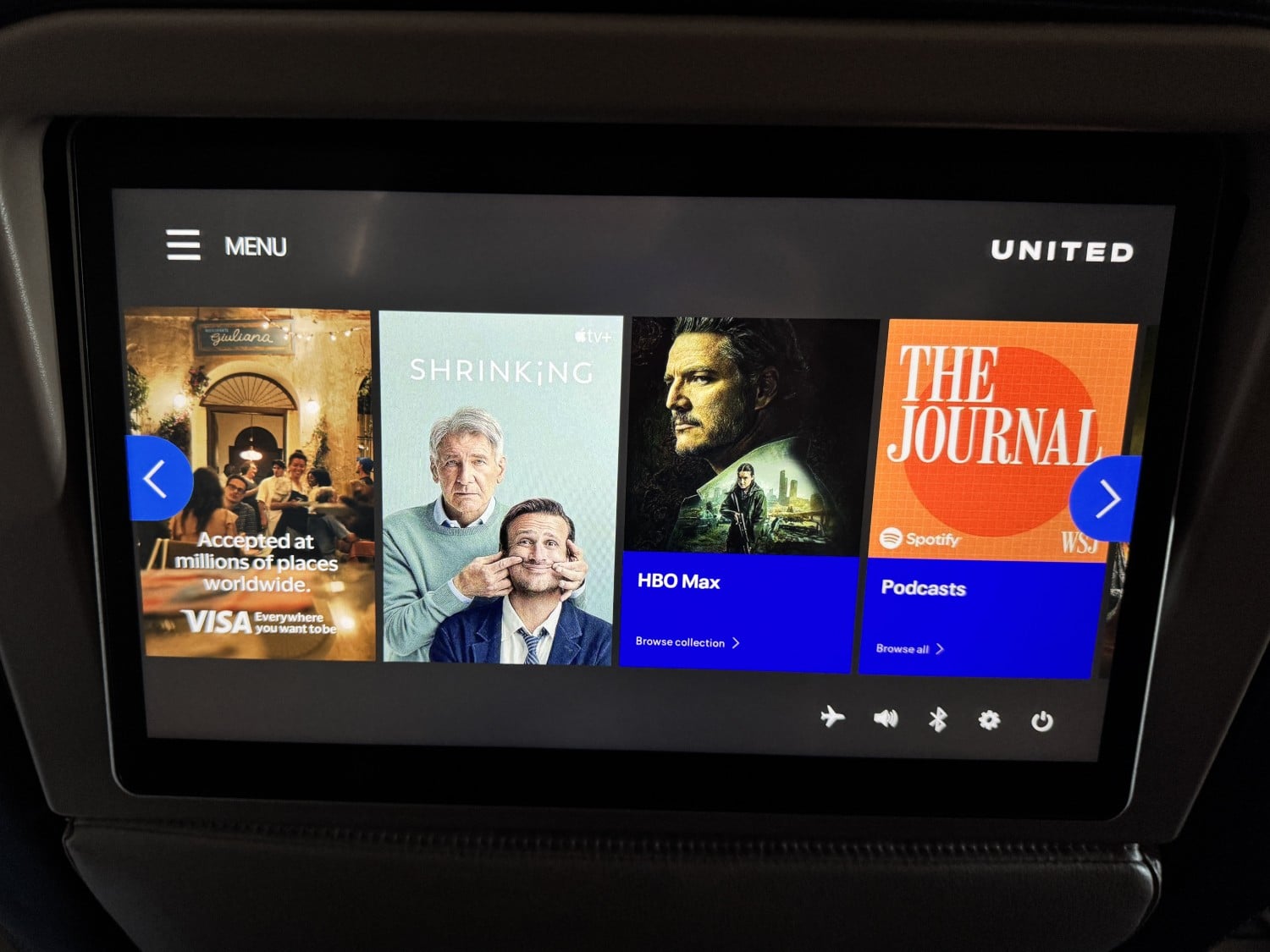
One of United’s newer aircraft, the seatback entertainment system on my MAX 8 had the ability to connect to bluetooth devices. There are a variety of shows and even podcasts available through the system. There are even shows available from streaming services such as Apple TV+ and HBO Max. Earbuds were offered to everyone as well.
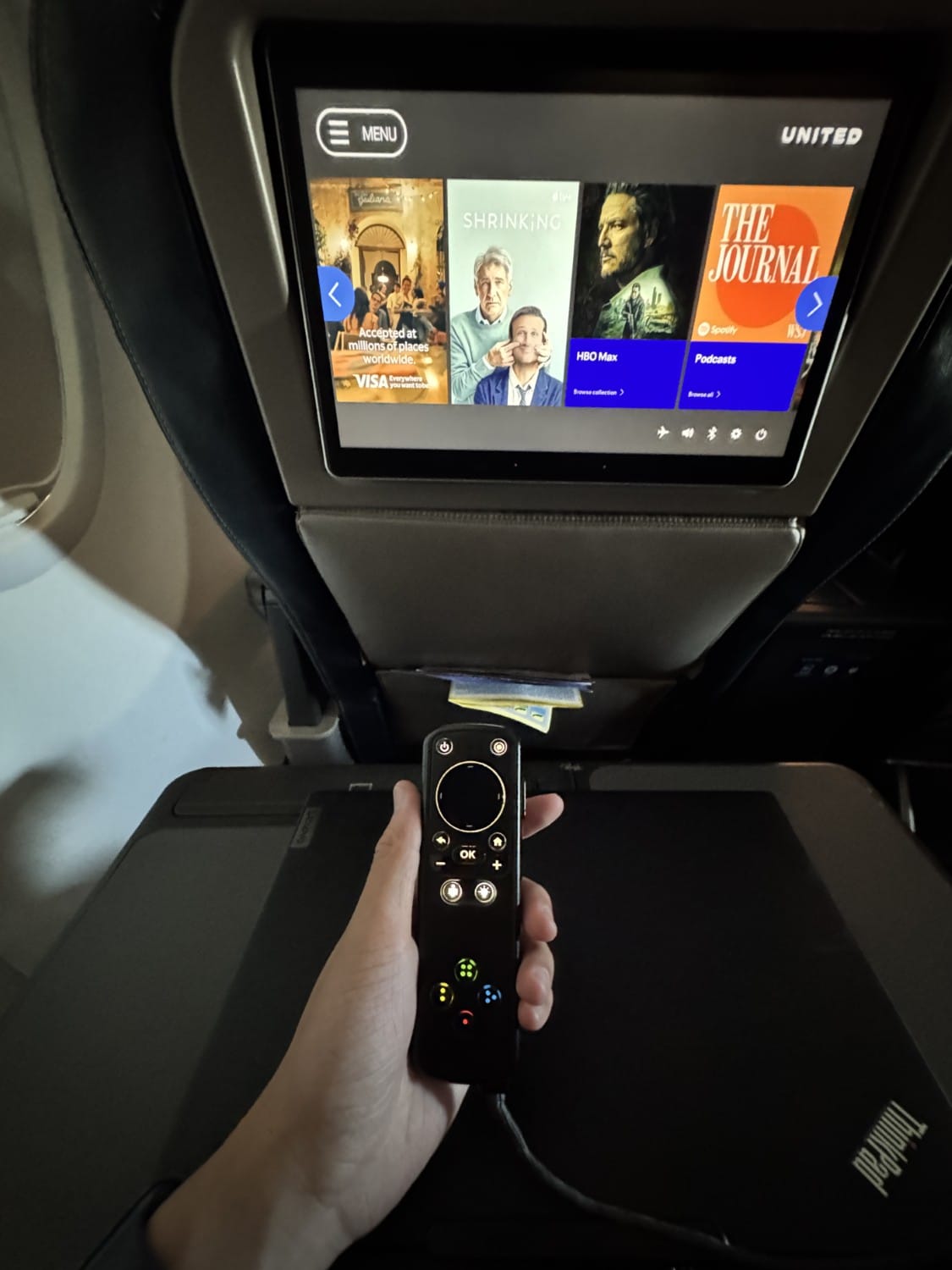
Each seat has a small remote that can be used to control the entertainment system.
WiFi
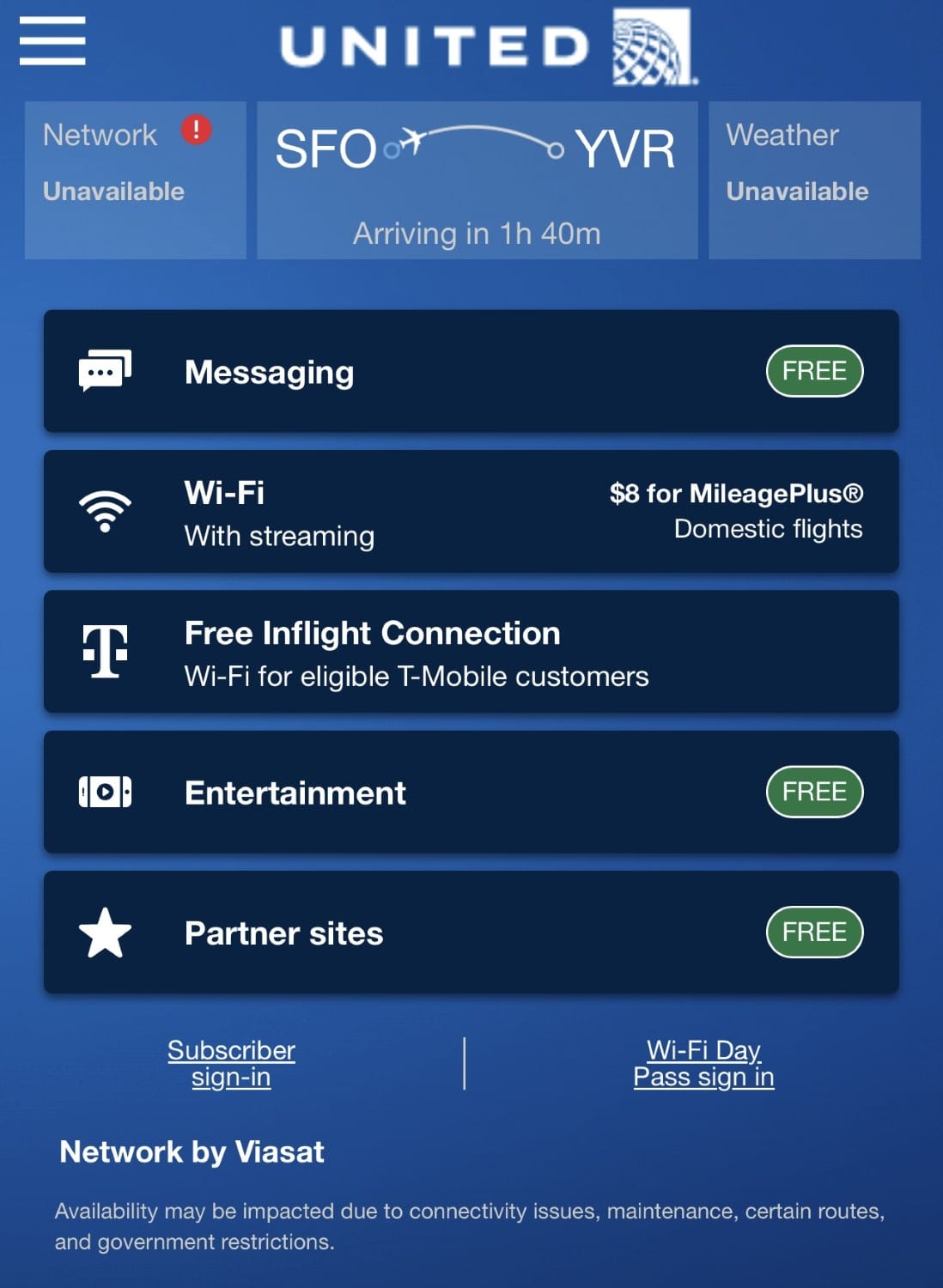
WiFi was available for this flight, though it is a paid service. However, most T-Mobile customers have free access to the wifi network, as long as they verify their number with a two-factor authentication code sent in-flight, with the use of wi-fi messaging.
Since I had a MileagePlus account, I was able to purchase internet for $8 USD for the full flight. Otherwise, messaging on apps such as WhatsApp and Messenger is complimentary after you sign in.
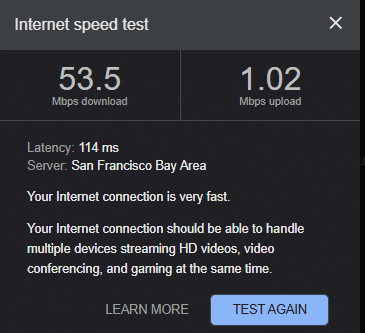
The download speed was quite fast, but don’t expect to upload anything at a decent rate.
Conclusion
Taking advantage of a cheap upgrade while anticipating the Air Canada strike, I chose to change my Air Canada Economy Flex ticket to United’s First Class cabin on their MAX 8. For most of the product, I enjoyed the experience. However, there were a few things lacking that you would find in other domestic business cabins, like hot meal service on flights longer than an hour which you would find on Air Canada and WestJet. It is a little unfortunate that SFO-YVR does not receive a meal service but LAX-YVR does even though the flight is only roughly 30 min longer. Unlike my experience in United’s Polaris cabin, this food service issue is more of a management issue.
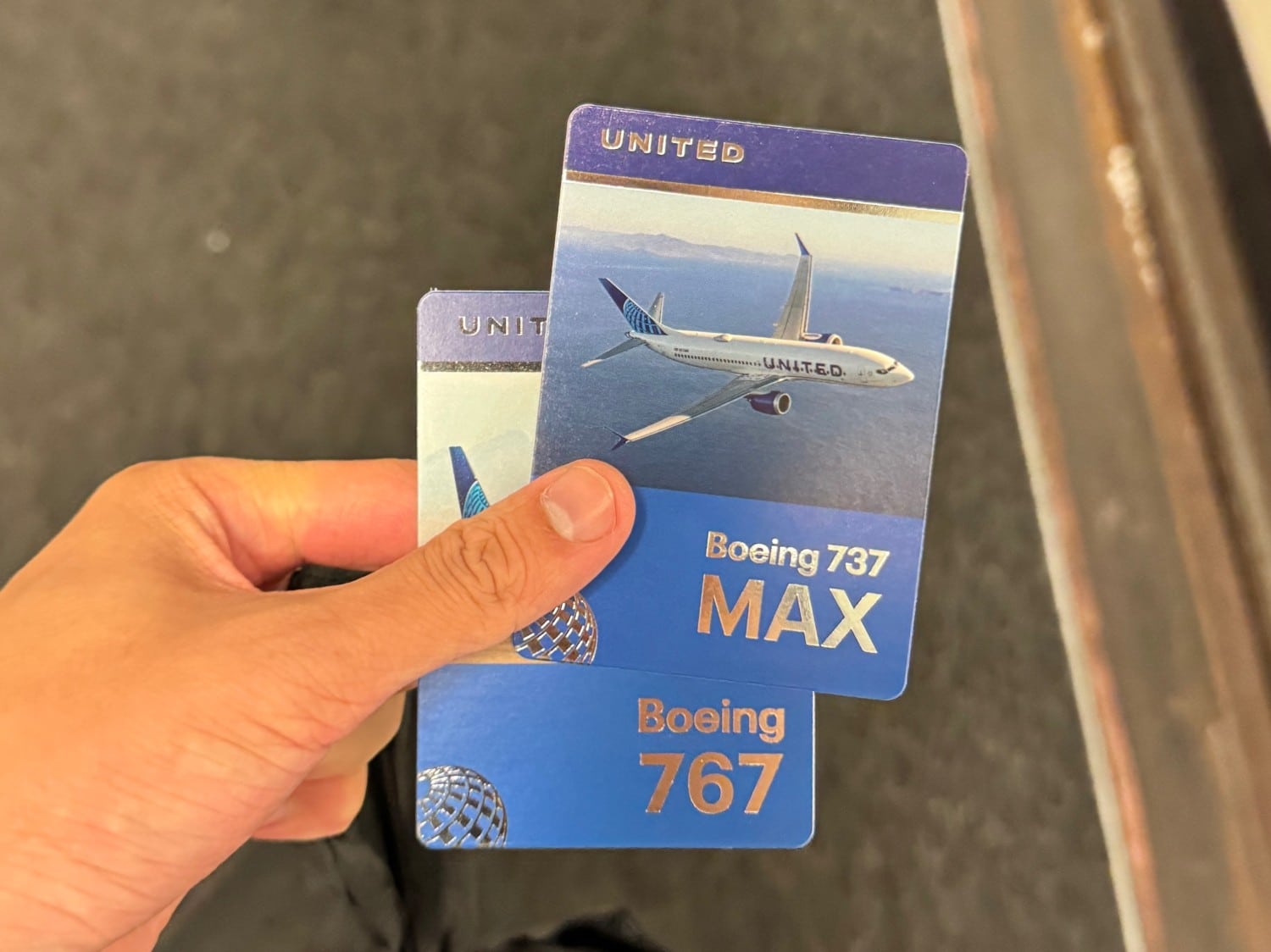
For the most part, I would say that United First is an acceptable option, however I would probably choose it again only if a flight is longer than 900 miles. Although it didn’t completely make up for it, asking the friendly pilots for trading cards did make the flight a little better after we got to the gate.

Andy Leung
Latest posts by Andy Leung (see all)
- Haneda vs. Narita: Which Tokyo Airport Should You Choose? - Oct 9, 2026
- Financial Institution Partnerships with Sports Teams in Canada: How Can You Benefit? - Jul 31, 2026
- Review: Petaling Jaya Marriott Hotel - Jul 29, 2026
- Eurail Pass: Complete Guide to Saving Money on European Train Travel (2026) - Jun 8, 2026
- How to Get to Vancouver Island (With and Without Points) - May 4, 2026

An upgraded fare to United First yields 150% SQM? I thought upgrades with United you just get the upgrade and your original booking class remains (Flex)?
Hey Mike! Sorry for the confusion. I did a flight change to take advantage of Air Canada’s no-change-fee goodwill policy during the strike, so I rebooked myself to a different flight in a higher class/Business and reissued a ticket. We updated the paragraph, so hopefully that clarifies things!
If I kept the same flight (which was ultimately cancelled due to the strike) and upgraded using e-upgrades or a last-minute upgrade, you would be correct that I would only have my miles credited at the original Flex rate (100%).