When it comes to frequent flyer and hotel loyalty programs, we often see trends cascade across the industry as programs are always keeping an eye on what the competition is doing. It’s not surprising, but when it comes to miles and points, these changes tend to lean far more towards negative than positive.
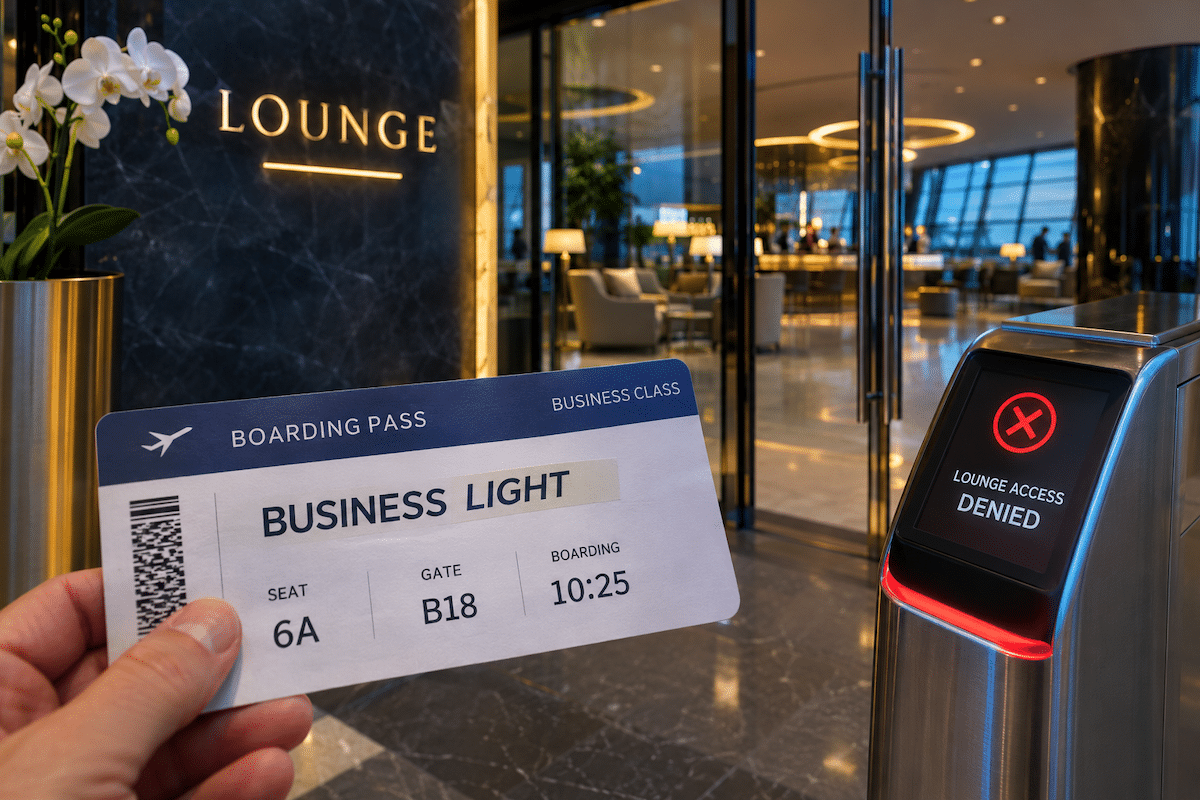
The latest negative change we have started to see is business class light fares, and it’s becoming an epidemic as it spreads to airline carriers and frequent flyer programs across the globe. Many business class light fares started out as cash fares only, but are now starting to seep into the world of award travel.
So where do we go from here, and are business class light fares a slippery slope for award travel?
What Are Business Class Light Fares?
Business class light fares are a stripped-down version of your standard business class fare with benefits removed, such as airport lounge access, seat selection, checked baggage allowances, and less flexibility. What benefits are not included in the fare will depend on the airline carrier, as each tends to handle their business class light fare a bit differently.
The list of airline carriers that offer business class light fares is ever-growing, but includes carriers such as Delta Air Lines, United Airlines, Air France, KLM, Qatar Airways, Finnair, Emirates, Etihad Airways, and Air Canada. Carriers may offer business class light fares on all long-haul routes or only on select routes, and may or may not include these fare types as a mileage redemption option.
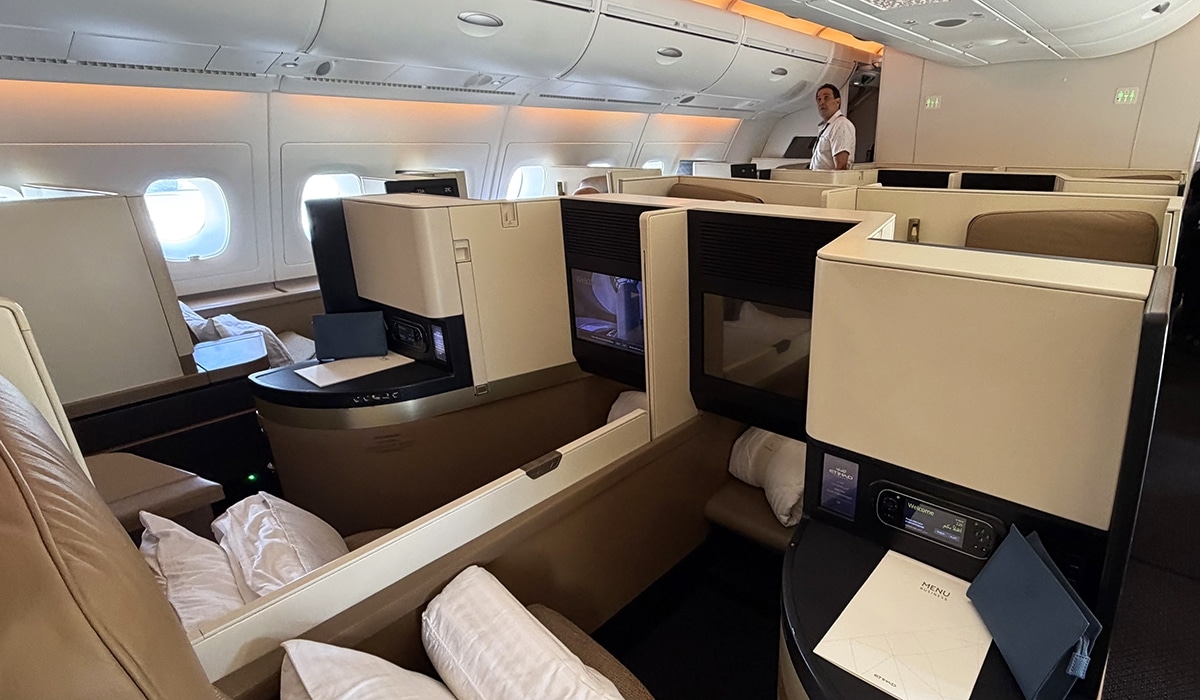
Ultimately, business class light fares are comparable to what we see with basic economy fare classes, like WestJet “UltraBasic”, but far more impactful as they strip away a lot of the typical benefits of a business class experience. Sure, you’ll save a bit of money if you are booking a business class light ticket with cash, but the savings might not be worth what you’ll miss out on when compared to a standard fare.
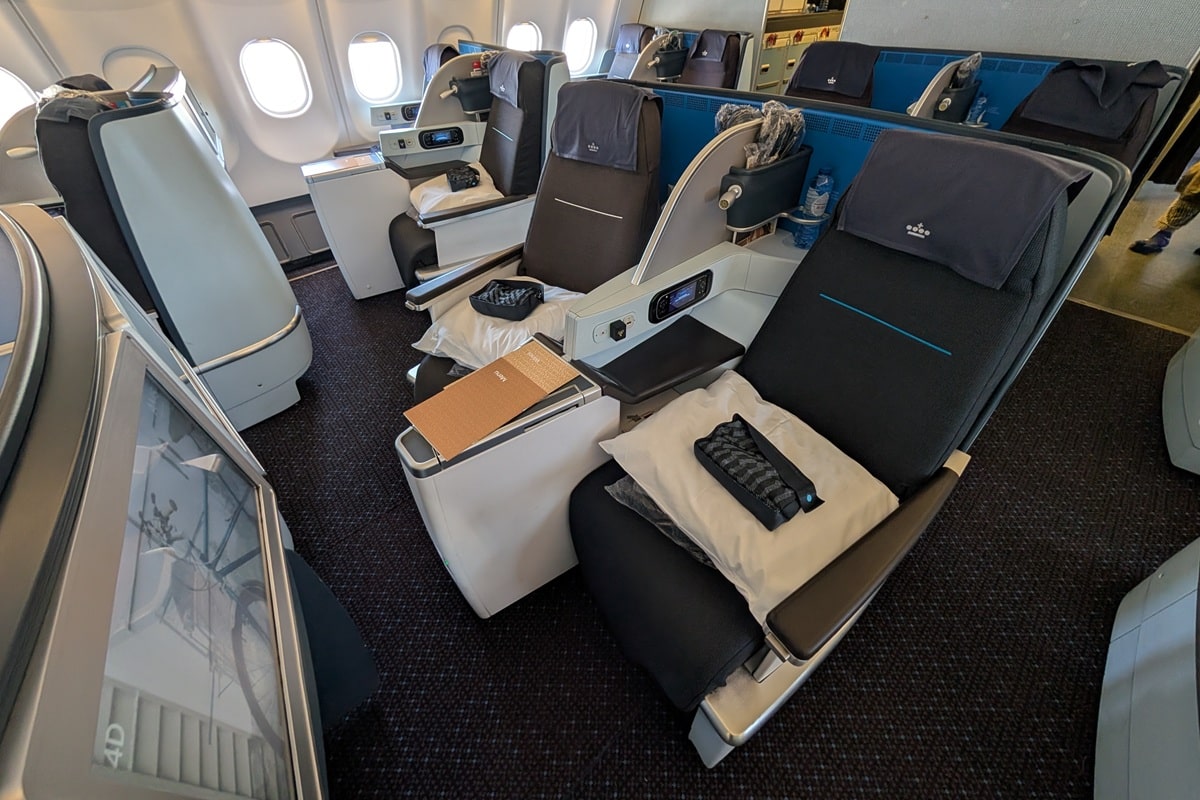
Passengers traveling on a business class light fare will still receive all of the typical onboard benefits of business class, including a lie-flat seat, food, and beverage. If you are considering booking one, you’ll need to look at what is being stripped out of the fare to determine if the cost savings are worth the lost benefits.
For those travelers who have frequent flyer program status, there is less of an impact with these fares, as the status benefits can often completely negate what has been removed from the fare class. For example, if you book a business class light fare on KLM but also have Flying Blue Platinum status, you still are eligible to receive the benefits that are typically offered as part of a standard business class fare anyways.
Now, I’m not someone who books business class cash fares, so when we first started to see these fares, it was largely irrelevant for me. However, we are now starting to see this fare class seep into award travel, often as a devaluation in the pricing structure when compared with existing redemption options.
Business Class Light Fares Are Slowly Seeping Into Award Travel
It was one thing when we started seeing business class light tickets sold as cash fares, but it’s become another thing entirely now that they have slowly started to show up as a redemption option for award travel.
This leaves me with a few core concerns, focusing on having to pay more for less, and losing the flexibility that comes with award travel.
No one wants to pay more for less, let alone travelers. The most recent example we have seen of this is when Flying Blue updated its fare class pricing for KLM and Air France flight redemptions, introducing three new tiers: Light, Standard, and Flex.
Previously, a lowest-price KLM or Air France redemption would cost 60,000 Flying Blue Miles. Since this change was implemented, a business class light fare now costs 60,000 miles and a standard fare costs 75,000 miles. Standard, which is mostly what the normal fare was before, increased by 15,000 miles per ticket, but also stripped out free seat selection in advance of check-in.

Devaluations happen all the time in this hobby, and are just part of the game you need to work within, but paying more for less is always going to feel bad.
The real problem lies with the new light fare, which is priced at the same amount of miles as the previous normal fare. However, it offers one less piece of checked baggage, no airport lounge access, and is unchangeable and non-refundable. The checked luggage and lounge access are not as big of a concern for me, but the loss of flexibility is massive.
Imagine redeeming 60,000 Flying Blue miles, plus sizable taxes and fees, and then not being able to make any changes or refund your flight. The money and miles are gone, regardless of whether you take the flight or not. Short of booking a ticket like this a day or two before you want to travel, I would never recommend that someone redeem miles for a fare class like this, because life is uncertain and plans can change.
Flexibility is one of the most powerful things that miles and points bring to the table, and with the introduction of business class light fares, that flexibility evaporates. Sure, we participate in the miles and points game to save money on travel and experience things we wouldn’t have been able to afford otherwise, but having that flexibility to pivot and change plans is a huge driver as well for me.
Where Do We Go From Here?
Unfortunately, I don’t see a world where it gets better. Airlines, especially in North America, tend to play copycat, and ideas like business class light fares will permeate the industry as they catch momentum. Airlines will always share the news via nonsense corporate communications as “offering more choice for consumers” which everyone can see through as a devaluation.
In my eyes, business class light fares are a symptom, not the problem. Airlines, as expected, continue to push boundaries and squeeze consumers as much as they can, and introducing a new fare class which offers way less for slightly less cost makes sense for their business.

It’s one thing to add a business class light fare option for award travel redemptions for those consumers who see value, but like we have seen with the Flying Blue changes, it’s deadly when this introduction is paired with an unavoidable pricing increase across the board. No one wants to pay more for less, and any time we see changes like this happen, it effectively impacts the valuation of that frequent flyer program’s miles.
I will continue to recommend against redeeming miles for business class light fares, but mainly as a result of the lack of ability to make changes or cancel for a refund. This is one of the biggest benefits of award travel, and I wouldn’t give up that freedom for a slightly lower price.
While the trend is here and is not going to go away, you can continue to make better redemption choices. And as always, continue to burn your points as you earn them. They definitely aren’t going to become more valuable long term.
Conclusion
The addition of business class light fares to award travel is a tough trend, but it’s really just another example of what we always say in this hobby: things don’t tend to get better. That being said, there is still a ton of value in programs that have implemented this new fare class; you just have to approach redemptions differently. Be smart, don’t pay more for less, and for the most part, ignore that these fares even exist as a redemption option.

Josh Bandura
Latest posts by Josh Bandura (see all)
- Business Class Light Fares: A Slippery Slope for Award Travel - Nov 16, 2026
- Review: Hotel TwentySeven Amsterdam, SLH - Nov 11, 2026
- The BMO CashBack World Elite Business Mastercard Is Now Available - Nov 9, 2026
- Miles & Points Family Travel: Experiences From Our Readers - Nov 2, 2026
- RBC Avion to Avios 30% Transfer Bonus Now Available - Nov 2, 2026