We are firm believers that credit cards should be part of all Canadians’ responsible personal finance strategies. Credit cards are powerful tools that can provide an extra layer of risk management when transacting as opposed to using a debit card, as well as additional rewards in the form of miles, points, or cash back.
While most Canadians have at least one credit card in their wallet, they might not know the ins and outs of credit cards, including how to build their credit score or how to change their credit card statement date. Similarly, there are a number of anti-fraud features used by credit cards to further protect consumers, one of which is a CVV number.
Let’s take a look at what CVV numbers are, what they are used for, and how you can locate your CVV number on your credit card.
What is a Credit Card CVV & What Is It Used For?
All credit cards have a CVV, which stands for “card verification value”. Depending on the credit card issuer, this string of digits may also be called a CSC (card security code) or CVC (card verification code or card validation code). A CVV is also available on Mastercard and Visa debit cards issued in Canada.
The card verification value presents an additional layer of security when you are transacting with your credit card. In order to make a purchase online or over the phone, you will need to provide your credit card number, expiry date, and often the CVV code to reduce the risk of fraudulent or suspicious transactions.
Since the CVV is an important piece of information that you are typically required to enter to transact with your credit card, you should always protect it and never share it, similarly to how you would protect your credit card number.
How to Find Your Credit Card CVV Number
Whether you hold a Mastercard, Visa, or American Express card, CVV numbers are located in different spots and may be either a three-digit number or a four-digit number.
Mastercard & Visa Card CVVs
Mastercard and Visa credit card holders can locate their CVV number by turning over their credit card, as the number can be found on the back, next to the authorized signature panel.
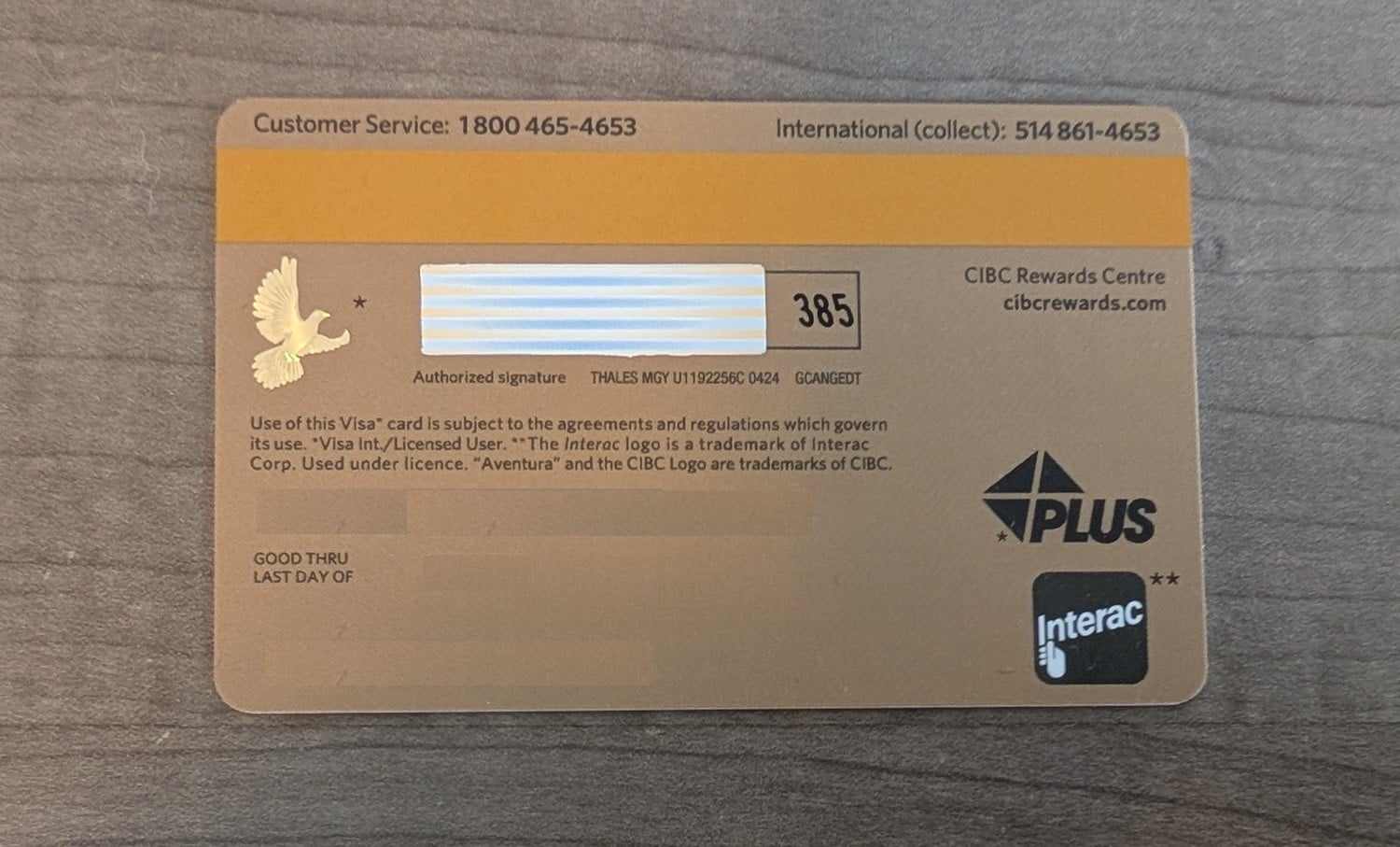
The CVV number on a Mastercard or Visa card is always a random string of three digits.
American Express Card CVV
American Express cardholders can find their CVV on the front of their card.
Note that American Express cards do have a string of three digits on the back of the card next to the authorized signature panel, but this is not a CVV number. This is a security code that is occasionally used by American Express to verify your identity when contacting them for assistance with your credit card account.

The CVV number on an American Express card is always a random string of four digits.
Conclusion
CVV numbers are an important tool that financial institutions use to help combat credit card fraud. Similar to how you would always protect your physical credit card and credit card number, you should always protect your CVV code to avoid fraudulent transactions on your card.
Frequently Asked Questions
Yes, many do. If your debit card has a Visa or Mastercard logo, you will find the CVV on the back of the card, same as you would for a credit card.
Yes, financial institutions may use these terms interchangeably, but they mean the same thing. CVV stands for card verification value, while CSC stands for card security code.
The CVV number on a Mastercard or Visa card is a three-digit code. The CVV number on an American Express card is a four-digit code.
The CVV number can be found on the back of your Mastercard or Visa card. If you have an American Express card, it can be found on the front of the card.
It depends on the merchant, but the majority of online purchases or purchases over the telephone will require the customer to enter a CVV for the purchase to be successful.
No, you must have the physical credit card to find your CVV number. If you have lost your credit card, call your financial institution for a replacement.
It depends on the financial institution. Typically, a renewal will retain the same CVV number, whereas a product switch to a different credit card may result in the CVV number being changed.

Josh Bandura
Latest posts by Josh Bandura (see all)
- Review: KLM Business Class (A330-300) - Oct 7, 2026
- American Express Aeroplan Reserve Cards: Changes Inbound - Sep 29, 2026
- New Tangerine Credit Card Offers – Up to 60,000 Scene+ Points! - Sep 25, 2026
- WestJet Points: Variance In Redemption Value - Sep 21, 2026
- RBC Avion to Asia Miles 15% Transfer Bonus Now Available - Sep 17, 2026