

It’s no secret that the cost of living in Canada has been getting higher, and families are feeling the squeeze. There’s no easy solution to overcome mounting costs for things like groceries, gas, and all the utilities associated with maintaining a home and raising a family.
Well, what if I told you there was a way to unlock hundreds, even thousands, of dollars in cashback or travel just by spending the same amount of money… on everyday things you already buy? Well, it wouldn’t be the first time on Frugal Flyer that we wrote about how to maximize everyday spending.
But what I can say is that for those of you with families, with home expenses, and who are feeling the pinch of day-to-day costs, there are great ways for you to make your expenses work for your travel dreams or pocketbook, thanks to the power of credit card rewards.
Why You Should Collect Miles & Points as a Household
We’ve talked before about why and how you should convince your significant other to join you on your Miles & Points journey. Everything we wrote then remains true, and is of immense value because nothing will feel better than going on a holiday. It will also feel amazing to go on a family vacation that’s been subsidized by nothing more than your regular, everyday expenses.
So let’s just go over a few other reasons why it’s generally a good idea to prioritize collecting airline Miles & Points before we continue on, though, of course, earning cashback is also acceptable (though often not of the same value).

The main reason is that you will earn way more points the sooner both adults in a household start collecting. You can then learn to pool your points via household and family accounts. For example, many major airline mileage programs will let you combine all the points earned in a household.
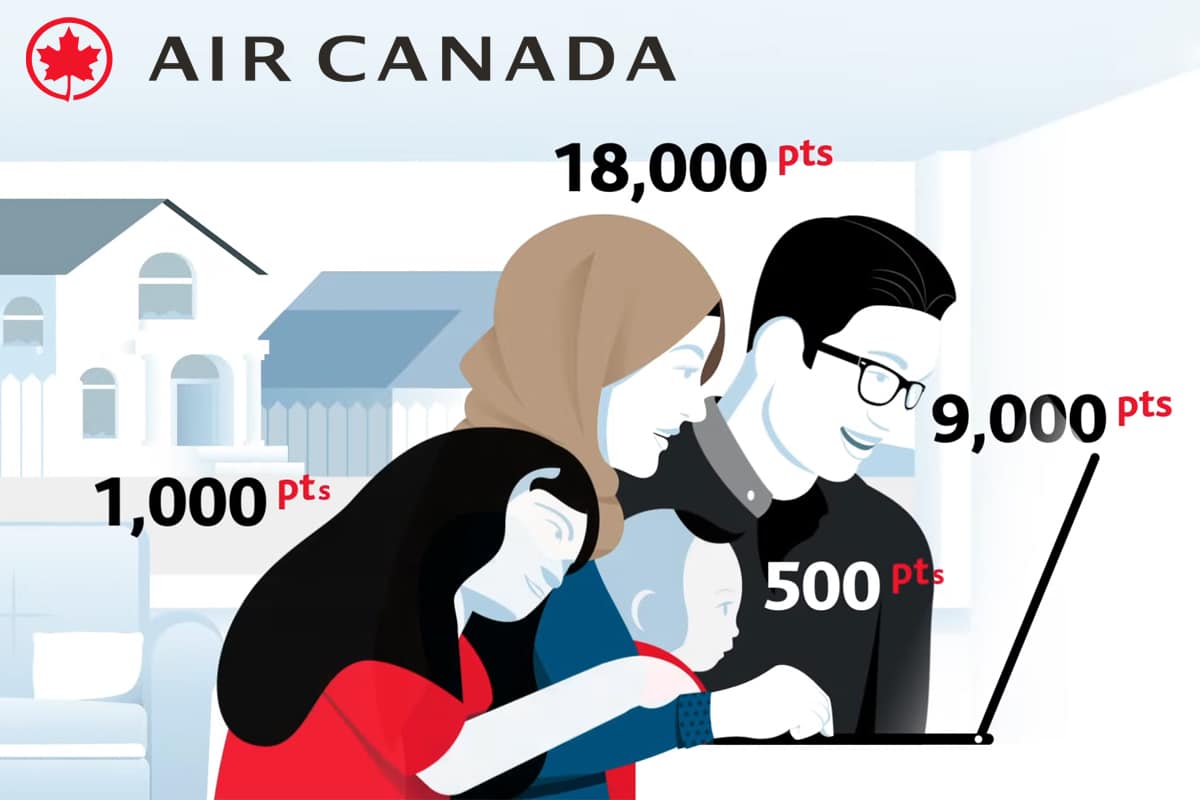
Combining everything lets you not only pool the points you earn, but also lets you easily book travel for the entire family. For example, the most common program in Canada is Air Canada Aeroplan, and they do offer an Aeroplan Family Sharing account. So if you have the family sharing feature set up, it makes getting enough points for 3-4 family members in one place much easier.
Recently, I was asked by a good friend living in Victoria what airline loyalty program was best for him and his young family. Because of how remote Victoria can be when it comes to available flights, it’s best serviced by WestJet, whose WestJet Rewards loyalty program is ideal for his needs because of its direct flights to and from YYJ.
Airlines aren’t the only way to maximize, though. You also get to use economies of scale when it comes to hotels because multiple family members can stay in a single room. Because this is so easy, it’s a bit trickier to combine hotel points between family members, but still a good idea to have both adults in a household collecting if possible
How Households Can Maximize Category Spending
So, before we get into the specific strategies, we need to categorize your household spend. How much do you spend in a given month on groceries? How about gas? What about all those recurring bills, like phone, hydro, electricity, and internet?
To put things into perspective, costs are pretty wild these days. Dalhousie University does a food price analysis every year. Their 2025 food price report estimates that the average Canadian family consisting of a mom, a dad, and two children can expect to spend $16,833.67 on groceries alone in a given year.
If you read the rest of the report, they have all kinds of interesting stats on the price of feeding a family in the comments. The only good news I have to share from it is that it appears their predictions of future food increases tend to wind up being lower than projected.

As groceries are the largest likely cost that you have, it’s important to get a tally of how much you spend on recurring bills and gas in a given month. These can’t be avoided, and often are budgeted monthly, making them great ways to get your daily costs to work for you.
The reason you should track these is so you have an idea that in a month, you might spend, for example, $1,350 on groceries, $380 on gas, and $400 on utilities like water and electricity. Tracking these spending categories is a great idea because then you can keep track of the “spending caps” for bonus earning categories you might face on your credit cards.
Credit card issuers are very good at keeping data on where you shop via Merchant Code Categories (MCCs). If a card, like the American Express Cobalt Card, can only earn 5x the points on groceries and food up to $2,500 in a month, then they’re gonna know, via these MCCs, when you’ve hit that limit.
This means part of the game of getting the MOST out of your spends is to know what those caps are, and when you’re likely to hit them. The best part is that when you have two players in a household, you have a secret weapon: each person can have their own card. That $2,500 5x earning limit on groceries and restaurants in a month? Now it’s $5,000 across two people with two cards!
The same concept applies to categories like gas, utilities, heck, even your subscriptions. A great example I can use to illustrate this is a fantastic card that launched recently: the BMO VIPorter World Elite Mastercard.
This card is normally capped at $10,000 a year on groceries or restaurants and $5,000 on gas and transportation like Uber or public transit. With two cards in the household, that effectively doubles both of your limits. VIPorter is an excellent program, especially for people flying to Canada, the US, and Sun destinations who are based in the GTA.
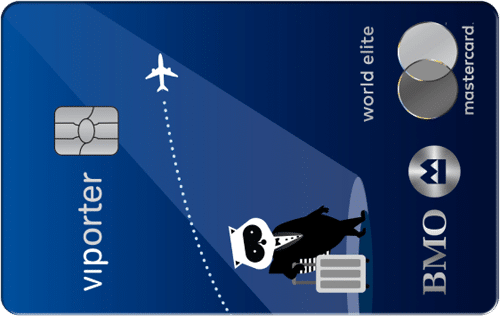

The BMO VIPorter World Elite Mastercard, Canada’s most valuable airline credit card*, offers benefits including VIPorter Venture membership and the opportunity to earn an annual round-trip companion pass through spending.
Be entered to win a $500 Porter Airlines e-Gift Card when you apply and get approved for this card through Frugal Flyer in October 2026! Click here for more details.

Earn when you apply through Frugal Flyer.
70,000 VIPorter points
$18,000
$1,250+
$199 (FYF)
Yes
Oct 31, 2026
If you apply these strategies and know how much you spend in a year, you can determine which cards to have and how to get the maximum mileage out of cash you were already going to spend.
As an aside, a key point to remember is that wholesale clubs like Costco, which are the lifeblood of families, do NOT code as groceries.

While there are technically ways to use Amex and Visa cards at Costco, it’s often best to stick to Mastercard on the understanding that you’ll earn the minimum number of points. So remember that as part of your strategy if you’re a heavy Costco shopper.
Are Supplementary User Cards The Answer?
Before we continue, I need to share a key detail that is of the utmost importance for families. That detail is that your bank will stop at nothing to try and get you to sign up your spouse or significant other under a supplementary card for a credit card you already have. Supplementary cards are not typically worth obtaining unless you’re offered a very strong signup bonus on that supplementary card.
This is because the supplementary card is considered identical to the original card. So, for example, if your partner made you a cardholder on their account, they’d remain liable for any costs or debts incurred. You’d also both have to share the same category cap, be it $2,500 on groceries/dining a month, like on the American Express Cobalt Card, or $10,000 a year, like on the BMO VIPorter World Elite Mastercard.
Plus, if you are each signing up for your own card and not using supplementary cards, you can each earn a welcome bonus, a potential cash back rebate from Frugal Flyer, and double-dip on any benefits that the card offers. While you will have to pay two annual fees, it can definitely be worth it to have each person hold the same card in certain situations with specific credit cards.
The Best Credit Cards To Maximize Household Spending
Now there’s a whole pile of cards that can be amazing for household expenses, many of which I’ve covered in a longer article I wrote about which 5x rewards-earning credit cards should look to earn space in your wallet.
Of those I listed in the article, I’ve already mentioned the American Express Cobalt Card, which remains sort of the undisputed supreme emperor of the Canadian consumer financial products space.
The best part about their American Express Membership Rewards points is that they can be transferred to partner programs or redeemed for 1 cent per point as a statement credit. The $191.88 annual fee (split into 12 equal monthly payments) is more than worth it.
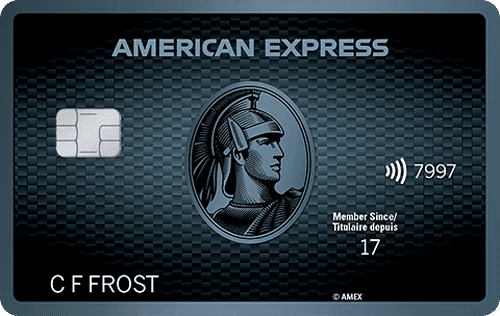
The American Express Cobalt® Card gives cardholders the opportunity to earn 5x Membership Rewards on eligible restaurant, food delivery, and grocery store purchases in Canada. With the American Express Membership Rewards® program, it makes for an excellent everyday credit card.
15,000 Membership Rewards points
$9,000
$300+
$191.88
Yes
–
I’d also strongly advocate the Scotiabank Gold American Express Card as an alternative, as it also earns 5x on groceries and 3x on gas, transit, and streaming services like Netflix. Scene+ points aren’t just good for movies; you can also use them at 1 cent per point on all travel costs, and even at the checkout of grocery stores under the Sobeys, Safeway, and Freshco banners.
With only a $120 annual fee, and the fact that the annual fee is often waived in the first year as part of the welcome bonus, it’s a no-brainer. Its limit is also a whopping $50,000 per calendar year on all dining and grocery purchases that earn bonus points; see our Scotiabank Gold American Express Card review for all the details.


The Scotiabank Gold American Express Card earns an impressive 6x Scene+ points at Empire-affiliated grocery stores, 5x at all other grocery stores and restaurants, and 3x on gas, transit, and streaming. Plus, the card offers no foreign transaction fees.
Scene+ points are redeemed at a rate of 100 Scene+ points = $1 against any travel purchase, making this a powerful everyday card for those who want strong earning rates without the complexity of transfer partners.
Earn when you apply through Frugal Flyer.
50,000 Scene+ points
$7,500
$700+
$120
No
Nov 1, 2026
However, these are American Express cards. Not every store accepts them, especially Costco, which is vital for large families but only takes Mastercard, as well as the Loblaws/Superstore family of grocery stores, which also takes Visa.
So, what’s someone to do? You could definitely get the VIPorter card I recommended earlier. I’d also advise you to consider looking at some other products: one would be the WestJet RBC World Elite Mastercard. This is useful because it earns 1.5% back in Westjet points everywhere and, key to families, comes with free checked bags and companion fare vouchers. See our review of the WestJet RBC World Elite Mastercard for all the details.
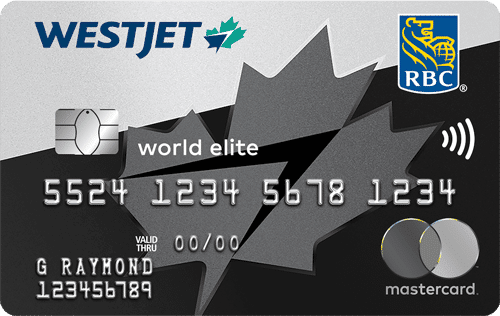
The WestJet RBC® World Elite Mastercard‡ offers a World Elite Companion Voucher on approval (with the ability to earn one each anniversary year through spending), plus a first free checked bag on WestJet flights.
Earn when you apply through Frugal Flyer.
70,000 WestJet points
$5,000
$825+
$139
Yes
Nov 4, 2026
If none of these work for you, maybe try the Scotiabank Passport Visa Infinite + Card. While it caps out at 3x on Sobeys, IGA, and other Empire-brand grocery stores, it does get 2x on all other dining, grocery, gas, transport, and entertainment charges.
Last but not least, it has no foreign exchange fees for those trips where you take the family abroad and, being a Visa, it is much more commonly accepted outside Canada than Amex. Not to mention, we’ve selected this card many times as the best overall travel credit card in Canada.


The Scotiabank Passport Visa Infinite + Card is one of Canada’s best all-around travel cards, offering no foreign transaction fees and six complimentary airport lounge passes through the Visa Airport Companion Program.
Scene+ points are easy to earn on everyday spending and can be redeemed flexibly for travel, groceries, and more, making it a strong everyday carry for travellers who want simplicity and real value for $150 per year.
Earn when you apply through Frugal Flyer.
35,000 Scene+ points
$40,000
$475+
$150
No
Nov 1, 2026
Conclusion
Collecting points as a household lets you earn at a significantly faster rate and take advantage of economies of scale when you choose to redeem your hard-earned points. Don’t sleep on maximizing your normal expenses to improve your own life.
Issuers can try to lull you into getting supplementary cards; while this is worth it, it’s usually better to run 2-player mode and have both adults in a house with their own points collecting together, and pooling resources for everyone’s benefit. This also lets you beat the house when it comes to getting around spending category caps.
I hope you’ve found this valuable, and remember, not every card on this list may be right for you, but the principle is: make your bills work for your family.

Kirin Tsang
Latest posts by Kirin Tsang (see all)
- Scotiabank Amex Offers: Don’t Leave Cash On The Table - Oct 5, 2026
- EU261 Regulations: Know Your Air Passenger Rights - Oct 2, 2026
- BMO eclipse Visa Infinite Card Review - Oct 1, 2026
- Uber vs Lyft: Use Both Apps For Best Prices & Promotions - Sep 26, 2026
- Flying Blue Award Chart Changes: Your Next Redemption Is Now More Expensive - Sep 25, 2026