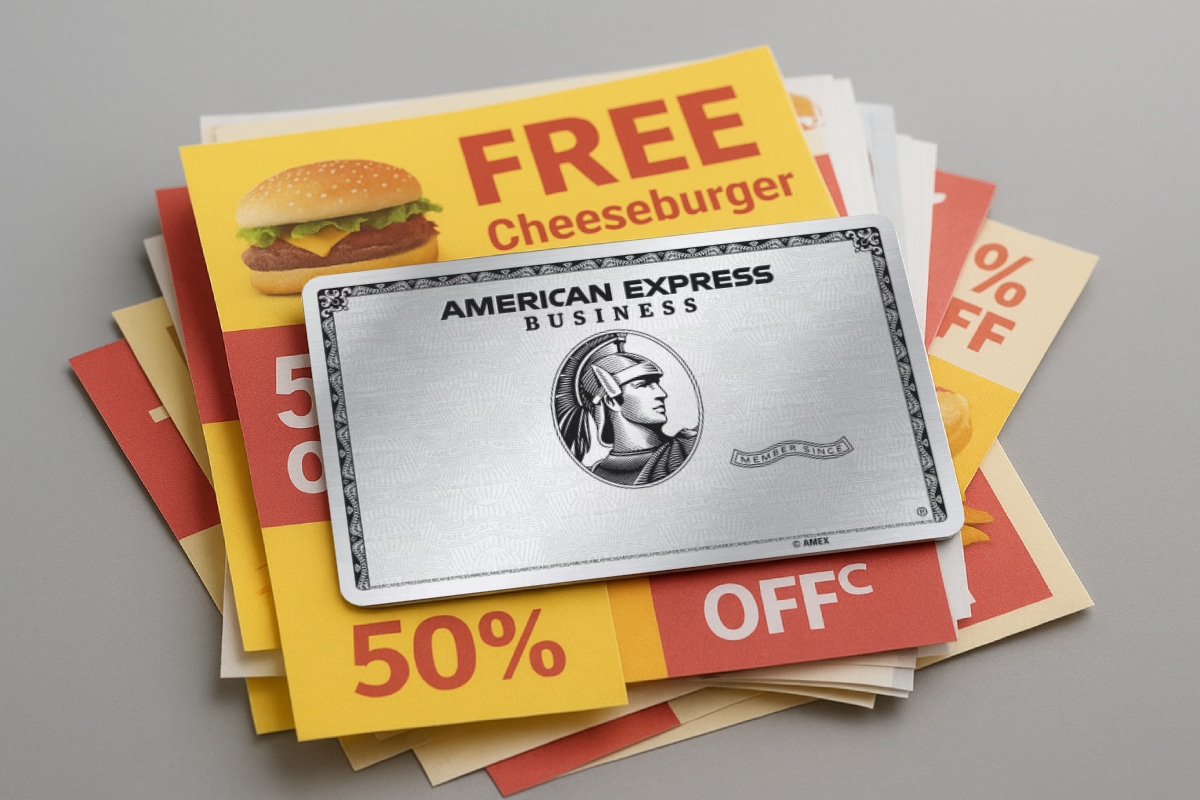
One of the sad realities of the modern Miles & Points landscape is that the engine of our hobby, the humble credit card, feels as if it is undergoing a process that is endemic to many products in the digital landscape.
What this has consisted of, particularly since COVID, has been glamorous credit cards offering record-setting features, such as welcome bonuses or premium airport lounge access, to get customers through the door and paying hefty annual fees. But then, for some reason, the benefits of the cards get worse. Earning rates go down. Airport lounges get crowded.
But worst of all is the most dreaded change of all: an issuer hikes an annual fee and promises that they’re giving you some money “back” on it… in the form of rebates or statement credits that are locked behind specific merchants and which require an encyclopedic knowledge of the days and seasons to schedule in.
There are a variety of terms for this procedure, the most common one being too vulgar to publish here, but in the context of credit cards, I call it “coupon-booking.” So, what’s leading to it? Why is it happening? Is there any way to maximize it and make these coupons work for you?
What is the Credit Card ‘Coupon Book’?
Before we continue, it’s important to understand the two ways that credit card coupon books work. Knowing these will help us reveal why coupon-booking is misleading, maybe even nefarious, from the customer perspective.
The first type of coupons you might think of that are attached to credit cards is more common in the United States than in Canada. This is in the form of a program such as Amex Offers, which offers cashback at certain merchants when you use your eligible credit card. For example, I’m a sports fan and needed a pair of sunglasses, so using Amex Offers legitimately saved me money:

This is a win for Amex as you use their card, and for the merchant because you buy their products. However, this doesn’t mean I’d ever hold an American Express card just for the possibility of having a coupon that I could get value from; it’s more the gravy on top. Other financial institutions offer programs similar to Amex Offers as well, both in Canada and the United States.
The second type of “coupons” that come bundled with your favourite premium credit cards, like the American Express Platinum Card in Canada or the Chase Sapphire Reserve Card in the United States.
The American Express Platinum Card costs $799 a year for its Canadian incarnation, a spicy sum indeed, whilst the latter has an annual fee of $795 USD, more than a grand in the Great White North as of time of writing!
However, this big annual fee expense is offset by the addition of a bunch of incentivizing credits. For example, the American Express Platinum card comes with a $200 travel credit and another $200 dining credit. Beyond the credits, this card offers a ton of value; read our review of the American Express Platinum Card for more details.
The Chase Sapphire Reserve comes with $300 in annual travel credit on any travel, and $250 biannually (for a total of $500) on hotels booked with The Edit by Chase travel. It also has a gigantic list of lifestyle credits on Chase dining and Lyft credits.

OK, so far so good, right? Once you consider the above credits, the American Express Platinum only has an effective annual fee cost of $399 CAD, and the Chase Sapphire Reserve is basically paying you money to hold the card, right? Why is coupon booking bad?
Why is There So Much Coupon Booking?
To understand the issue with coupon booking, we need to be very clear on something: your real money is almost always worth more than dollar-value rebates. Most of these coupons are tied to specific retailers, and when they aren’t (such as for the Chase travel credit), they are linked to categories.
This means the issuer is getting real money and giving you coupons that they know you won’t use or maximize. This is a deliberate business strategy: lots of people forget to cash in on their “valuable” promotions, or simply don’t have one of the mentioned vendors close enough to help. To add insult to injury, most of these credits have truly labyrinthine redemption schedules.
For example, the Chase Sapphire Reserve Card that I mentioned before has bi-annual credits. If you miss the cutoff by one day, too bad, so sad. This is even worse for some of the monthly or quarterly credits, as now you have to track different, more complex units of time simultaneously.
There’s also the question of merchants for whom the coupons can be used. Here in Edmonton, for example, there’s only a handful of restaurants on the $200 Platinum dining credit list. I’ve now eaten at most of them due to being a longtime resident, and I can tell you, even with $200 off, I wouldn’t go out of my way for some of them.

What should also be remembered is that the issuer is taking revenue from a pile of sources: annual fees, interest, and swipe fees to merchants, and using them to buy the coupons. Do you think they’re buying them for one cent on the dollar? Absolutely not! Those coupons are being sold at a discounted rate that the number crunchers have determined is profitable.
This is an amazing value proposition for credit card issuers, as they can buy plenty of these discounted coupons year over year and justify hiking the annual fee: they are trading your real money for rebated fees that they may never need to actually pay out if they are not used by the customer. In fact, companies looking to grow may offer such benefits to premium cardholders for no cost to the issuer in the hope of attracting higher-spending, more affluent customers.
The business efficiency of this means that you need to strap in, as the trend isn’t going to get much better. Just take a look at what’s going on with the recent changes to the American Express Platinum Card (US) and the American Express Business Platinum Card (US), where the annual fee increased on both products at the same time that they added even more credits to each card.

The good news is that you don’t have to take this lying down: you being a credit card company’s customer is a two-way street, and if you’re paying them annual fees and swipe fees, you have every right to maximize your payouts from all the coupons.
How To Maximize Credit Card ‘Coupon Books’
Before we start getting into maximization is the most important question and it’s one of personality. For both groups, I’d suggest not valuing the credits offered at one cent on the dollar. This isn’t mandatory, but if you want a more detailed mathematical breakdown, you can read my article about considering whether you should renew your premium credit card. This makes the pain of potentially “missing out” on some rebates much less drastic.
With that said, are you:
- A) A person who needs to get every available dollar?
- B) A person who wants convenience as well as value?
In either case, you’ll need to make sure that the cost of coupons redeemed outweighs the value of the annual fee.
For the first type of person, I have some good news for you: you’ll always beat the annual fee’s nominal price. I also have bad news: you’re going to have to spend a lot of energy squeezing blood from the proverbial stone.
My advice to you is simple: use something like Google Calendar or a miles and points-focused Excel spreadsheet to keep track of all your cards and credits. Make absolutely sure you know when credits start and end their eligibility period. Then, plan accordingly: if you must use your $10/month Peloton rebates, go nuts.

Like I said, following this strategy, it will be hard not to come out on top on the nominal value.
For the second group, good on you for realizing you can let some of these vouchers go. Part of maximizing is learning what coupons are worth putting in the effort to cash out.
When you get a premium credit card that’s subject to coupon booking, such as the American Express Hilton Honors Aspire Card (US), take a look at its various credits and figure out which ones you can use, and which ones are big-ticket enough items for you to get creative in using. You might need to learn to love Las Vegas to redeem those Hilton resort credits, for example, so try not to lose too much at blackjack just because you had to liquidate them.
Regardless, though, you need to make sure that your benefits (be it the welcome bonus, the coupons, or premium features like airport lounge access, or some combo of each) collectively outweigh the annual fee.
Finally, for both groups, I have one parting piece of wisdom: keep your ear to the ground on what offers, deals, or devaluations are en route. Anytime the word “revamp” is being floated through the rumour mill, you should probably apply before the card’s annual fee is inflated and “offset” with another round of vouchers (to be exclusively used on dry cleaning or manicures, who knows what they’ll think of next).
Conclusion
The age of the enormous welcome bonus has ended. The time of the COUPON has come.
OK, I am joking a little bit. There’s still plenty of excellent credit cards out there offering both premium user features like lounge access or concierge service, and more than enough welcome bonuses for every avid Miles & Points enthusiast.
But the coupon booking? That won’t end, so it’s time to get used to the post-coupon world and start figuring out how to maximize these and get them working for you. Just make sure that no matter what, you’re getting more value than whatever value the issuers hike the annual fees to next.

Kirin Tsang
Latest posts by Kirin Tsang (see all)
- Canada Post MyMail: Track Your Incoming Credit Card Mail & More - Oct 12, 2026
- Scotiabank Amex Offers: Don’t Leave Cash On The Table - Oct 5, 2026
- EU261 Regulations: Know Your Air Passenger Rights - Oct 2, 2026
- BMO eclipse Visa Infinite Card Review - Oct 1, 2026
- BMO Blue Rewards World Elite Mastercard Review - Sep 27, 2026